Get your free personalized podcast brief
We scan new podcasts and send you the top 5 insights daily.
Widespread protests are fueled by everyday grievances like poverty and environmental destruction. These issues trace back to the Islamic Revolutionary Guard Corps (IRGC) systematically extorting and taking over successful private businesses, creating a corrupt and inefficient economy that angers the populace.

Related Insights
Iran's Islamic Revolutionary Guard Corps (IRGC) isn't funded by the state budget. It operates a global network of front companies for construction and other projects, laundering money to create a self-sustaining financial ecosystem. If the regime collapses, the IRGC would likely persist as a heavily-armed mafia with international criminal ties.

The Islamic Revolutionary Guard Corps (IRGC) has eclipsed the clergy, controlling major political and economic institutions. Ayatollah Khamenei maintains power through a symbiotic relationship with the IRGC, leveraging their military and economic might, rather than just religious authority.

The recent unrest originated with merchants in Tehran's Grand Bazaar, a group that prioritizes stability. Their protests highlight the crisis's economic roots: inability to access hard currency for imports, rampant inflation, and collapsing consumer demand, making business untenable for even multi-million dollar traders.

The government's response to protests involved a near-total information blackout, shutting down not just the global internet but also Iran's controlled domestic network. This paralysis extended to essential services like ATMs, making it an unsustainable tactic for the regime as it halts the entire economy.
An entrepreneur established a bank, offered high interest rates to attract deposits, and then loaned the majority of that money to his own construction companies. The resulting collapse was so massive (requiring a $5 billion infusion) that it forced the government to amend the national budget, fueling public rage against systemic corruption.
The progression of protest slogans from demanding a vote recount in 2009 ('Where is my vote?') to calling for regime overthrow today ('Death to the supreme leader') indicates a fundamental change. Protestors no longer seek to work within the existing system but aim to dismantle it entirely.

The current Iranian protests are uniquely potent because the regime is at its weakest geopolitically. The loss of regional proxies like Hezbollah and Hamas, coupled with key ally Russia's preoccupation with Ukraine, has left the Iranian government more isolated and vulnerable than during any previous wave of unrest.
While US sanctions are a factor, the Iranian currency's freefall is largely due to structural corruption. The economy is dominated by the military and clerical foundations, a political-economic model that stifles growth and fuels public anger—a problem sanctions relief alone cannot solve.
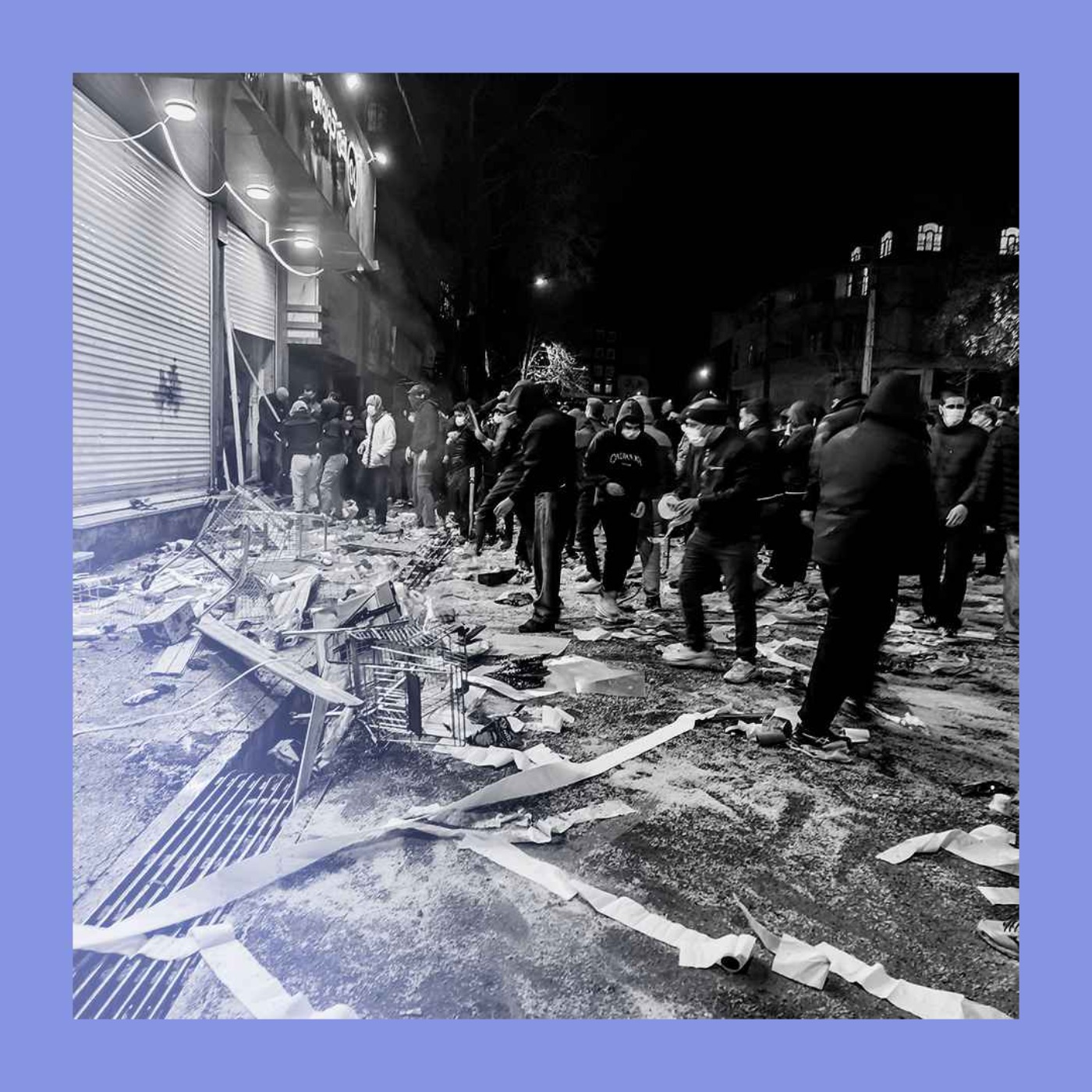
Unlike the 2022 protests led by middle-class women over social freedoms, the current unrest is driven by jobless young men—a traditionally pro-regime group—angry about economic collapse. This shift in demographics and motivation makes the government's usual appeasement tactics less effective.
Philosopher Eric Hoffer's framework suggests a natural lifecycle for revolutionary movements. They begin as a cause, evolve into a business enterprise profiting the elite (like Iran's IRGC), and finally devolve into a racket, where only racketeering leaders remain, devoid of the original ideology.
