Get your free personalized podcast brief
We scan new podcasts and send you the top 5 insights daily.
Philosopher Eric Hoffer's framework suggests a natural lifecycle for revolutionary movements. They begin as a cause, evolve into a business enterprise profiting the elite (like Iran's IRGC), and finally devolve into a racket, where only racketeering leaders remain, devoid of the original ideology.

Related Insights
Lasting transformation doesn't happen overnight. It follows a three-stage progression: a single 'moment' creates an opportunity, which must be built into sustained 'momentum,' and then finally cultivated into a full-fledged 'movement.' Understanding this 'Three M's' framework is key to achieving large-scale change.
The Islamic Revolutionary Guard Corps (IRGC) has eclipsed the clergy, controlling major political and economic institutions. Ayatollah Khamenei maintains power through a symbiotic relationship with the IRGC, leveraging their military and economic might, rather than just religious authority.

Unlike historical fascism which co-opted business, today's authoritarianism is arguably a product of finance capitalism. The concentration of wealth creates oligarchs who merge with the state, trading democratic norms for deregulation and profit in a speculative, symbol-driven economy.

The ruling elite has inverted from 80% ideologues at the revolution's start to 80% charlatans today. Expedience and financial gain, not revolutionary zeal, now bind the regime's core. This ideological hollowness makes the regime more brittle than its rhetoric suggests.
When a political movement is out of power, it's easy to unify against a common opponent. Once they gain power and become the establishment, internal disagreements surface, leading to factions and infighting as they debate the group's future direction.

A political system is in jeopardy when its citizens and leaders prioritize their ideological causes above the system's rules and stability. This creates irreconcilable differences, making compromise impossible and leading to internal conflict and eventual breakdown, a pattern observed repeatedly throughout history.

Contrary to a "burn-it-all-down" revolutionary approach, Reza Pahlavi proposes a pragmatic transition. He plans to incorporate existing state institutions, including the Islamic Revolutionary Guard Corps (IRGC), into his vision for a new national army to ensure stability and state function.
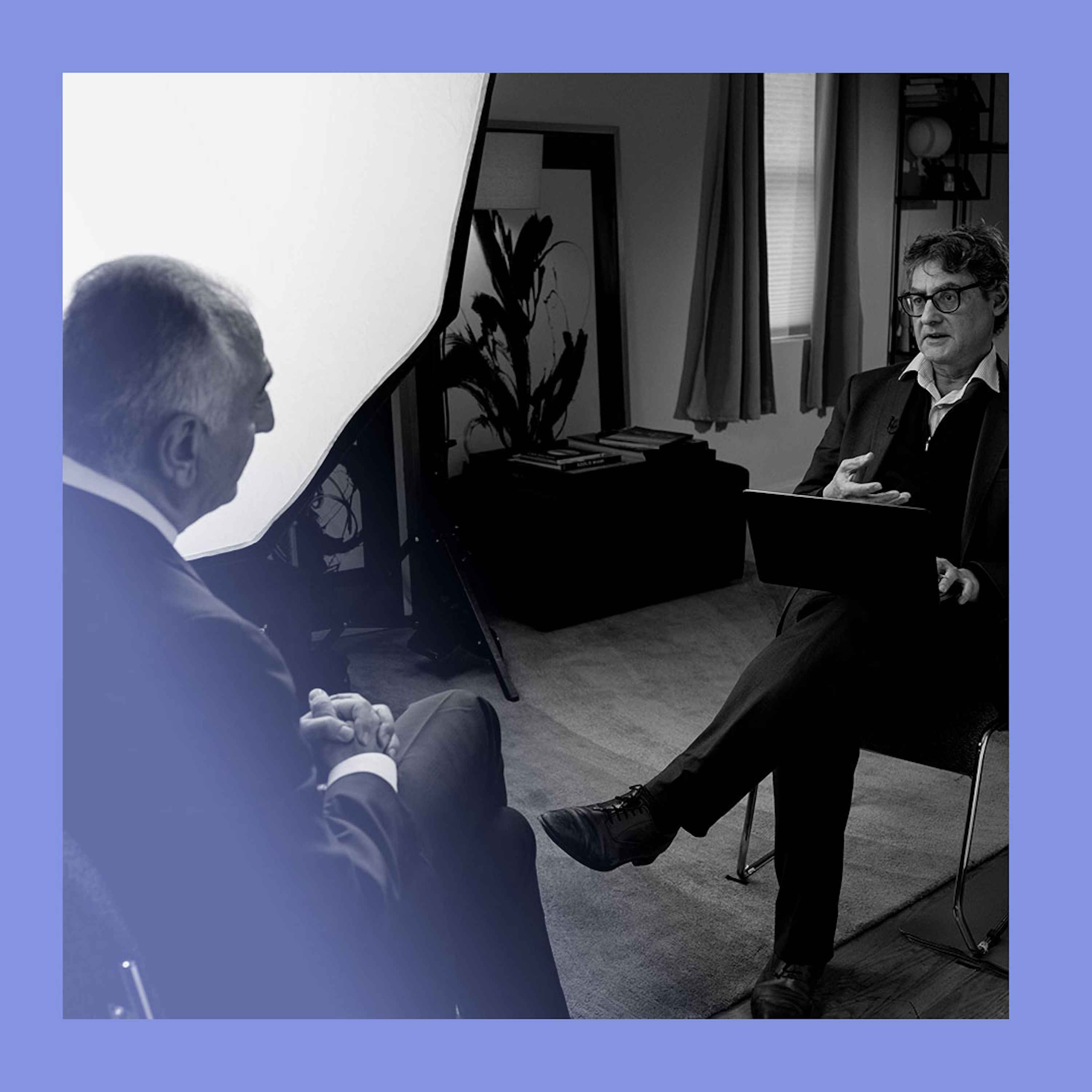
The Iranian populace is exhausted with theocratic rule after five decades. Any future authoritarian leader will likely be a product of the intelligence or security services, appealing to nationalism rather than revolutionary ideology. The era of the turban-wearing ruler is over.
The progression of protest slogans from demanding a vote recount in 2009 ('Where is my vote?') to calling for regime overthrow today ('Death to the supreme leader') indicates a fundamental change. Protestors no longer seek to work within the existing system but aim to dismantle it entirely.

Unlike nascent revolutionary states that rally against foreign attacks, late-stage dictatorships are weakened by military defeats. Iran's recent humiliations by Israel and the US have exposed incompetence and eroded the public's perception of strength, fueling protests and accelerating the regime's demise.