Get your free personalized podcast brief
We scan new podcasts and send you the top 5 insights daily.
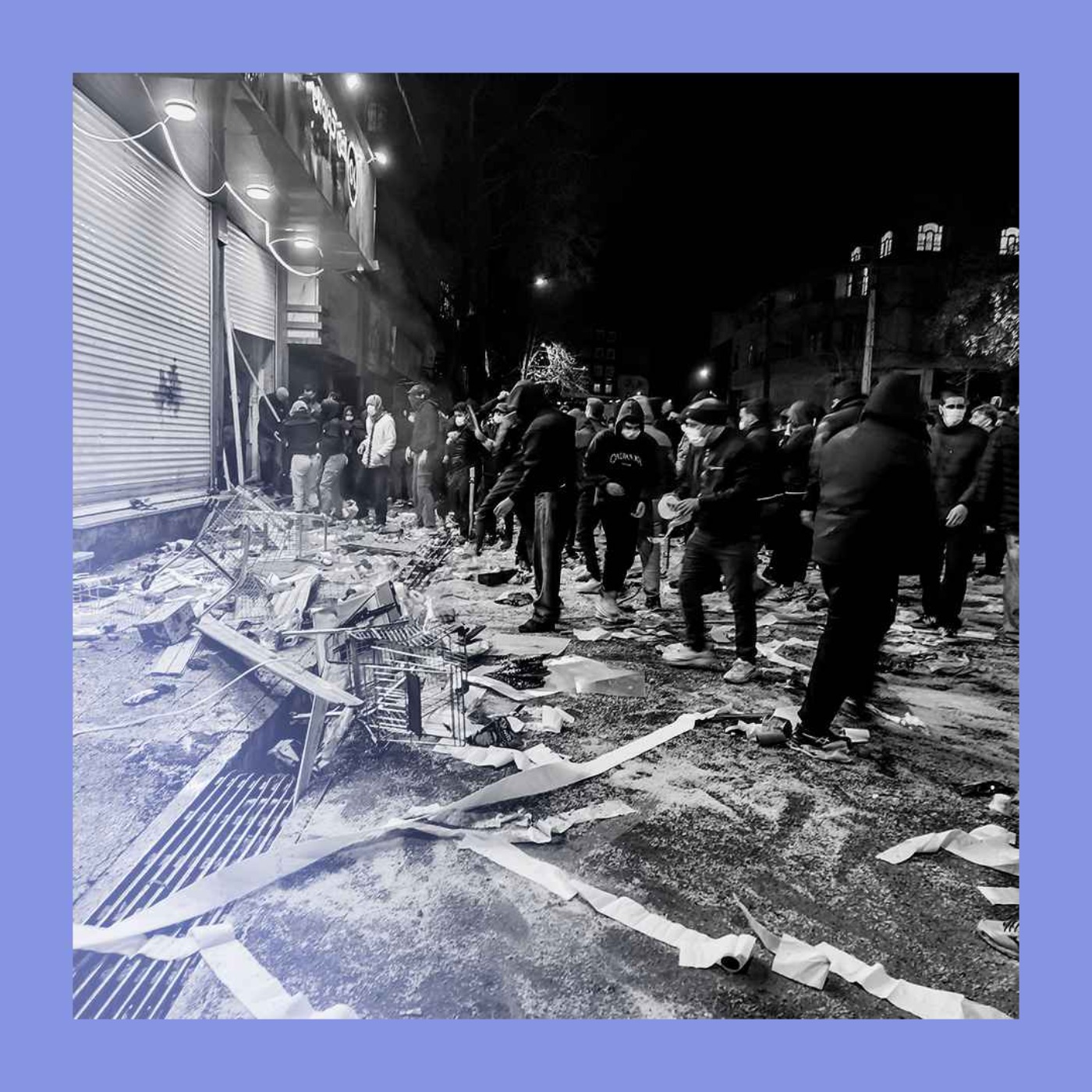
The recent unrest originated with merchants in Tehran's Grand Bazaar, a group that prioritizes stability. Their protests highlight the crisis's economic roots: inability to access hard currency for imports, rampant inflation, and collapsing consumer demand, making business untenable for even multi-million dollar traders.

Related Insights
The US response to the 2008 crisis—massive money printing—exported inflation globally. This led to sharp increases in food prices in places like the Arab world, creating economic hardship that became a key, though often overlooked, trigger for the widespread social and political upheaval of the Arab Spring.

Due to sanctions, Iran's oil exports go almost exclusively to China. This monopsony gives Beijing immense leverage, allowing it to demand deep price discounts and pay in yuan. The funds are held in Chinese banks, restricting Iran to using them only for Chinese goods, crippling its ability to buy essentials elsewhere.
The government's response to protests involved a near-total information blackout, shutting down not just the global internet but also Iran's controlled domestic network. This paralysis extended to essential services like ATMs, making it an unsustainable tactic for the regime as it halts the entire economy.
The inability for young people to afford assets like housing creates massive inequality and fear. This economic desperation makes them susceptible to populist leaders who redirect their anger towards political opponents, ultimately sparking violence.

An entrepreneur established a bank, offered high interest rates to attract deposits, and then loaned the majority of that money to his own construction companies. The resulting collapse was so massive (requiring a $5 billion infusion) that it forced the government to amend the national budget, fueling public rage against systemic corruption.
Economic uncertainty and anxiety are the root causes of political violence. When governments devalue currency through inflation and amass huge debts, they create the stressful conditions that history shows consistently lead to civil unrest.

While US sanctions are a factor, the Iranian currency's freefall is largely due to structural corruption. The economy is dominated by the military and clerical foundations, a political-economic model that stifles growth and fuels public anger—a problem sanctions relief alone cannot solve.
After a two-week stock market shutdown during a previous conflict, a massive sell-off occurred. This was a liquidity event, not a reflection on fundamentals. Retail investors, who dominate the market, were locked out of their funds and sold at any price simply to access cash, creating a cascading effect.
Unlike the 2022 protests led by middle-class women over social freedoms, the current unrest is driven by jobless young men—a traditionally pro-regime group—angry about economic collapse. This shift in demographics and motivation makes the government's usual appeasement tactics less effective.
Facing severe economic pressure from sanctions and inflation, the Iranian government has relaxed enforcement of the hijab law. This is a calculated concession to appease the population and release social pressure, effectively trading social freedom for economic stability without ceding significant political power.