Get your free personalized podcast brief
We scan new podcasts and send you the top 5 insights daily.
The current Iranian protests are uniquely potent because the regime is at its weakest geopolitically. The loss of regional proxies like Hezbollah and Hamas, coupled with key ally Russia's preoccupation with Ukraine, has left the Iranian government more isolated and vulnerable than during any previous wave of unrest.

Related Insights
Meaningful reform in Iran is unlikely until the succession of the 86-year-old Supreme Leader is resolved. Deep uncertainty over who will hold power paralyzes the political system, preventing any faction from making significant changes and forcing the country into a holding pattern until the leadership transition occurs.
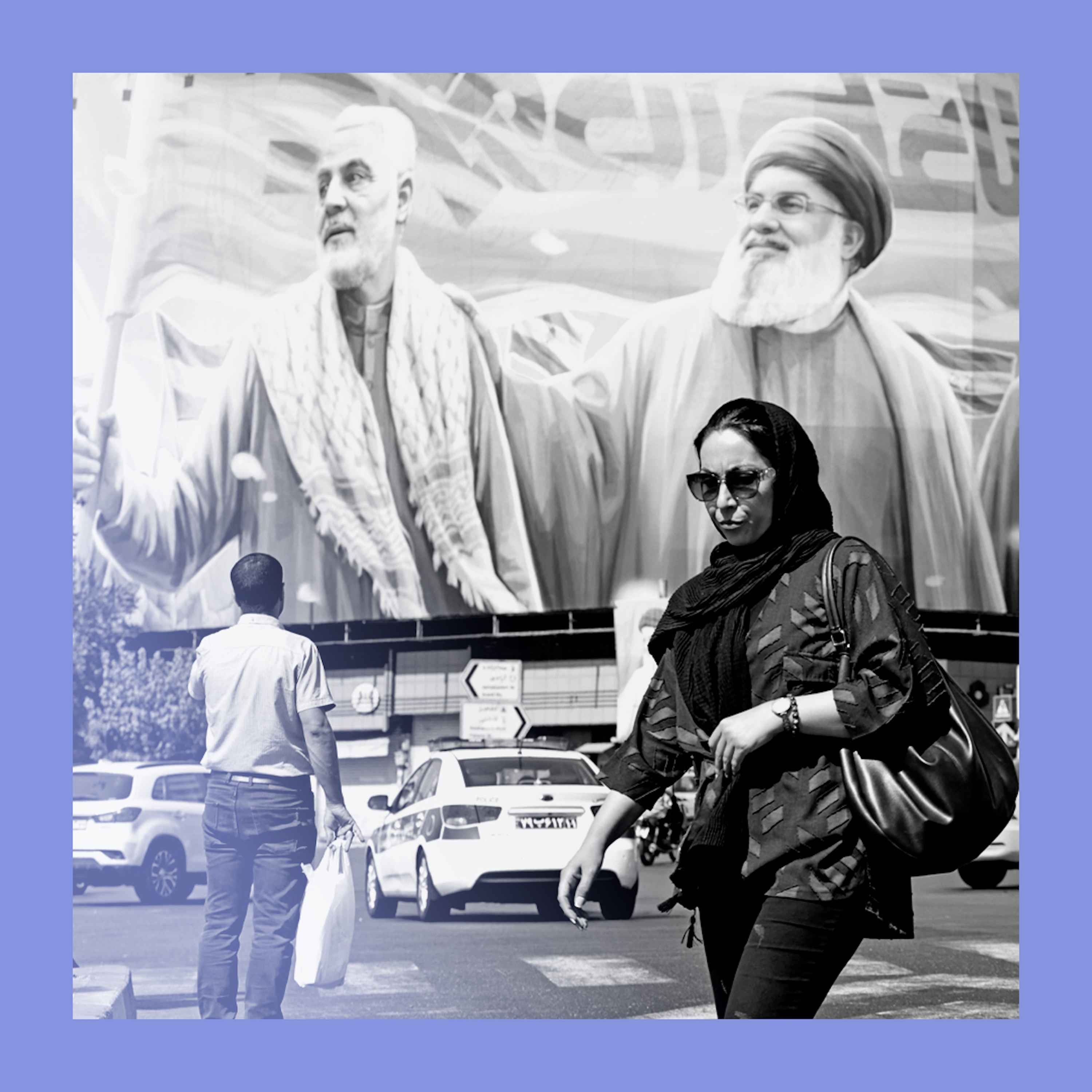
Widespread suffering alone doesn't trigger a revolution. Historically, successful uprisings require a politically savvy, well-organized group with a clear agenda and influential leadership. Disparate and unorganized populations, no matter how desperate, tend to see their energy dissipate without causing systemic change.

A clean, external removal of Iran's leadership, similar to what occurred in Venezuela, is unlikely. Iran's population is nearly four times larger, it is geographically distant, and the American political psyche associates the Middle East with costly military entanglements, creating a much higher barrier to intervention.
While the operation occurred in Venezuela, its primary psychological impact may be on Iran. The Iranians are reportedly "terrified," viewing the successful removal of a hostile leader as a direct threat and a plausible preview of future U.S. action against them.

An obsessive focus on internal political battles creates a critical geopolitical vulnerability. While a nation tears itself apart with divisive rhetoric, strategic adversaries like China benefit from the distraction and internal weakening. This domestic infighting accelerates the erosion of the nation's global influence and power.

In times of extreme polarization, the political middle is not a safe haven but a kill zone. Moderates are targeted by both sides because they have no tribe to defend them. The escalating cost of neutrality forces everyone to pick a side, eliminating compromise and accelerating conflict.

The progression of protest slogans from demanding a vote recount in 2009 ('Where is my vote?') to calling for regime overthrow today ('Death to the supreme leader') indicates a fundamental change. Protestors no longer seek to work within the existing system but aim to dismantle it entirely.
Dara Khosrowshahi theorizes the Shah of Iran's regime collapsed because he modernized too fast, focused excessively on military power over industrial growth, and failed to bring along rural populations and integrate Islam into his vision, creating a power vacuum for the Islamic regime to exploit.

Geopolitical adversaries with long-term leadership, like Iran, view the U.S.'s frequent changes in administration as a temporary inconvenience rather than a fundamental policy shift. They see the U.S. as an "obnoxious guy on the bus" whom they can simply ignore and outlast by staying their course.

Facing severe economic pressure from sanctions and inflation, the Iranian government has relaxed enforcement of the hijab law. This is a calculated concession to appease the population and release social pressure, effectively trading social freedom for economic stability without ceding significant political power.