Get your free personalized podcast brief
We scan new podcasts and send you the top 5 insights daily.
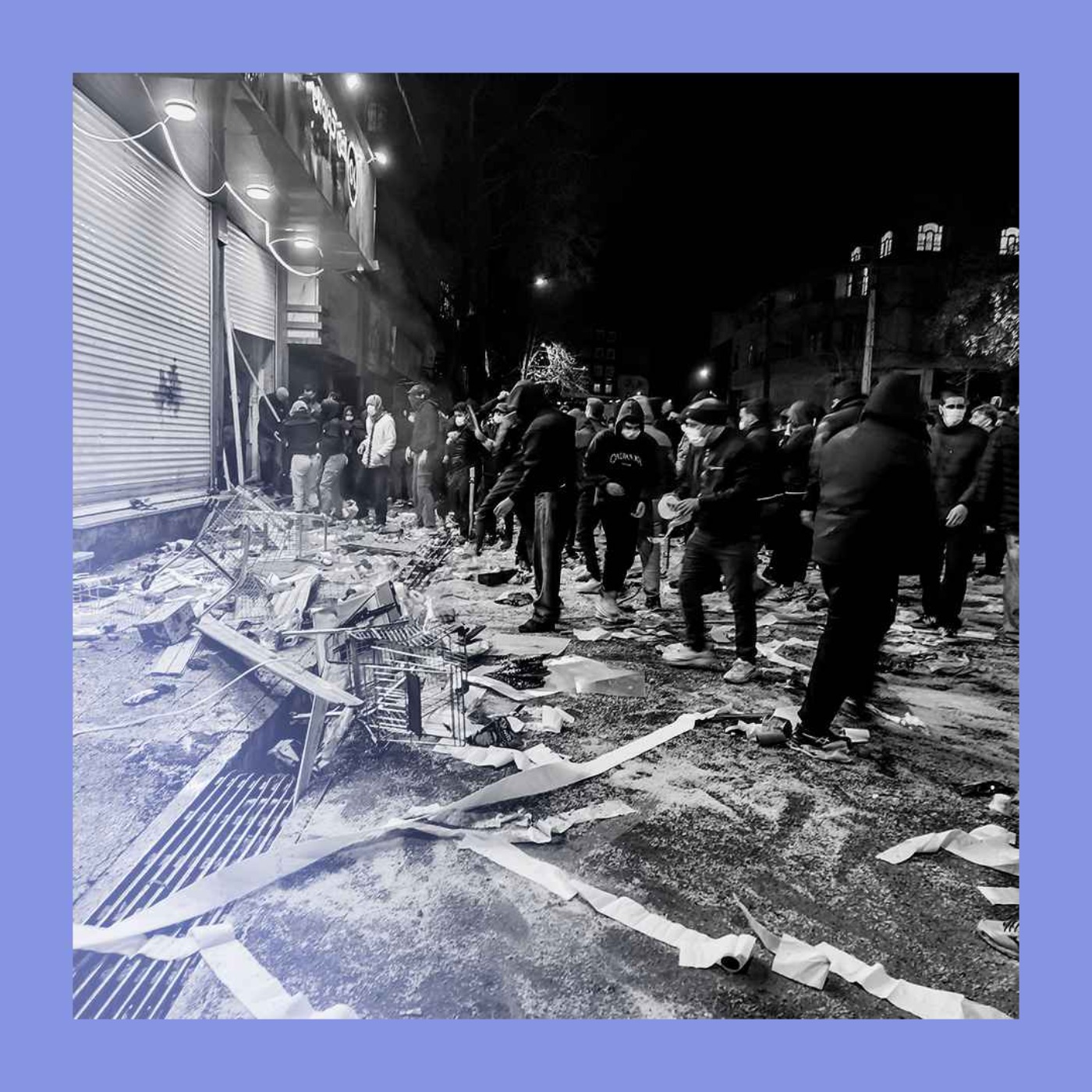
An entrepreneur established a bank, offered high interest rates to attract deposits, and then loaned the majority of that money to his own construction companies. The resulting collapse was so massive (requiring a $5 billion infusion) that it forced the government to amend the national budget, fueling public rage against systemic corruption.

Related Insights
A financial journalist warns that rapid growth in a new bank can be a red flag. It often signifies aggressive lending to win market share, but the quality of those loans and associated risks may not become apparent for several years. This makes fast-growing banks, like the new tech-focused Erbador Bank, a source of cautious skepticism.

The South Sea Bubble wasn't just a market mania; it was enabled by government corruption. Directors secretly gave shares to government officials who, in turn, had a direct financial incentive to keep the share price rising, regardless of the cost to the nation. This highlights how state actors can be complicit in creating systemic risk.

JPMorgan CEO Jamie Dimon highlighted Turkey as a case study where political pressure to cut interest rates led to a collapse in confidence and crippling 80% inflation. This demonstrates that a central bank's independence from politics is critical for maintaining economic stability.

The recent unrest originated with merchants in Tehran's Grand Bazaar, a group that prioritizes stability. Their protests highlight the crisis's economic roots: inability to access hard currency for imports, rampant inflation, and collapsing consumer demand, making business untenable for even multi-million dollar traders.
The creation of the Bank of England and John Law's monetary schemes were not academic exercises. They were desperate measures to solve the massive national debts accumulated by England and France from decades of war, showing how fiscal crisis is a powerful catalyst for financial innovation.

The city wasn't simply bad at accounting; it effectively had no centralized system. Finances were tracked on scraps of paper and in drawers, making it impossible to know the true state of its debt. This systemic failure, not just policy choices, made the collapse inevitable.
The system often blamed as capitalism is distorted. True capitalism requires the risk of failure as a clearing mechanism. Today's system is closer to cronyism, where government interventions like bailouts and regulatory capture protect established players from failure.

During its boom, Japan's industrial policy and close bank-firm relationships were admired as strengths. After the bubble burst, these same traits were immediately relabeled as crony capitalism and systemic flaws, showing how quickly dominant narratives about national economic models can invert.
Unlike countries with no recent memory of economic collapse, nations like Greece, Spain, and Italy—and potentially now Argentina—that have endured hyperinflation are more likely to elect reformist governments. The population internalizes the cost of fiscal irresponsibility and votes to avoid repeating the disaster.
While US sanctions are a factor, the Iranian currency's freefall is largely due to structural corruption. The economy is dominated by the military and clerical foundations, a political-economic model that stifles growth and fuels public anger—a problem sanctions relief alone cannot solve.