Get your free personalized podcast brief
We scan new podcasts and send you the top 5 insights daily.
The Taliban's supreme leader has consolidated control not just ideologically, but by directing revenue from mining contracts to himself and building a private 8,000-fighter force in Kandahar, loyal only to him. This bypasses the formal government structures in Kabul and marginalizes more moderate factions.

Related Insights
Iran's Islamic Revolutionary Guard Corps (IRGC) isn't funded by the state budget. It operates a global network of front companies for construction and other projects, laundering money to create a self-sustaining financial ecosystem. If the regime collapses, the IRGC would likely persist as a heavily-armed mafia with international criminal ties.

The Islamic Revolutionary Guard Corps (IRGC) has eclipsed the clergy, controlling major political and economic institutions. Ayatollah Khamenei maintains power through a symbiotic relationship with the IRGC, leveraging their military and economic might, rather than just religious authority.

The current conflict between Pakistan and Afghanistan is complicated by a history of shifting alliances. Many Taliban leaders now being targeted by Pakistan's military once found refuge in Pakistan with the support of the country's security services during the US and NATO mission in Afghanistan, illustrating the region's complex dynamics.
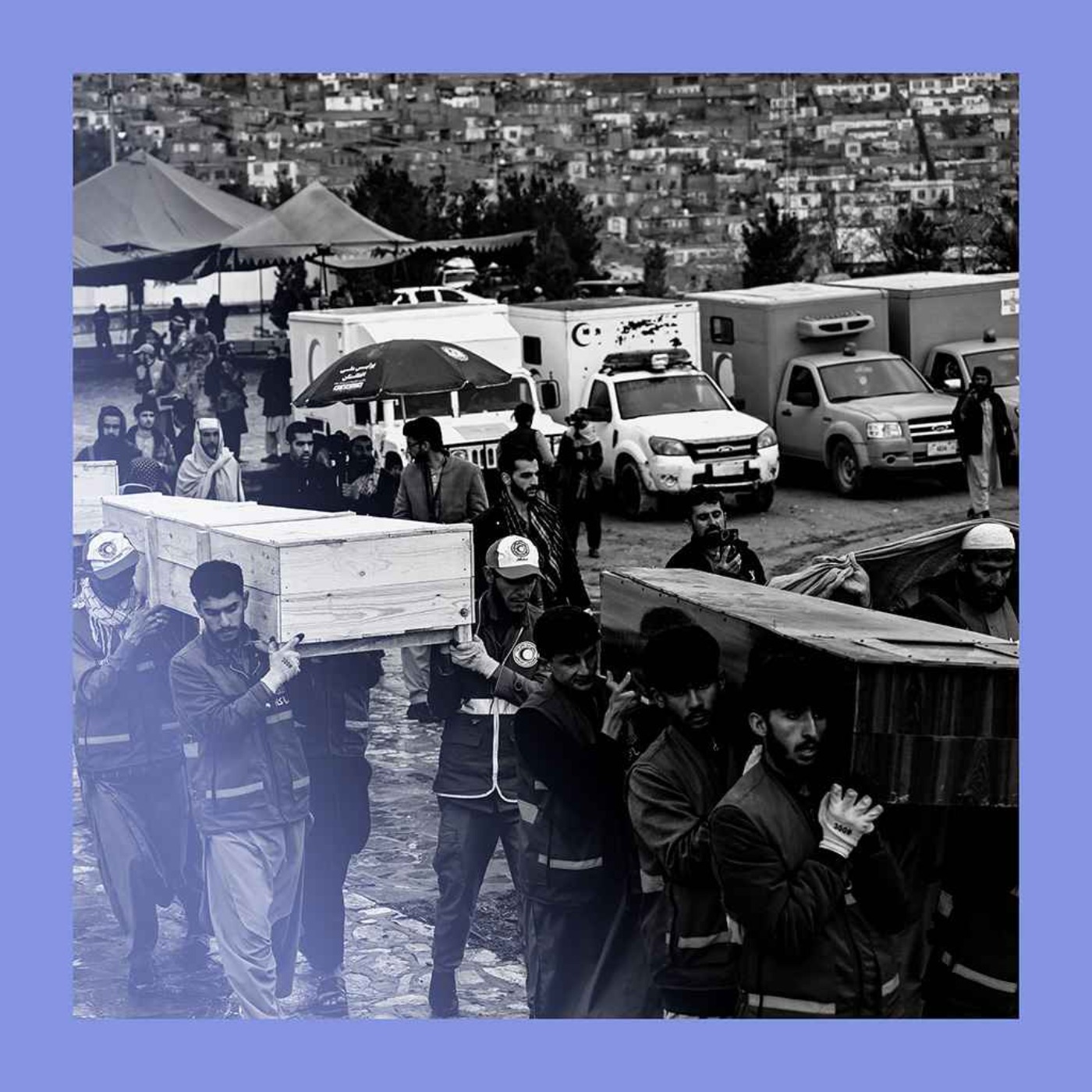
In mass movements and wars of attrition, having a charismatic leader is less critical than having a clearly defined enemy. As long as a figure like "the West" or the U.S. can be framed as the devil, the movement can sustain itself, even without a central figurehead to rally around.

While the Taliban's firm grip on power has drastically reduced violence and brought a sense of peace to daily life, it has come at a severe cost. The economy has collapsed, leaving many in deep poverty, struggling for food, and unemployed, creating a grim trade-off for the Afghan people.
The IRGC isn't just a military force; it's a paramilitary organization with near-monopolistic control over Iran's key economic sectors, from telecom to banking. This deep economic entrenchment makes it a uniquely powerful and resilient entity, capable of turning strategic chokepoints like the Strait of Hormuz into a personal toll booth.

The Islamic Revolutionary Guard Corps (IRGC), Iran's most powerful institution, is the true kingmaker. A Supreme Leader without the IRGC's backing is effectively powerless, regardless of constitutional or religious standing. This makes any assassination of the leader a less effective strategy for regime change.
The West's five-year strategy of using sanctions, reduced aid, and frozen assets to pressure the Taliban into moderation has not worked. This failure is forcing a reluctant strategic shift, with countries now engaging on issues like migration and counter-terrorism out of necessity.
The Revolutionary Guards leverage their military power for economic gain. In one instance, after losing a bid to operate a new airport, they drove armored vehicles onto the runway and scrambled a fighter jet to prevent planes from landing until the foreign contract was cancelled and state firms took over.

Iran maintains two distinct military forces. The national army's role is to defend Iran's borders. In contrast, the Islamic Revolutionary Guard Corps (IRGC) is an ideological army accountable only to the Supreme Leader, tasked with protecting the revolution and its proxies abroad.