Get your free personalized podcast brief
We scan new podcasts and send you the top 5 insights daily.
The Islamic Revolutionary Guard Corps (IRGC), Iran's most powerful institution, is the true kingmaker. A Supreme Leader without the IRGC's backing is effectively powerless, regardless of constitutional or religious standing. This makes any assassination of the leader a less effective strategy for regime change.

Related Insights
The IRGC increasingly wields the true power in Iran, while the Supreme Leader's role is becoming more symbolic. He serves as a "sacred totem" and a "lightning rod for criticism" but is ultimately a facilitator of IRGC influence rather than a check on its power.
The Islamic Revolutionary Guard Corps (IRGC) has eclipsed the clergy, controlling major political and economic institutions. Ayatollah Khamenei maintains power through a symbiotic relationship with the IRGC, leveraging their military and economic might, rather than just religious authority.
While Mojtaba Khamenei is now supreme leader, his actual control is questionable. Iran is navigating a wartime transition with leaders in hiding, allowing factions like the Revolutionary Guard to vie for influence and pull the strings, suggesting a period of fragmented authority.
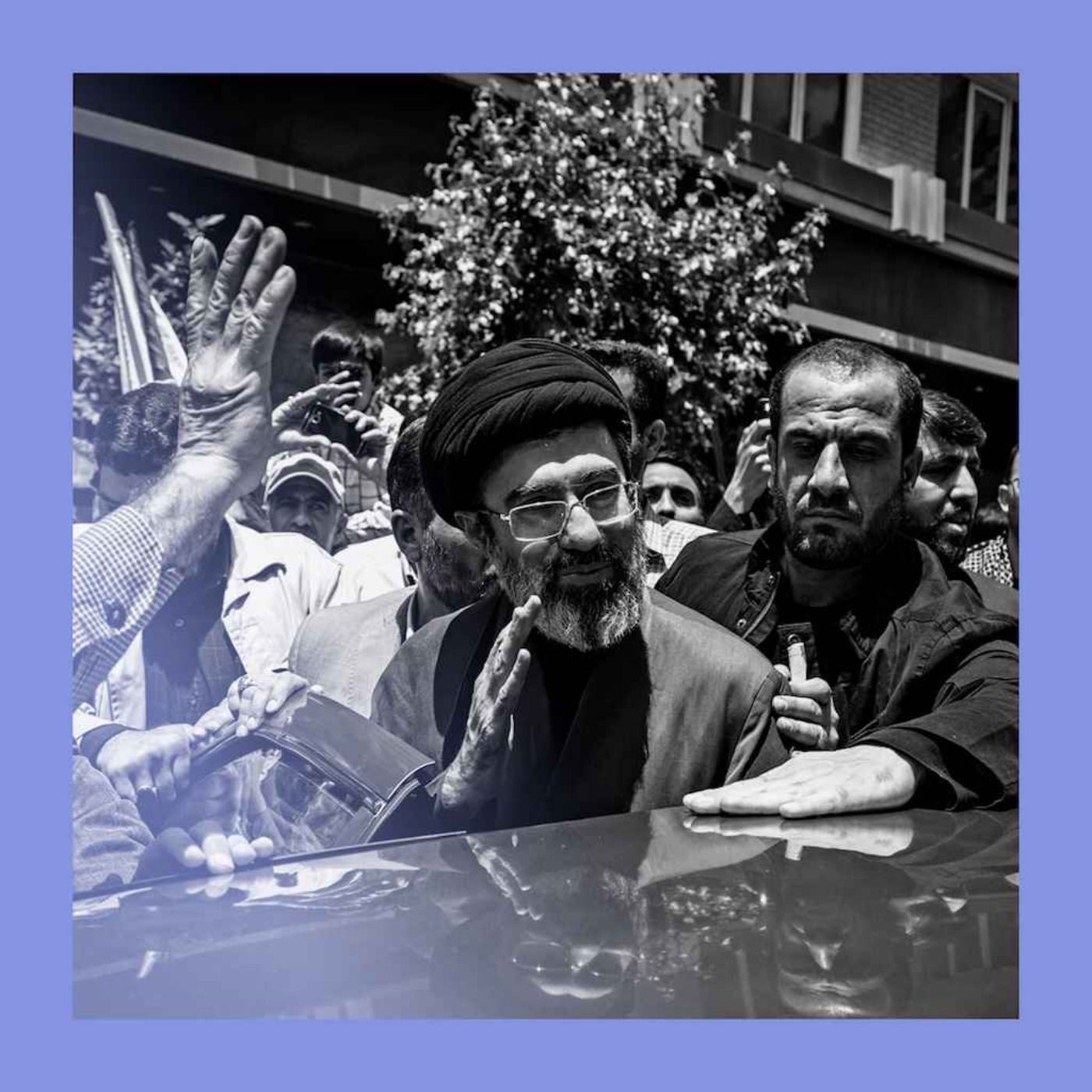
Unlike regimes centered on a single dictator like Saddam Hussein, Iran's power structure is a complex, institutionalized relationship between its clerical and military establishments. This distributed power makes the regime resilient to 'decapitation' strikes aimed at killing senior leaders, as there is no single point of failure.

The Trump administration's apparent strategy of decapitating leadership to find a compliant successor is unlikely to work in Iran. Unlike Venezuela, Iran's power is deeply institutionalized, it lacks an obvious cooperative figure, and potential US targets for that role have already been eliminated.
Beyond being the IRGC's favored candidate, Mojtaba Khamenei's selection was pragmatic. As his father's right-hand man, he intimately understands the complex business and institutional mechanics of the Supreme Leader's office, allowing him to "hit the ground running" during a crisis.
Iran has anticipated leadership decapitation strikes for decades, building a resilient and distributed command and control infrastructure. This allows its forces, particularly the IRGC, to continue operating and launching attacks even without direct contact with headquarters.

The Iranian populace is exhausted with theocratic rule after five decades. Any future authoritarian leader will likely be a product of the intelligence or security services, appealing to nationalism rather than revolutionary ideology. The era of the turban-wearing ruler is over.
A U.S. military strike to remove Ayatollah Khamenei is unlikely to help protesters. Analysis suggests it would more likely result in the Revolutionary Guard seizing control or other regime remnants continuing the fight, ultimately failing to satisfy the opposition and potentially worsening the civil conflict.
Iran maintains two distinct military forces. The national army's role is to defend Iran's borders. In contrast, the Islamic Revolutionary Guard Corps (IRGC) is an ideological army accountable only to the Supreme Leader, tasked with protecting the revolution and its proxies abroad.
