Get your free personalized podcast brief
We scan new podcasts and send you the top 5 insights daily.
The IRGC isn't just a military force; it's a paramilitary organization with near-monopolistic control over Iran's key economic sectors, from telecom to banking. This deep economic entrenchment makes it a uniquely powerful and resilient entity, capable of turning strategic chokepoints like the Strait of Hormuz into a personal toll booth.

Related Insights
Iran's Islamic Revolutionary Guard Corps (IRGC) isn't funded by the state budget. It operates a global network of front companies for construction and other projects, laundering money to create a self-sustaining financial ecosystem. If the regime collapses, the IRGC would likely persist as a heavily-armed mafia with international criminal ties.

The IRGC increasingly wields the true power in Iran, while the Supreme Leader's role is becoming more symbolic. He serves as a "sacred totem" and a "lightning rod for criticism" but is ultimately a facilitator of IRGC influence rather than a check on its power.

Despite sanctions, Iran's decentralized oil-selling operation, involving groups like the IRGC and using front companies and small Chinese banks, is thriving. By exploiting higher global oil prices caused by blocked shipping lanes, the regime is now earning nearly twice its pre-war revenue, showcasing the resilience and sophistication of its sanction-evasion tactics.
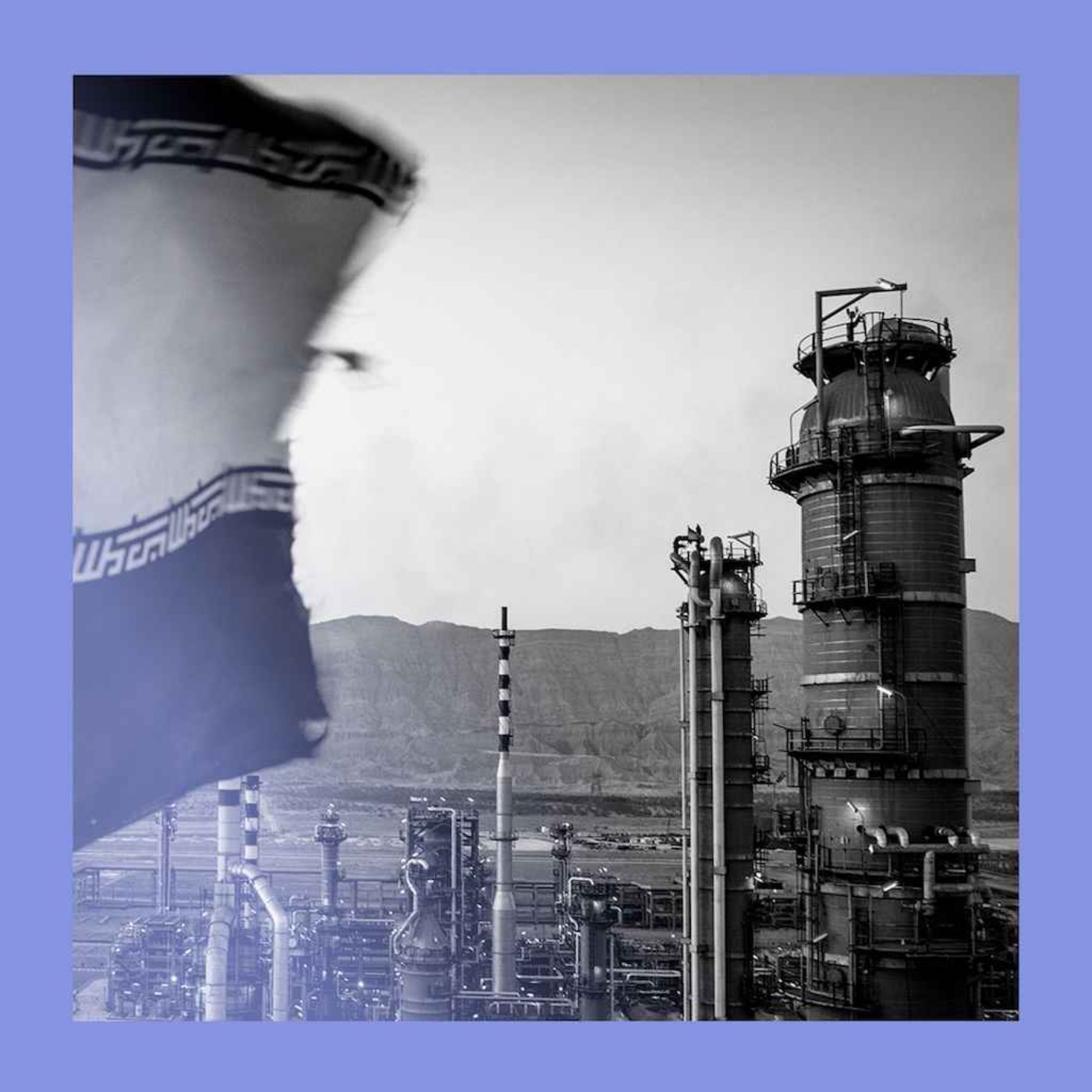
The Islamic Revolutionary Guard Corps (IRGC) has eclipsed the clergy, controlling major political and economic institutions. Ayatollah Khamenei maintains power through a symbiotic relationship with the IRGC, leveraging their military and economic might, rather than just religious authority.
A likely outcome of the conflict is Iran establishing control over the Strait of Hormuz and charging tolls for passage. This would mirror Russia's control over the Northern Sea Route, fundamentally altering freedom of navigation and creating a new economic reality where a state actor monetizes a critical global chokepoint.

Engaging only with formal Iranian negotiators while ignoring hardliner factions like the Islamic Revolutionary Guard Corps (IRGC) leads to failed diplomacy. The IRGC is the true power center in Iran, and any agreement made without their buy-in is unlikely to be honored or effective, as they control the actual military assets.
The Islamic Revolutionary Guard Corps (IRGC), Iran's most powerful institution, is the true kingmaker. A Supreme Leader without the IRGC's backing is effectively powerless, regardless of constitutional or religious standing. This makes any assassination of the leader a less effective strategy for regime change.
Iran's victory condition isn't military dominance but strategic disruption. By using asymmetric warfare—mines, drones, and missiles—to create chaos in the Strait of Hormuz, it can halt the flow of oil. This cracks the petrodollar system and achieves its primary geopolitical objective without needing to defeat the US Navy in a conventional battle.
Widespread protests are fueled by everyday grievances like poverty and environmental destruction. These issues trace back to the Islamic Revolutionary Guard Corps (IRGC) systematically extorting and taking over successful private businesses, creating a corrupt and inefficient economy that angers the populace.
Despite significant military losses, Iran is successfully leveraging its control over the Strait of Hormuz. This asymmetric strategy chokes global energy markets, creating economic pain that Western nations may be less willing to endure than Iran, potentially snatching a strategic victory from a tactical defeat.
