Get your free personalized podcast brief
We scan new podcasts and send you the top 5 insights daily.
Unlike the de-Ba'athification in Iraq, the proposed transition for Iran includes a path for members of the current military and bureaucracy. Those who did not commit atrocities will be offered roles or retirement, a strategy designed to ensure stability and prevent a power vacuum.

Related Insights
Meaningful reform in Iran is unlikely until the succession of the 86-year-old Supreme Leader is resolved. Deep uncertainty over who will hold power paralyzes the political system, preventing any faction from making significant changes and forcing the country into a holding pattern until the leadership transition occurs.
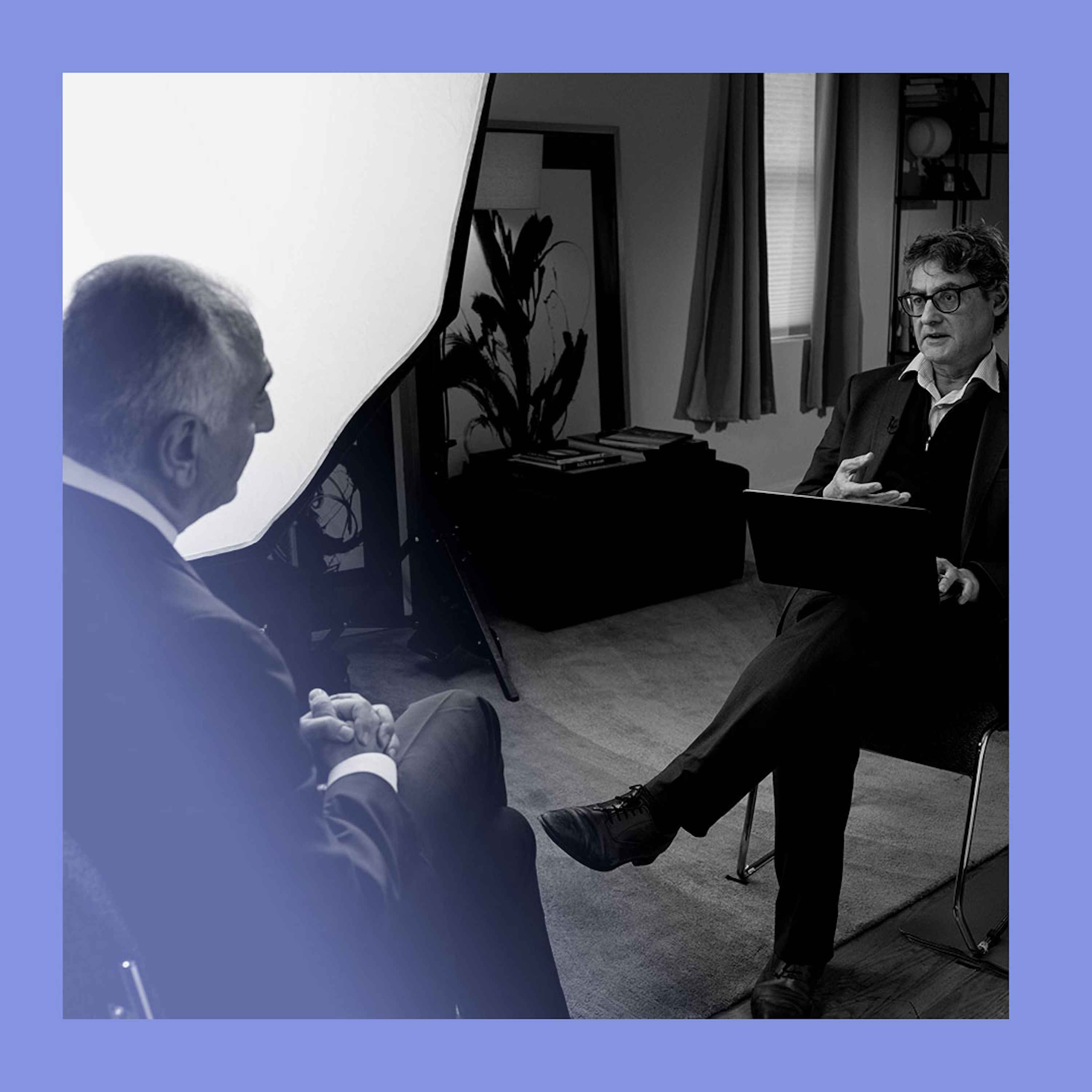
Pahlavi stresses his focus is on the democratic process, not the outcome. He defines his role as a unifying figure to guide Iran toward free elections, where the populace will choose their system of government. He explicitly states he is not seeking personal power or a specific office.
After deposing a leader, the success of a foreign intervention hinges on whether the nation retains enough competent bureaucrats, engineers, and judges with experience in a functioning, democratic society to rebuild. Without this institutional memory, the state will likely collapse into chaos.

Historical data since World War II shows that when authoritarian regimes fall, they lead to a stable democracy only about 20% of the time. The most common outcome—in over 80% of cases—is the replacement of one authoritarian system with another, a sobering statistic for post-regime change planning in countries like Iran.

Unlike regimes centered on a single dictator like Saddam Hussein, Iran's power structure is a complex, institutionalized relationship between its clerical and military establishments. This distributed power makes the regime resilient to 'decapitation' strikes aimed at killing senior leaders, as there is no single point of failure.
The Trump administration's apparent strategy of decapitating leadership to find a compliant successor is unlikely to work in Iran. Unlike Venezuela, Iran's power is deeply institutionalized, it lacks an obvious cooperative figure, and potential US targets for that role have already been eliminated.

Contrary to a "burn-it-all-down" revolutionary approach, Reza Pahlavi proposes a pragmatic transition. He plans to incorporate existing state institutions, including the Islamic Revolutionary Guard Corps (IRGC), into his vision for a new national army to ensure stability and state function.
With its credibility destroyed by bloodshed, the Iranian regime's only remaining leverage over some citizens is the fear of a chaotic power vacuum. The prospect of a full-blown civil war may convince some to tolerate the current oppression over the alternative of total state collapse.
The Iranian populace is exhausted with theocratic rule after five decades. Any future authoritarian leader will likely be a product of the intelligence or security services, appealing to nationalism rather than revolutionary ideology. The era of the turban-wearing ruler is over.
By leaving the existing Chavista power structure largely intact after removing Maduro, the U.S. is applying a key lesson from Iraq: avoiding a power vacuum and the chaos of de-Ba'athification is paramount for stability.