Get your free personalized podcast brief
We scan new podcasts and send you the top 5 insights daily.
Pahlavi stresses his focus is on the democratic process, not the outcome. He defines his role as a unifying figure to guide Iran toward free elections, where the populace will choose their system of government. He explicitly states he is not seeking personal power or a specific office.

Related Insights
Reza Pahlavi, the exiled son of the last Shah, has become a legitimate political figure. This surprising resurgence is not organic but driven by a decade of well-produced, mysteriously-funded satellite TV documentaries romanticizing the pre-revolution era for Iran's large, young population.

Young Iranians, with no memory of the Shah's era, embrace a romanticized vision of pre-1979 Iran's social freedoms and global standing. This nostalgia, combined with the regime's suppression of internal leaders, has elevated Reza Pahlavi as a symbolic, default leader for a nationalist reclamation.

Unusually, Reza Pahlavi's supporters are already turning on their coalition partners. They've launched online hate campaigns to crush alternative power centers within the opposition movement, a tactic typically reserved for consolidating power *after* a successful revolution, not during the struggle.
Reza Pahlavi outlines a clear, four-point platform required for any group to join the post-regime alliance: maintaining Iran's territorial integrity, a strict separation of religion and state, equality for all citizens under the rule of law, and a transparent democratic process.
Contrary to a "burn-it-all-down" revolutionary approach, Reza Pahlavi proposes a pragmatic transition. He plans to incorporate existing state institutions, including the Islamic Revolutionary Guard Corps (IRGC), into his vision for a new national army to ensure stability and state function.
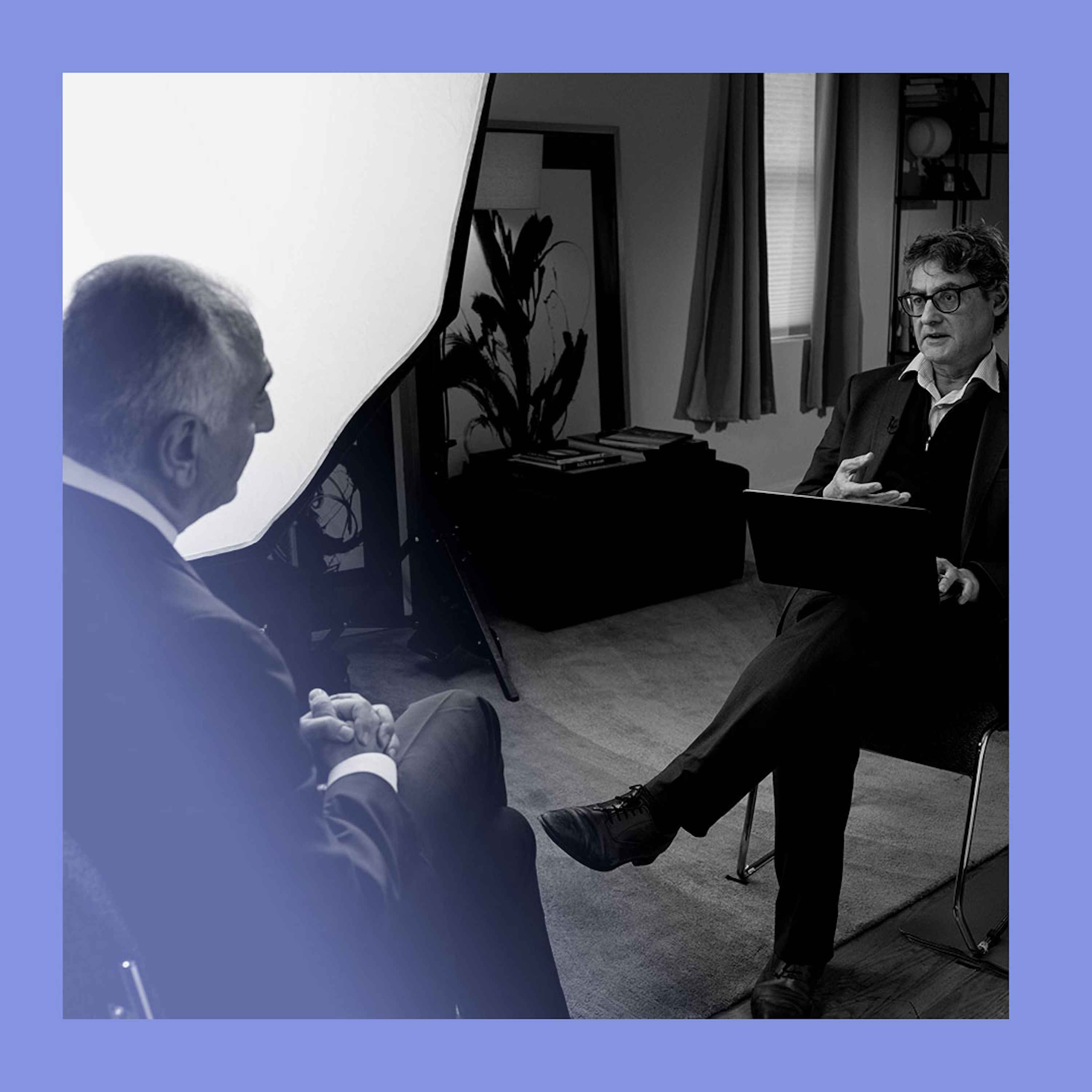
Reza Pahlavi's strategy is not based on domestic uprising alone. He believes protestors are "sacrificial lambs" who cannot succeed without direct American military intervention, framing them as a "fort waiting for the cavalry." This dependence makes his plan vulnerable to US political shifts.
Shervin Peshavar frames the modern fight for a democratic Iran within a 2,500-year historical context. He connects the principles of human rights from Persian king Cyrus the Great to the American Declaration of Independence via Thomas Jefferson, arguing the current movement continues this ancient legacy.
The Iranian populace is exhausted with theocratic rule after five decades. Any future authoritarian leader will likely be a product of the intelligence or security services, appealing to nationalism rather than revolutionary ideology. The era of the turban-wearing ruler is over.
Unlike the de-Ba'athification in Iraq, the proposed transition for Iran includes a path for members of the current military and bureaucracy. Those who did not commit atrocities will be offered roles or retirement, a strategy designed to ensure stability and prevent a power vacuum.
Prince Reza Pahlavi frames Iran's transition in economic terms, arguing it's the 21st century's most significant untapped market. He estimates a democratic Iran could generate one trillion dollars for the U.S. market alone in the first decade through reconstruction, investment, and trade.