Get your free personalized podcast brief
We scan new podcasts and send you the top 5 insights daily.
Historical data since World War II shows that when authoritarian regimes fall, they lead to a stable democracy only about 20% of the time. The most common outcome—in over 80% of cases—is the replacement of one authoritarian system with another, a sobering statistic for post-regime change planning in countries like Iran.

Related Insights
Meaningful reform in Iran is unlikely until the succession of the 86-year-old Supreme Leader is resolved. Deep uncertainty over who will hold power paralyzes the political system, preventing any faction from making significant changes and forcing the country into a holding pattern until the leadership transition occurs.
Data reveals an "inverted U-shape" for political and economic stability. Both strong democracies and full autocracies are relatively stable. The most dangerous and volatile environment for business and society is the “anocracy” in the middle, which suffers from lower growth, lower investment, and higher rates of violence.

After deposing a leader, the success of a foreign intervention hinges on whether the nation retains enough competent bureaucrats, engineers, and judges with experience in a functioning, democratic society to rebuild. Without this institutional memory, the state will likely collapse into chaos.

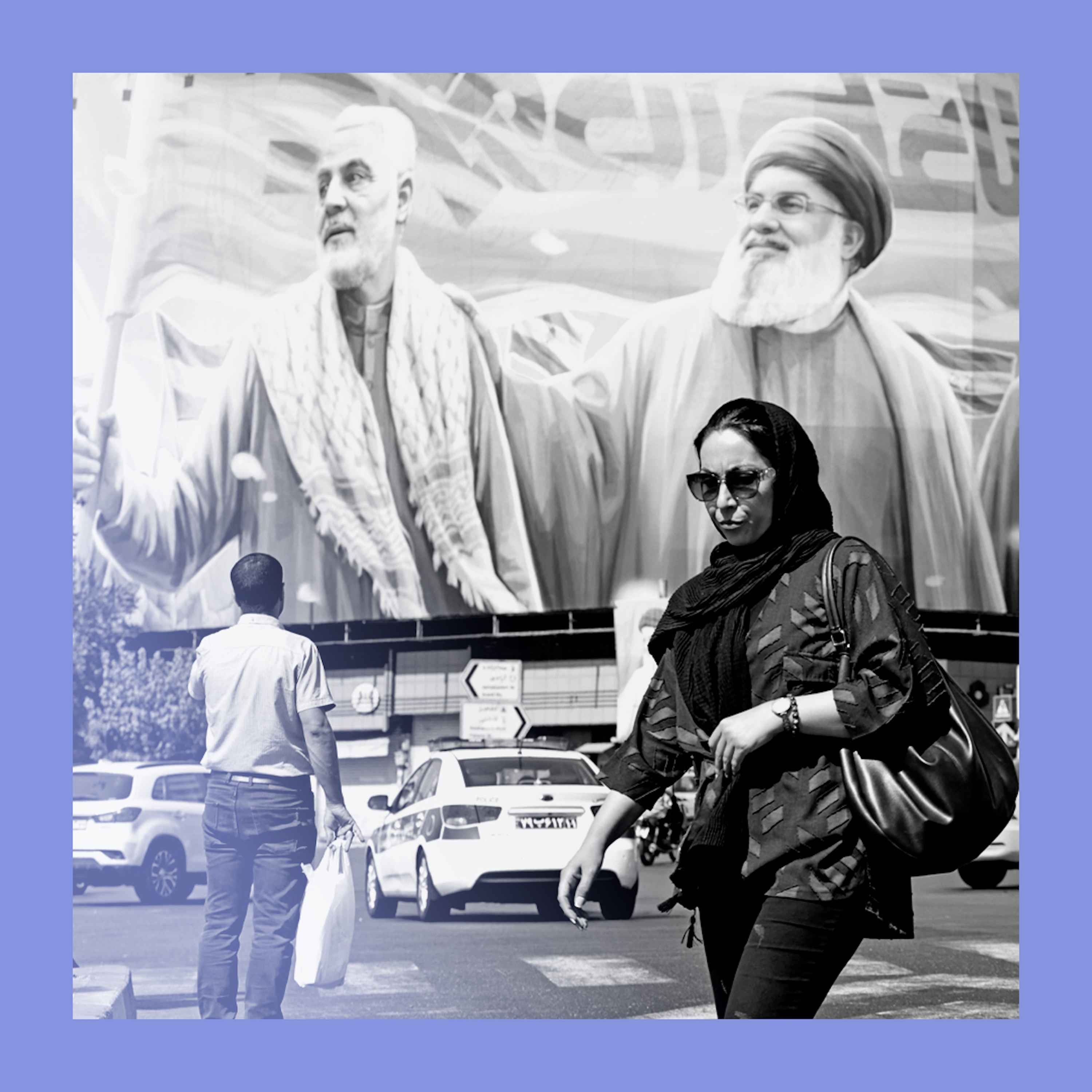
Despite widespread protests, Iran's repressive state apparatus is highly effective and has shown no signs of cracking. The probability of the regime collapsing from internal pressure alone is extremely low. Niall Ferguson argues that only external intervention, a form of 'regime alteration,' can realistically topple the Islamic Republic.

Authoritarian leaders like Hugo Chavez systematically dismantle democracy from within after winning elections. They replace competent individuals in the military and government with those who are absolutely loyal, destroying meritocracy to ensure the state apparatus serves the regime, not the people.

Once a country falls into the unstable “anocracy” zone, its chances of recovery are slim, with only 20% returning to a full democracy. Data shows this reversal, or "U-turn," must happen quickly, typically within a single electoral cycle of five to eight years. The longer a nation lingers, the harder it is to escape.
The Iranian populace is exhausted with theocratic rule after five decades. Any future authoritarian leader will likely be a product of the intelligence or security services, appealing to nationalism rather than revolutionary ideology. The era of the turban-wearing ruler is over.

Dara Khosrowshahi theorizes the Shah of Iran's regime collapsed because he modernized too fast, focused excessively on military power over industrial growth, and failed to bring along rural populations and integrate Islam into his vision, creating a power vacuum for the Islamic regime to exploit.

Despite rhetoric supporting protesters in Iran and Venezuela, the Trump administration's actions suggest a preference for replacing existing leaders with more compliant strongmen. In Venezuela, this meant dealing with Maduro's VP, indicating a pragmatic focus on control and stability over messy, long-term nation-building.

Unlike nascent revolutionary states that rally against foreign attacks, late-stage dictatorships are weakened by military defeats. Iran's recent humiliations by Israel and the US have exposed incompetence and eroded the public's perception of strength, fueling protests and accelerating the regime's demise.