Get your free personalized podcast brief
We scan new podcasts and send you the top 5 insights daily.
Designing small drones is counter-intuitively harder than larger aircraft because engineers cannot simply add weight—like a larger heat sink—to solve physical constraints like thermals or vibrations. Every component must be optimized to the absolute limits of physics, making miniaturization an extreme engineering game.

Related Insights
A drone's dock is a complex engineering challenge, functioning as a commercial-grade HVAC system. It must keep the lithium-ion batteries within their optimal temperature range—whether it's snowing or scorching hot—to ensure the drone is always ready for dispatch.

In defense technology, smaller is often better. The ideal platform is the most compact one that can still perform its intended mission. This approach provides significant advantages in stealth, manufacturing cost, logistical footprint, and speed of proliferation.

While space offers abundant solar power, the common belief that cooling is "free" is a misconception. Dissipating processor heat is extremely difficult in a vacuum without a medium for convection, making it a significant material science and physics problem, not a simple passive process.

Simply replacing jet engines with electric motors on current aircraft designs is ineffective. The extreme weight of batteries demands a complete redesign from the ground up, optimizing the entire airframe to accommodate a fundamentally different and heavier energy source.

The inefficiency of using a 4,000-pound gas vehicle for a 5-pound delivery ensures drone delivery will eventually be far cheaper. This physics-based argument underpins the entire business model's long-term economic viability.

While using advanced digital modeling, Jet Zero gets crucial, rapid feedback by mounting scale models on a truck and driving down a runway. This "cheapest wind tunnel on the planet" demonstrates the irreplaceable value of physical, iterative testing for complex hardware development.

Zipline's CEO argues from first principles that current delivery logistics are absurdly inefficient. Replacing a human-driven, gas-powered car with a small, autonomous electric drone is not just an incremental improvement but a fundamental paradigm shift dictated by physics.

Zipline's 50% cost reduction for its next-gen aircraft wasn't just from supply chain optimization. The primary driver was a design philosophy focused on eliminating components entirely ("the best part is no part"), which also improves reliability.

Counterintuitively, space's vacuum acts as a powerful insulator (like a thermos), preventing heat dissipation through convection. This forces reliance on less efficient infrared radiation. The engineering challenge is maximizing this radiation, not leveraging the coldness of space.

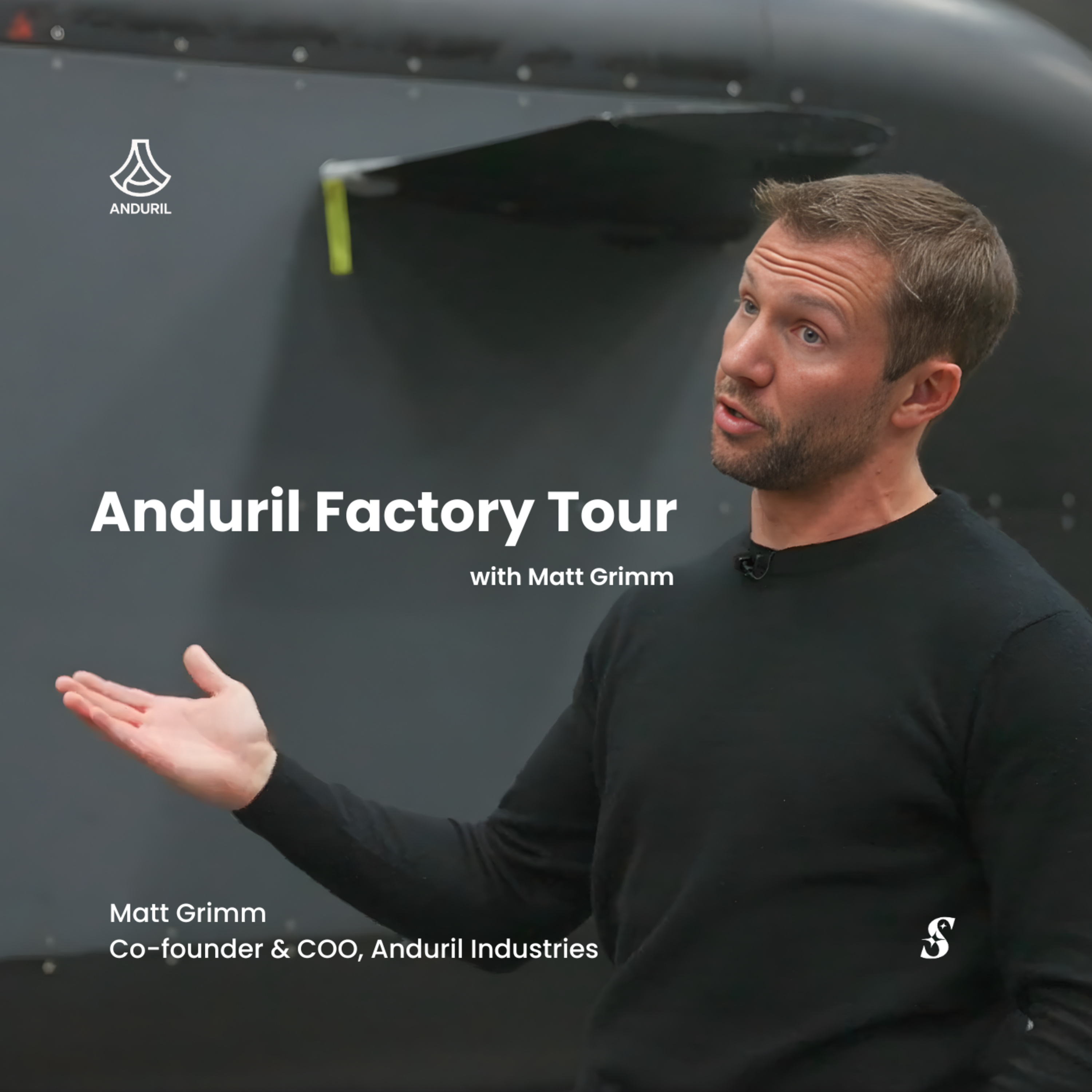
Anduril prototypes drone frames by milling them from solid metal blocks. While extremely wasteful and expensive for mass production, this method bypasses the slow and costly process of creating molds for casting, drastically reducing latency during the critical iterative design phase and getting products to market faster.