Get your free personalized podcast brief
We scan new podcasts and send you the top 5 insights daily.
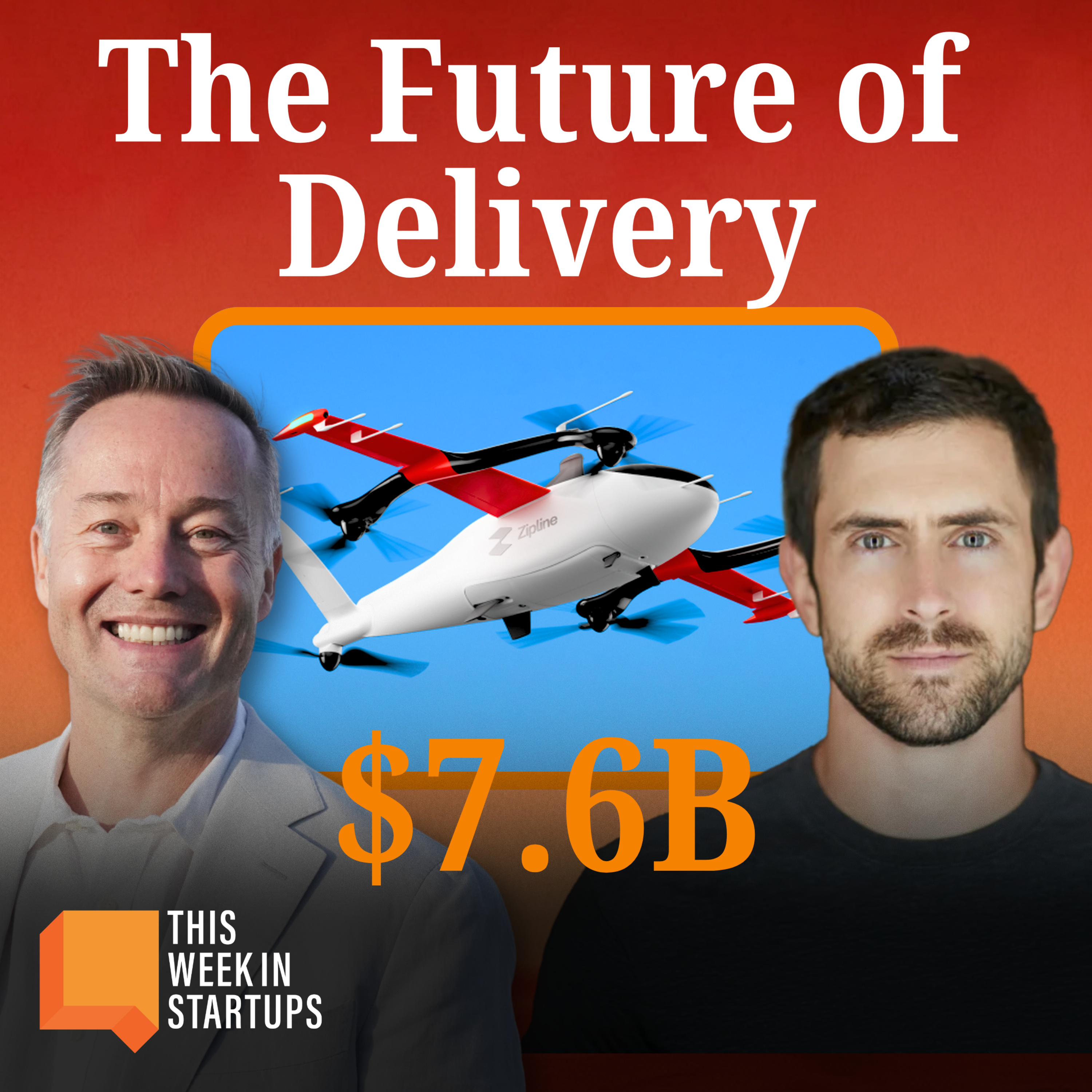
The inefficiency of using a 4,000-pound gas vehicle for a 5-pound delivery ensures drone delivery will eventually be far cheaper. This physics-based argument underpins the entire business model's long-term economic viability.
Related Insights
As autonomous vehicles drop the per-mile cost of ride-sharing to under $1, it will become cheaper than owning a car. This price drop will induce massive demand, shifting most transportation to these networks and creating a market exponentially larger than the current industry.
Rather than just replacing drivers, autonomy will allow logistics to operate 24/7 during the midnight-to-8am "third shift." This will dramatically increase the world's operational intensity and create new demand as automation drives down costs and enables services that were previously too expensive.

Creating the Dot delivery robot wasn't just a hardware challenge. DoorDash had to build the vehicle hardware, a custom L4 autonomy software stack, integrate them, and then plug the entire system into its complex logistics and merchant platform—a multi-year, first-principles effort.

Zipline counters safety concerns by highlighting its zero-incident record over 135M miles, contrasting it with the hundreds of crashes and multiple fatalities cars would have over the same distance. This reframes drones as a safer alternative.
While many see autonomous vehicles as a threat to Uber's ride-hailing, its delivery segment may be more important and defensible. Automating last-mile delivery of goods from varied locations is significantly more complex and less economical than automating passenger transport, providing a durable moat.

The convergence of autonomous, shared, and electric mobility will drive the marginal cost of travel towards zero, resembling a utility like electricity or water. This shift will fundamentally restructure the auto industry, making personal car ownership a "nostalgic privilege" rather than a daily necessity for most people.

Zipline's CEO argues from first principles that current delivery logistics are absurdly inefficient. Replacing a human-driven, gas-powered car with a small, autonomous electric drone is not just an incremental improvement but a fundamental paradigm shift dictated by physics.

ARK Invest projects an $8-10 trillion market for autonomous ride-hailing, dwarfing the current ~$60B market of Uber and Lyft. This isn't just about replacing drivers; it's about a 4x cost reduction per mile (from ~$1.10 to $0.25). This dramatic price drop will absorb the entire transportation market, not just the existing ride-hailing segment.

The transition from selling cars to operating a RoboTaxi network transforms Tesla's business model. A car sold for a one-time $4,000 profit could generate $200,000 in profit over a five-year period as an autonomous taxi. This 100x increase in lifetime value per unit represents a massive financial unlock for the company.

The humanoid robot company 1X is pricing its Neo robot at $20,000 to buy or $500/month to rent. This price point is a major signal for the industry because it's already competitive with, or cheaper than, human labor for tasks like housekeeping. This makes economic viability a near-term reality, even before full autonomy is achieved.