Get your free personalized podcast brief
We scan new podcasts and send you the top 5 insights daily.
A drone's dock is a complex engineering challenge, functioning as a commercial-grade HVAC system. It must keep the lithium-ion batteries within their optimal temperature range—whether it's snowing or scorching hot—to ensure the drone is always ready for dispatch.

Related Insights
The paradigm for police drones is shifting from manually-flown tools to autonomous, dock-based systems. A drone can launch from a police station roof, fly to a 911 call location in seconds, and provide real-time situational awareness before human officers arrive, fundamentally changing emergency response.

Creating the Dot delivery robot wasn't just a hardware challenge. DoorDash had to build the vehicle hardware, a custom L4 autonomy software stack, integrate them, and then plug the entire system into its complex logistics and merchant platform—a multi-year, first-principles effort.

The founders initially focused on building the autonomous aircraft. They soon realized the vehicle was only 15% of the problem's complexity. The real challenge was creating the entire logistics ecosystem around it, from inventory and fulfillment software to new procedures for rural hospitals.
The seamless experience of an autonomous vehicle hides a complex backend. A subsidiary company, FlexDrive, manages a fleet for services like cleaning, charging, maintenance, and teleoperation. This "fleet management" layer represents a significant, often overlooked, part of the AV value chain and business model.

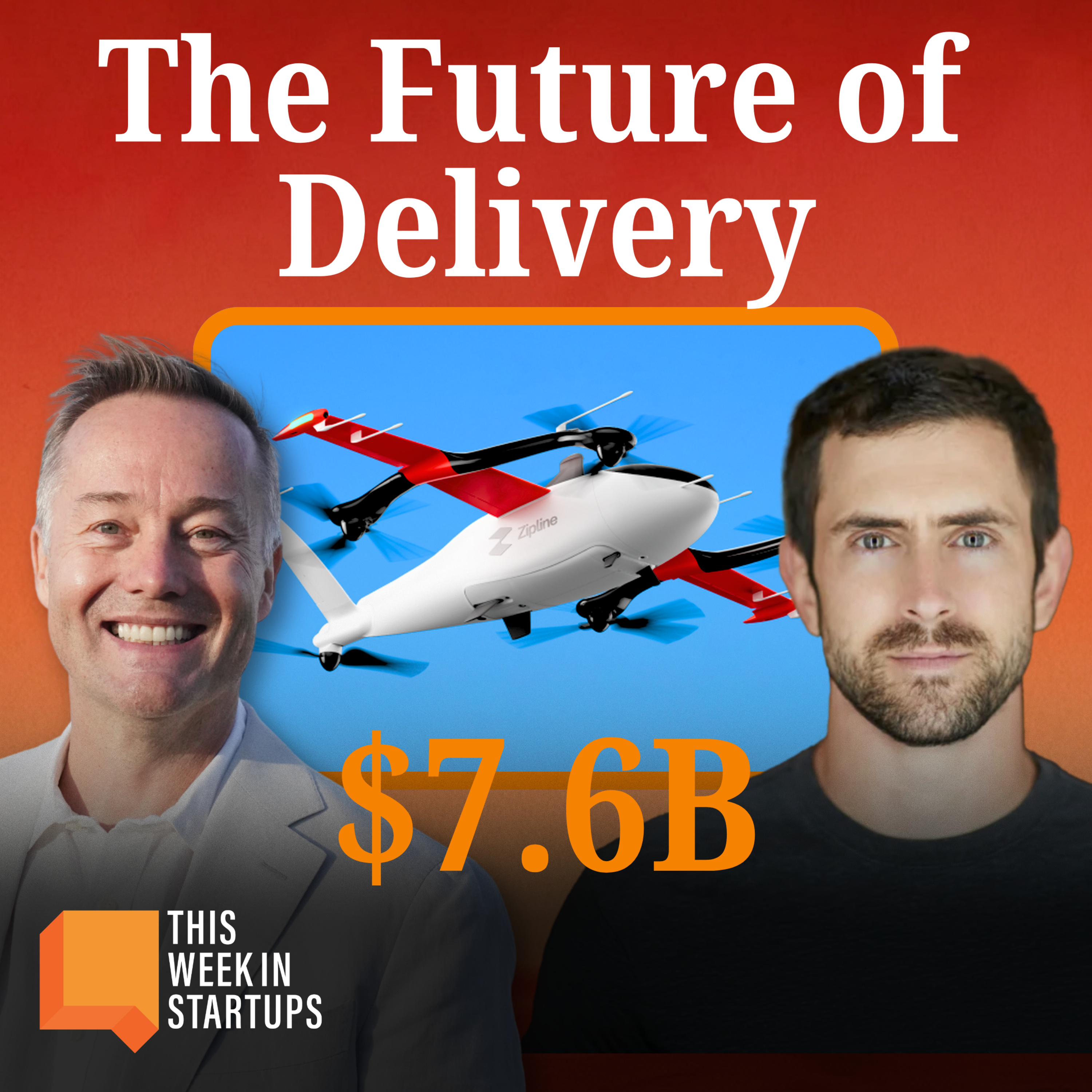
Zipline's CEO reveals the aircraft is a small part of their solution. The real challenge and value lie in the vertically integrated network: ground infrastructure, traffic management, regulatory approval, and customer-facing apps.
While space offers abundant solar power, the common belief that cooling is "free" is a misconception. Dissipating processor heat is extremely difficult in a vacuum without a medium for convection, making it a significant material science and physics problem, not a simple passive process.

The most complex challenge in robotics isn't just hardware or software alone, but the "boring" problem of calibration where they meet. Seemingly minor physical misalignments create cascading, hard-to-diagnose software issues that require deep, cross-functional expertise to solve.

Zipline's CEO argues from first principles that current delivery logistics are absurdly inefficient. Replacing a human-driven, gas-powered car with a small, autonomous electric drone is not just an incremental improvement but a fundamental paradigm shift dictated by physics.

Cooling data centers in space is more manageable than on Earth. Earth’s environment is unpredictable (temperature, humidity, weather). In orbit, you can choose a consistent thermal environment, sunshade cycle, and radiation angle, making the entire system programmable and stable.

Moving a robot from a lab demo to a commercial system reveals that AI is just one component. Success depends heavily on traditional engineering for sensor calibration, arm accuracy, system speed, and reliability. These unglamorous details are critical for performance in the real world.