Get your free personalized podcast brief
We scan new podcasts and send you the top 5 insights daily.
Counterintuitively, space's vacuum acts as a powerful insulator (like a thermos), preventing heat dissipation through convection. This forces reliance on less efficient infrared radiation. The engineering challenge is maximizing this radiation, not leveraging the coldness of space.

Related Insights
From a first-principles perspective, space is the ideal location for data centers. It offers free, constant solar power (6x more irradiance) and free cooling via radiators facing deep space. This eliminates the two biggest terrestrial constraints and costs, making it a profound long-term shift for AI infrastructure.
![Gavin Baker - Nvidia v. Google, Scaling Laws, and the Economics of AI - [Invest Like the Best, EP.451] thumbnail](https://megaphone.imgix.net/podcasts/d97fee14-d4d7-11f0-8951-8324b640c1c1/image/d3a8b5ecbf3957de5b91f278a191c9ff.jpg?ixlib=rails-4.3.1&max-w=3000&max-h=3000&fit=crop&auto=format,compress)
The two largest physical costs for AI data centers—power and cooling—are essentially free and unlimited in space. A satellite can receive constant, intense solar power without needing batteries and use the near-absolute zero of space for cost-free cooling. This fundamentally changes the economic and physical limits of large-scale computation.

While launch costs are decreasing and heat dissipation is solvable, the high failure rate of new chips (e.g., 10-15% for new NVIDIA GPUs) and the inability to easily service them in space present the biggest challenge for orbital data centers.
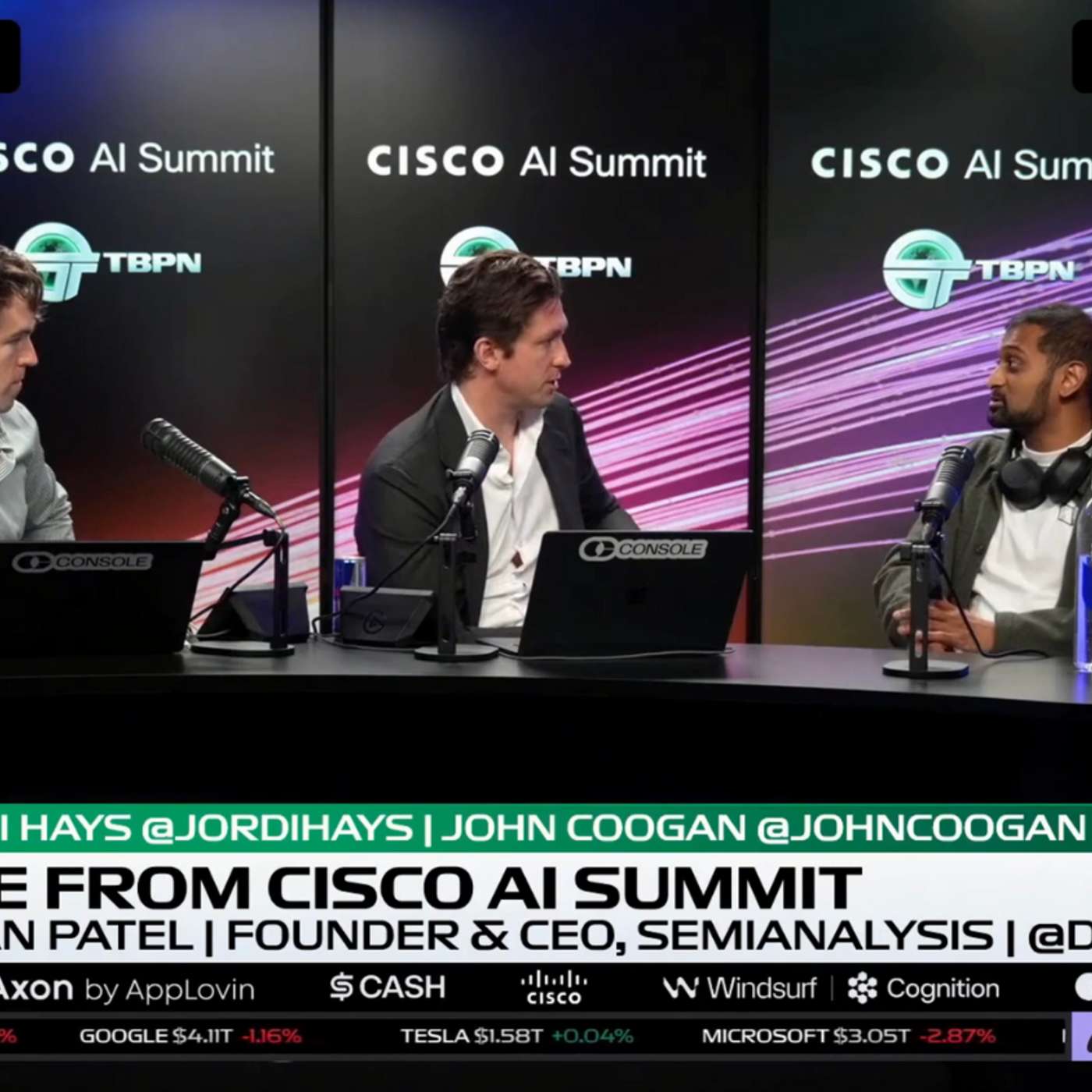
The company initially explored space-based solar but realized beaming power to Earth is highly inefficient. Since most new energy powers data centers anyway, they pivoted to moving the data centers to the power source in space, eliminating the massive energy loss from transmission.
The most powerful rocket fuels (cryogenics) are not storable in space as they boil away when exposed to sunlight. Orbital Operations is commercializing an active refrigeration system to solve this, enabling reusable, high-thrust vehicles that can wait in orbit for missions.
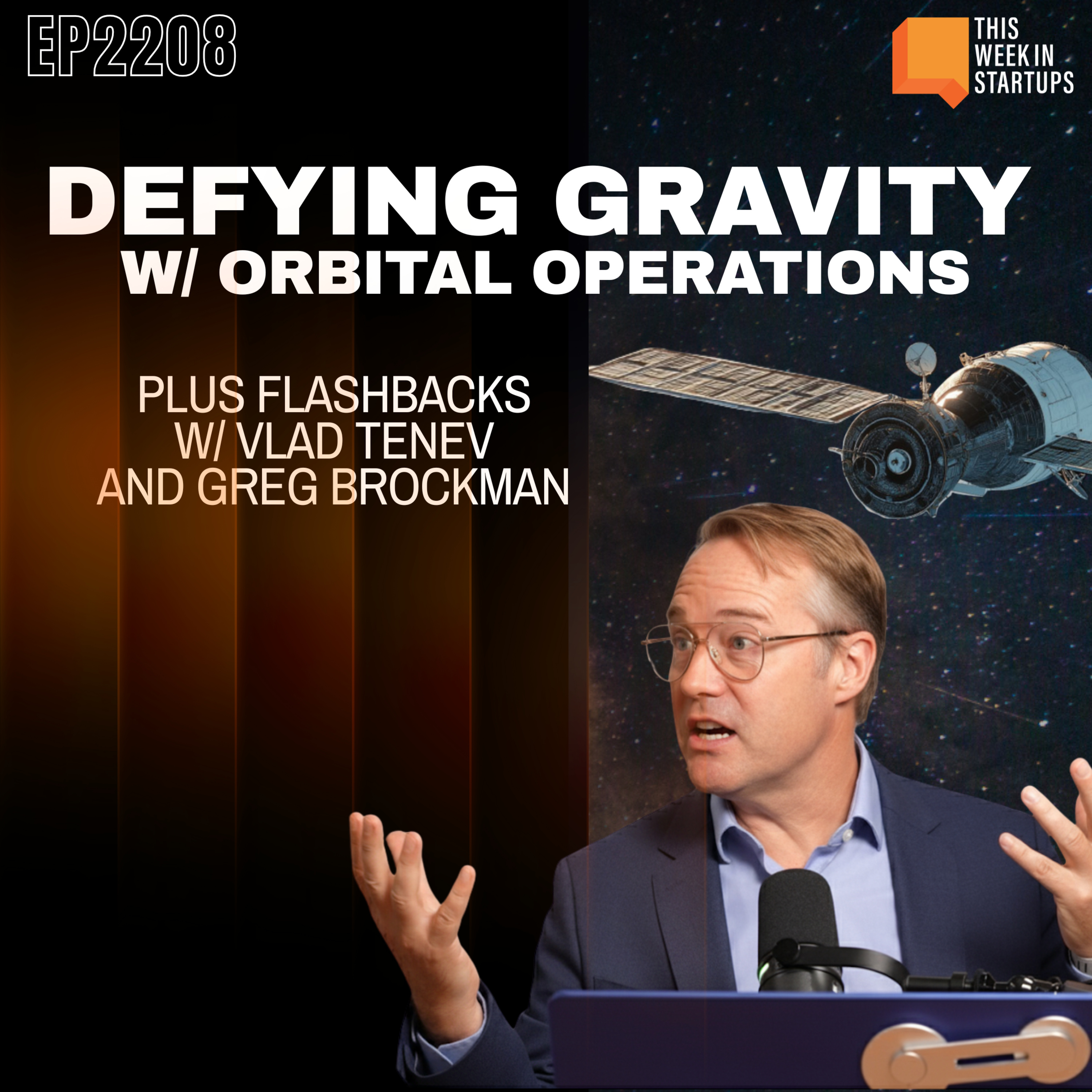
While space offers abundant solar power, the common belief that cooling is "free" is a misconception. Dissipating processor heat is extremely difficult in a vacuum without a medium for convection, making it a significant material science and physics problem, not a simple passive process.

Fusion reactors on Earth require massive, expensive vacuum chambers. Zephyr Fusion's core insight is to build its reactor in space, leveraging the perfect vacuum that already exists for free. This first-principles approach sidesteps a primary engineering and cost hurdle, potentially making fusion a more commercially viable energy source.

Cooling data centers in space is more manageable than on Earth. Earth’s environment is unpredictable (temperature, humidity, weather). In orbit, you can choose a consistent thermal environment, sunshade cycle, and radiation angle, making the entire system programmable and stable.

Scaling AI on Earth is limited by our atmosphere's capacity to absorb heat and the massive amount of fresh water needed for cooling. Moving data centers to space offers an elegant solution: an infinitely cold vacuum for heat dissipation and direct solar power, removing major environmental and resource bottlenecks for AI's growth.

The astronomical power and cooling needs of AI are pushing major players like SpaceX, Amazon, and Google toward space-based data centers. These leverage constant, intense solar power and near-absolute zero temperatures for cooling, solving the biggest physical limitations of scaling AI on Earth.