Get your free personalized podcast brief
We scan new podcasts and send you the top 5 insights daily.
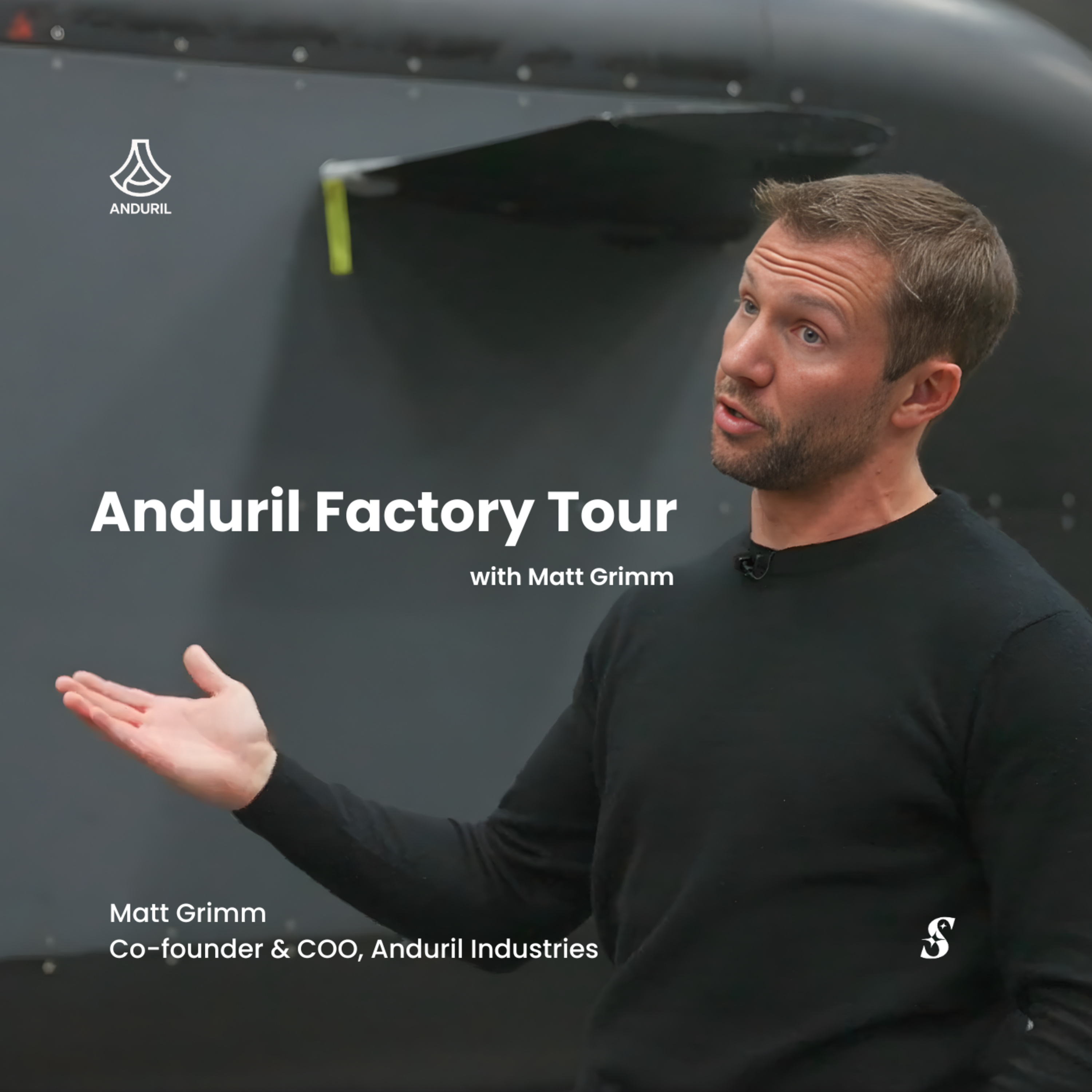
Anduril prototypes drone frames by milling them from solid metal blocks. While extremely wasteful and expensive for mass production, this method bypasses the slow and costly process of creating molds for casting, drastically reducing latency during the critical iterative design phase and getting products to market faster.
Related Insights
Instead of starting with a blank slate, Nike's team prototypes new ideas by physically cutting and modifying existing products. This "cobbling" method enables rapid, low-cost testing of core concepts before investing in new designs and expensive molds, allowing them to fail fast and forward.

Unlike software, hardware iteration is slow and costly. A better approach is to resist building immediately and instead spend the majority of time on deep problem discovery. This allows you to "one-shot" a much better first version, minimizing wasted cycles on flawed prototypes.

In AI, low prototyping costs and customer uncertainty make the traditional research-first PM model obsolete. The new approach is to build a prototype quickly, show it to customers to discover possibilities, and then iterate based on their reactions, effectively building the solution before the problem is fully defined.

At OpenAI, the development cycle is accelerated by a practice called "vibe coding." Designers and PMs build functional prototypes directly with AI tools like Codex. This visual, interactive method is often faster and more effective for communicating ideas than writing traditional product specifications.

Historically, resource-intensive prototyping (requiring designers and tools like Figma) was reserved for major features. AI tools reduce prototype creation time to minutes, allowing PMs to de-risk even minor features with user testing and solution discovery, improving the entire product's success rate.

Unconventional AI operates as a "practical research lab" by explicitly deferring manufacturing constraints during initial innovation. The focus is purely on establishing "existence proofs" for new ideas, preventing premature optimization from killing potentially transformative but difficult-to-build concepts.

Moving from a science-focused research phase to building physical technology demonstrators is critical. The sooner a deep tech company does this, the faster it uncovers new real-world challenges, creates tangible proof for investors and customers, and fosters a culture of building, not just researching.

Anduril's R&D building houses machine shops, labs, and a 'dev test area' designed specifically to break products. By putting engineers across the parking lot from facilities that can rapidly prototype and test for failures (e.g., saltwater corrosion, vibration), they create an extremely tight feedback loop, speeding up iteration.
Unlike mass manufacturers, defense tech requires flexibility for a high mix of low-volume products. Anduril addresses this by creating a core platform of reusable software, hardware, and sensor components, enabling fast development and deployment of new systems without starting from scratch.
The misconception that discovery slows down delivery is dangerous. Like stretching before a race prevents injury, proper, time-boxed discovery prevents building the wrong thing. This avoids costly code rewrites and iterative launches that miss the mark, ultimately speeding up the delivery of a successful product.
