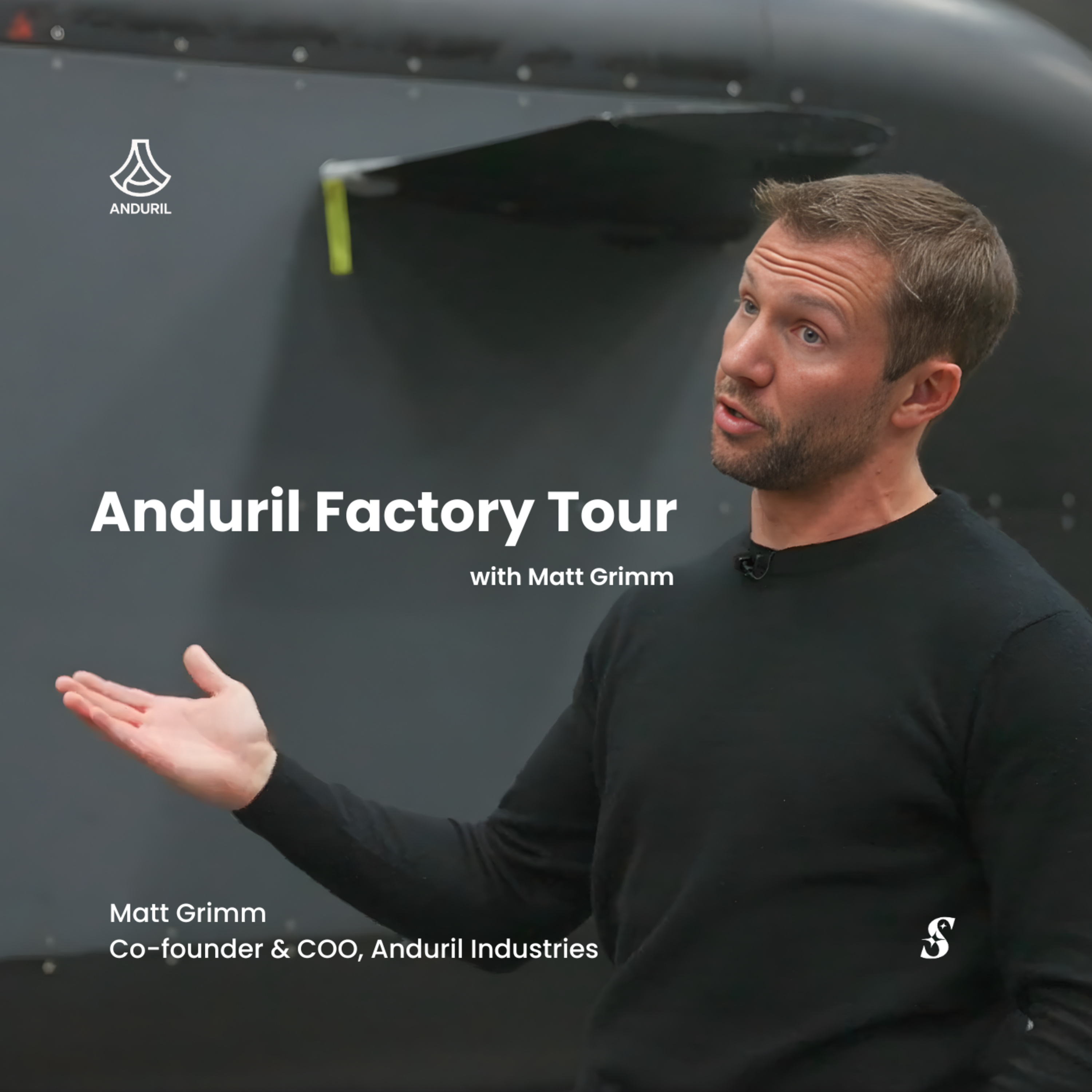
Anduril's R&D building houses machine shops, labs, and a 'dev test area' designed specifically to break products. By putting engineers across the parking lot from facilities that can rapidly prototype and test for failures (e.g., saltwater corrosion, vibration), they create an extremely tight feedback loop, speeding up iteration.
During its growth phases, Anduril's COO prefers buying capital equipment like manufacturing machinery from secondary markets. This capital-efficient strategy provides flexibility, acknowledging the high probability that their technical requirements will change, thus avoiding being locked into expensive new equipment that may become obsolete for their needs.
Anduril prototypes drone frames by milling them from solid metal blocks. While extremely wasteful and expensive for mass production, this method bypasses the slow and costly process of creating molds for casting, drastically reducing latency during the critical iterative design phase and getting products to market faster.
As Anduril scaled, its founders specialized. Palmer Luckey drives product innovation. CEO Brian Schimpf is the strategic 'genius' who sees the global chessboard. Trey Stephens handles investor relations and brand marketing. Matt Grimm acts as COO, the 'chief janitor' managing the complex operational guts of the company.
Anduril prioritizes a specific cultural mindset in hiring. They seek entrepreneurial, mission-driven people who instinctively ask 'How do we make it go right?' rather than 'What can go wrong?'. This positive, ambitious worldview is considered the core driver of the company's ability to tackle massive, complex programs.
Before its massive headquarters, Anduril's first office for its 10 initial employees was a sub-5,000 sq ft garage formerly used by an airline to store lost luggage. It had mold, no bathroom, and no A/C, demonstrating that category-defining companies can emerge from the most unglamorous and scrappy beginnings.
To test its electronic warfare products, Anduril uses an anechoic chamber. This is not just for a clean signal environment but a legal necessity. Their proximity to John Wayne Airport makes it illegal to broadcast powerful jamming signals openly, requiring a specialized, enclosed facility to develop and test these capabilities.