Get your free personalized podcast brief
We scan new podcasts and send you the top 5 insights daily.
Zipline's 50% cost reduction for its next-gen aircraft wasn't just from supply chain optimization. The primary driver was a design philosophy focused on eliminating components entirely ("the best part is no part"), which also improves reliability.

Related Insights
Roelof Botha claims "cost is the secret of Silicon Valley." While product innovation gets the attention, relentless cost reduction is the bigger driver of success. It democratizes technology and provides a true competitive advantage, unlike simply lowering prices.

Design for Excellence goes beyond just manufacturing costs. Consider the entire product lifecycle, including serviceability. A design that's easy to assemble but difficult to service in the field (like using a blind screw on a replaceable part) increases the total cost of ownership and harms the customer experience.

The founders initially focused on building the autonomous aircraft. They soon realized the vehicle was only 15% of the problem's complexity. The real challenge was creating the entire logistics ecosystem around it, from inventory and fulfillment software to new procedures for rural hospitals.
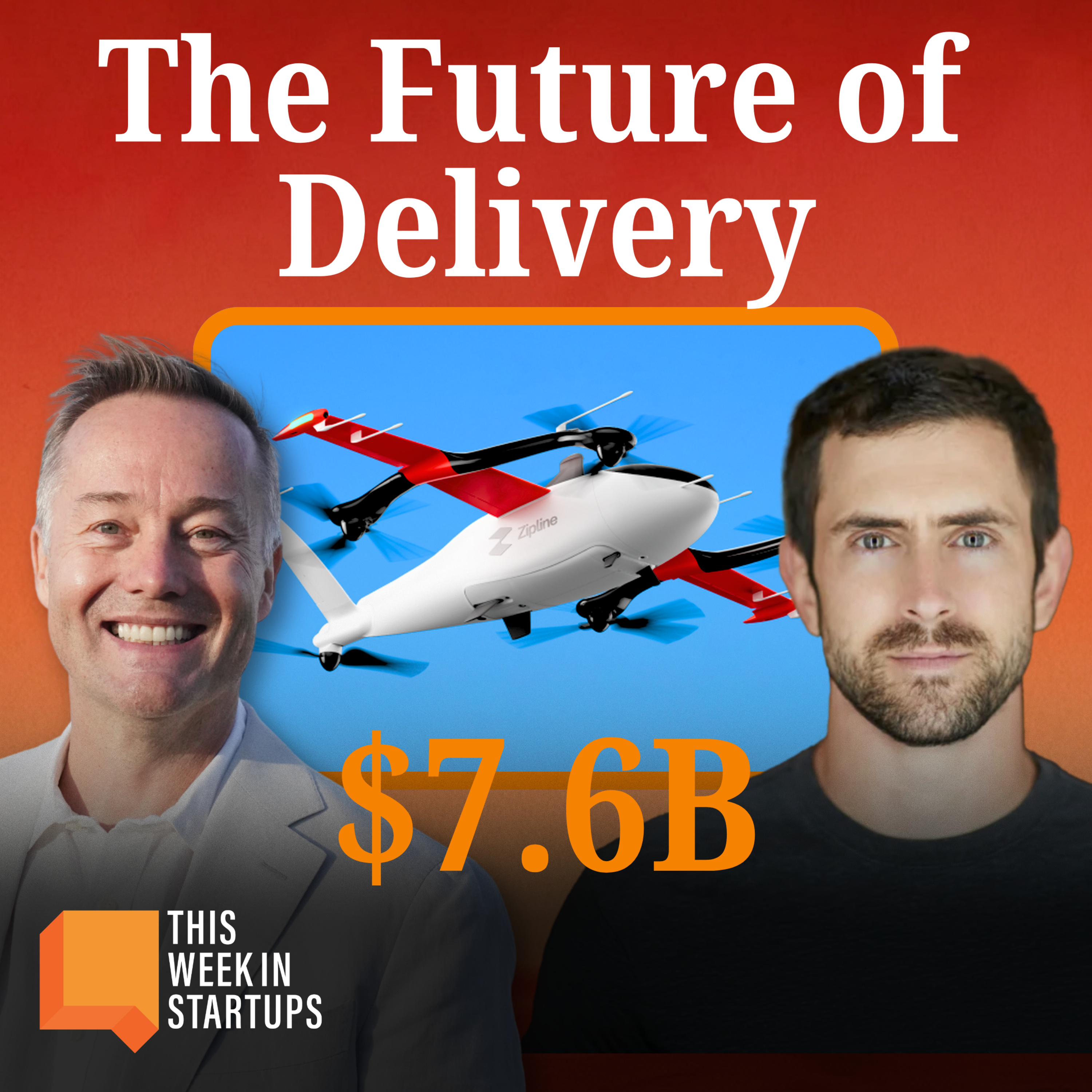
Against investor advice and industry trends favoring VTOL (vertical takeoff and landing) drones, Zipline opted for a fixed-wing airplane design. They realized their customers valued range above all else, and a simple airplane could fly 10-30x farther, solving the core problem more effectively.
Zipline's CEO reveals the aircraft is a small part of their solution. The real challenge and value lie in the vertically integrated network: ground infrastructure, traffic management, regulatory approval, and customer-facing apps.
Zipline's CEO argues from first principles that current delivery logistics are absurdly inefficient. Replacing a human-driven, gas-powered car with a small, autonomous electric drone is not just an incremental improvement but a fundamental paradigm shift dictated by physics.

Zipline's CEO argues the US can't compete with China's scale on simple drones. The winning strategy is to innovate on complex, state-of-the-art aircraft where America leads, and then scale that manufacturing advantage.
Zipline abstracts away all operational complexity (FAA regulations, maintenance, flight ops) and pitches a simple, powerful outcome to partners like Walmart: an instant delivery portal installed in their wall.
Zipline had to build its own components because the market only offered two extremes: cheap, unreliable consumer drone parts or prohibitively expensive military-grade systems. This "automotive grade" gap for reliable, cost-effective components forced them to vertically integrate to achieve their performance and cost goals.
Zipline is quadrupling its factory to produce 20,000 drones annually, a necessity to service a 15% week-over-week growth curve. This highlights a unique hardware scaling challenge driven by software-like demand.