Get your free personalized podcast brief
We scan new podcasts and send you the top 5 insights daily.
Canada's strategy of distancing itself from the U.S. has led its military to simulate a potential U.S. invasion. This reveals the severe geopolitical risk, as the U.S. is unlikely to tolerate a strategic competitor with ties to China or a divergent Europe on its long, undefended border.

Related Insights
America's unpredictable, "law of the jungle" approach doesn't embolden adversaries like Russia or China, who already operate this way. Instead, it forces traditional allies (Canada, Europe, Japan) to hedge their bets, decouple their interests, and reduce reliance on an unreliable United States for upholding international law.

Due to perceived US instability, traditional allies in Europe and Canada are proactively diversifying their partnerships. They are creating alternative trade and security networks (e.g., EU-India, Canada-EU) to reduce their dependence on the United States.

Contrary to common belief, a US military move on its neighbors like Canada or Venezuela is more probable than a Chinese invasion of Taiwan. Taiwan's population is internally divided, with a significant portion favoring reunification. China can achieve its goals through continued economic dominance, making a military conflict unnecessary and less likely than US expansionism.

Canada's long-term economic strategy is built on the belief that the era of increasing integration with the US is permanently over. The leadership anticipates that future American politicians will find it difficult to remove trade barriers, necessitating a fundamental, long-term pivot for Canada's economy away from US dependency.
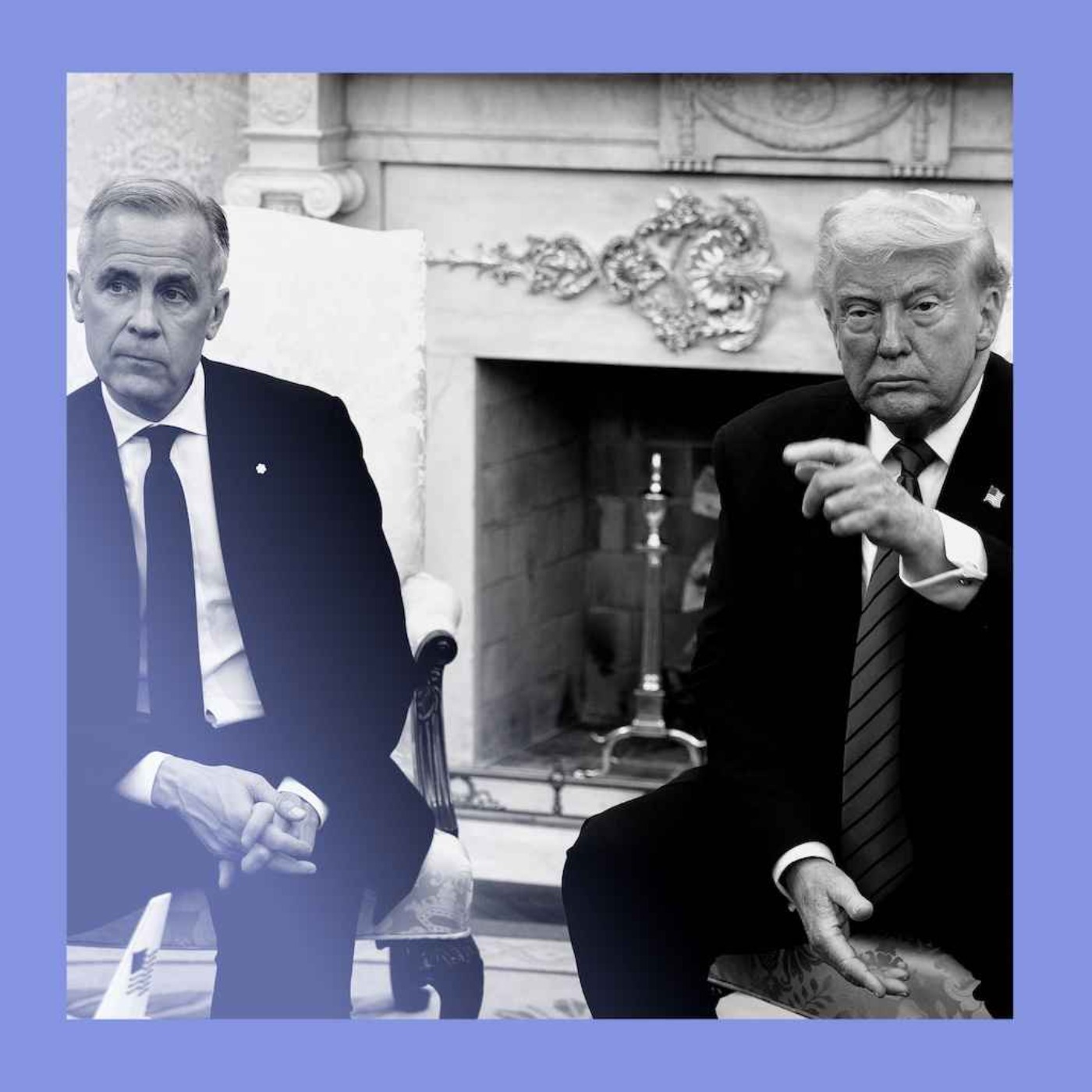
To manage domestic instability, particularly among disenfranchised young men, the United States could pursue a strategy of colonization in the Western Hemisphere. Taking over territories like Alberta, Greenland, or Venezuela is a plausible, if extreme, scenario for channeling internal aggression outward and securing resources, following historical imperial patterns.
Facing a potential second Trump presidency, Canada is seriously discussing drastic national security changes. Options include developing nuclear capabilities and adopting a Finnish-style "whole society defense" model to make any potential US aggression too costly to be worthwhile. This reflects a fundamental shift in how Canada views its southern neighbor.

Trump's confrontational stance with allies isn't just chaos; it's a calculated strategy based on the reality that they have nowhere else to go. The U.S. can troll and pressure nations like Canada and European countries, knowing they won't realistically align with China, ultimately forcing them to increase their own defense commitments.

Beijing capitalizes on visits from leaders of key US allies like Canada. Through official media and academic commentary, China actively encourages these nations to adopt "strategic autonomy" from Washington, aiming to sow division and weaken the Western bloc's united front.

Nations like Canada and the UK are not strategically realigning with China. Instead, they are pursuing short-term economic gains (e.g., in agriculture) while their fundamental security and economic allegiances remain with the US. It's a calculated risk to extract benefits without severing key ties.
In response to unpredictable US tariffs, Canada is fast-tracking infrastructure projects, like new pipelines to its west coast. This strategic shift aims to reduce its heavy reliance on the US market (where 90% of its oil was sent) and open up direct access to Asian and European buyers.
