Get your free personalized podcast brief
We scan new podcasts and send you the top 5 insights daily.
To manage domestic instability, particularly among disenfranchised young men, the United States could pursue a strategy of colonization in the Western Hemisphere. Taking over territories like Alberta, Greenland, or Venezuela is a plausible, if extreme, scenario for channeling internal aggression outward and securing resources, following historical imperial patterns.

Related Insights
The U.S. has a historical pattern of turning its focus back to the Western Hemisphere after periods of global overreach or crisis, such as after the Great Depression, Vietnam, and the War on Terror. This retreat is a way to reassert power in its immediate sphere of influence when its global ambitions falter.

The effort to acquire Greenland is more than a hemispheric strategy; it signals the US may be joining Russia and China in seeking to coercively redraw borders. This shift from all three major powers challenges the post-1945 international order that has largely prohibited forcible conquest, a change not seen since the 1930s.

Trump’s national security strategy subtly resurrected the 'Roosevelt Corollary' of 1904. This doctrine extends the Monroe Doctrine by asserting the U.S. right to proactively change governments it dislikes in the Western Hemisphere, signaling a return to a more interventionist and sphere-of-influence-based foreign policy.

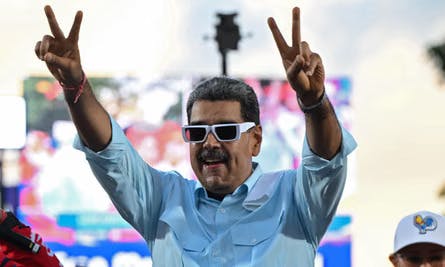
Despite the public focus on oil, the primary goal of removing Maduro was likely to demonstrate U.S. primacy in the Western Hemisphere. The action serves as a strong signal that the U.S. is willing to act aggressively to enforce its influence in the region.
Contrary to common belief, a US military move on its neighbors like Canada or Venezuela is more probable than a Chinese invasion of Taiwan. Taiwan's population is internally divided, with a significant portion favoring reunification. China can achieve its goals through continued economic dominance, making a military conflict unnecessary and less likely than US expansionism.
The US invasion of Venezuela isn't for oil or to stop drugs, but to counter China's strategic influence via its Belt and Road Initiative. This reasserts the Monroe Doctrine—preventing rival footholds in its hemisphere—in a new Cold War context.

By demonstrating a willingness to take extraordinary unilateral action, the U.S. makes previously outlandish threats—like those concerning Cuba or Greenland—seem newly credible. This strategic ambiguity creates leverage and increases U.S. bargaining power globally.
The US military operation in Venezuela is interpreted as a display of global military dominance aimed at China and Russia. This action suggests a strategic pivot towards becoming a global empire rather than retreating to a regional, isolationist Monroe Doctrine.

The administration's aggressive posture in Latin America is framed not by traditional security interests but by a desire to curb migration. This reflects a core white nationalist belief that demographic shifts pose an existential threat to the US, making immigration control a primary national security objective, viewing Venezuela as an exporter of people, not oil.
A faction of wealthy donors is encouraging the revival of American territorial expansion. Their primary motive is to bypass environmental regulations in places like Greenland and Canada to loot natural resources, framing this as a new form of empire-building for personal enrichment.
