Get your free personalized podcast brief
We scan new podcasts and send you the top 5 insights daily.
Contrary to common belief, a US military move on its neighbors like Canada or Venezuela is more probable than a Chinese invasion of Taiwan. Taiwan's population is internally divided, with a significant portion favoring reunification. China can achieve its goals through continued economic dominance, making a military conflict unnecessary and less likely than US expansionism.

Related Insights
Despite its military buildup, China's primary strategy for Taiwan is not a direct invasion, which remains highly difficult. Instead, President Xi Jinping favors a coerced diplomacy, aiming to squeeze Taiwan on all sides until it feels it has no choice but to accept a 'one country, two systems' model.

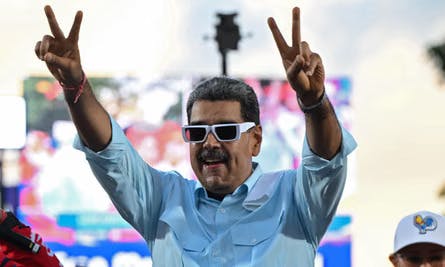
The U.S. operation to capture Maduro serves as a real-world case study for China's potential 'decapitation' strike against Taiwan. China has already rehearsed such scenarios in mock-ups of Taipei's presidential palace. This event demonstrates the feasibility of a quick, surgical strike, which is more aligned with the CCP's goals than a costly amphibious invasion.
A potential invasion of Taiwan by China is less likely due to internal military purges and dissent than to US military posturing. An authoritarian leader like Xi Jinping cannot launch a complex invasion if he doesn't trust his own generals, making domestic instability a powerful, albeit unintentional, deterrent.

Contrary to popular narratives, China's strategy for Taiwan is not a military invasion. It's a long-term plan of economic and political isolation, aiming to make Taiwan so irrelevant to the world that its eventual absorption faces no resistance, mirroring its Hong Kong playbook.

Despite ambitions for 2027, China is currently ill-positioned for an immediate invasion of Taiwan. The combination of disrupted energy supplies, a fragile domestic economy, and internal military purges by Xi makes a large-scale, energy-intensive conflict strategically unwise at this moment.

To manage domestic instability, particularly among disenfranchised young men, the United States could pursue a strategy of colonization in the Western Hemisphere. Taking over territories like Alberta, Greenland, or Venezuela is a plausible, if extreme, scenario for channeling internal aggression outward and securing resources, following historical imperial patterns.
Contrary to widespread fear, the probability of a Chinese invasion of Taiwan before 2028 is extremely low (~5%). China believes its goal of 'peaceful reunification' is progressing, its military is in disarray after deep purges, and it views President Trump as an accommodating US leader on the Taiwan issue.

China's strategy for Taiwan likely mirrors its 2019 Hong Kong takeover. Instead of a direct military assault, Beijing will use political influence, espionage, and legislative changes to create administrative bridges, making any physical resistance illegal before troops ever move in.

By prioritizing resource acquisition in its own sphere of influence (Venezuela), the US has effectively signaled it cannot or will not defend Taiwan. This action, whether an explicit deal or not, acts as a 'handshake,' giving China the green light to pursue its own regional strategic objectives.

China currently believes its strategy of coercion against Taiwan is succeeding, making a near-term military invasion unlikely. However, 2028 is a critical year. If Taiwan's pro-independence party wins re-election, Beijing may reassess its strategy and consider more dramatic military action.
