Get your free personalized podcast brief
We scan new podcasts and send you the top 5 insights daily.
Rather than a peace deal, the Abraham Accords signaled to Palestinians that their cause was being permanently sidelined by the Arab world. This removal of hope for a future state, guest Dave Smith argues, created the desperation that set the stage for violent outbreaks like October 7.

Related Insights
The Israeli withdrawal from Gaza, without Hamas being disarmed or an international force in place, creates a space for violent clashes. Hamas, armed gangs, and powerful clans are already competing for control, illustrating a critical risk in phased peace plans where security is not transferred seamlessly.

Yitzhak Rabin believed normalizing Arab relations required solving the Palestinian conflict. Benjamin Netanyahu's doctrine flipped this: use US military might to neutralize hostile Arab regimes, thereby bypassing the need to address Palestinian statehood at all, a core tenet of his political career.
The October 7th attacks, intended to advance the Palestinian cause, were a catastrophic strategic error. They eliminated previous restraints on Israel, allowing it to unleash its full military capacity as the region's superpower, ultimately leading to the decimation of Hamas, Hezbollah, and their primary sponsor, Iran.

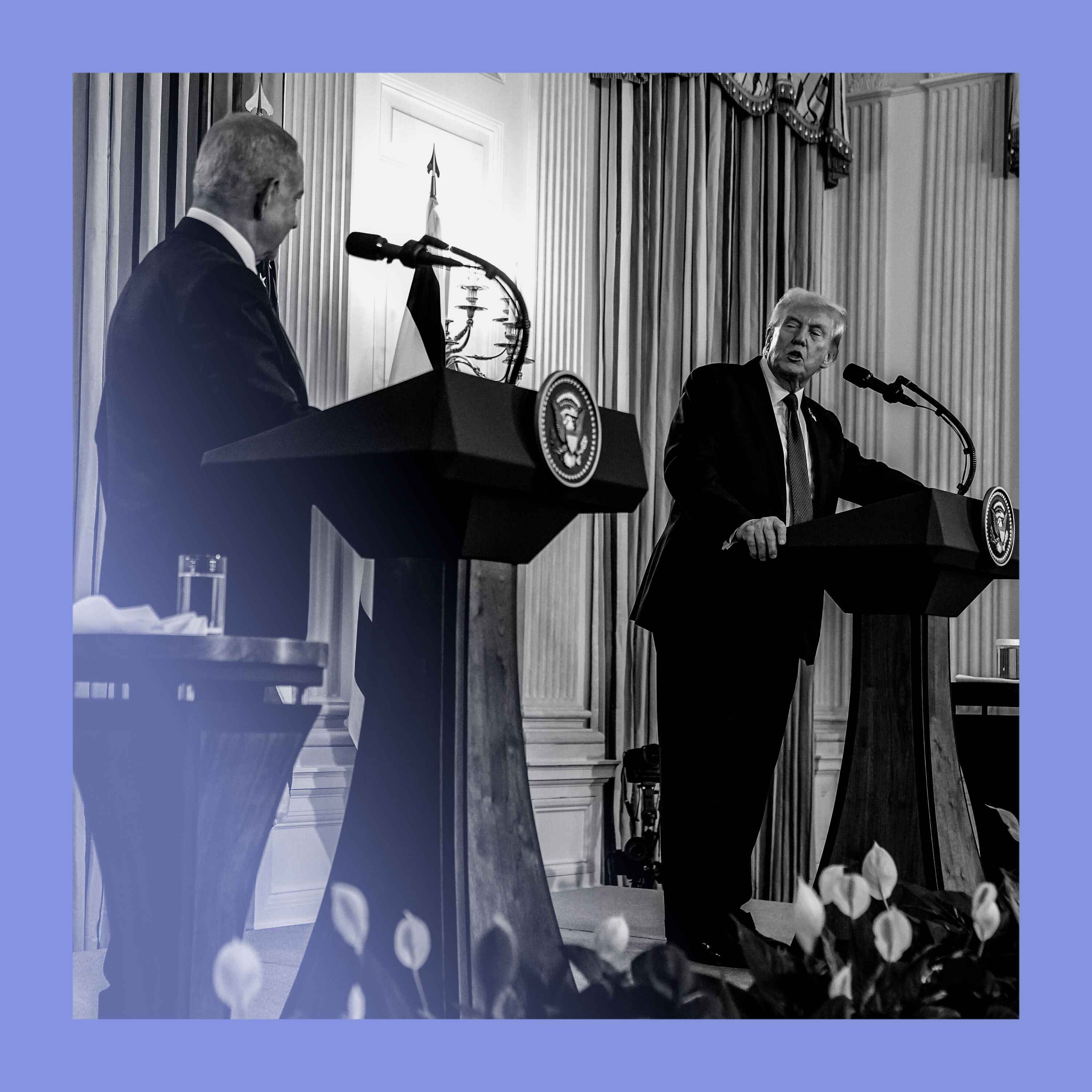
Israeli PM Netanyahu's acceptance of the peace plan is a study in contradiction. While publicly endorsing the deal, he immediately rejected a key component: a role for the Palestinian Authority in post-war Gaza. This tactic creates 'wiggle room' and signals a lack of genuine buy-in, challenging the deal's future.
The popularity of extremist groups like Hamas is inversely correlated with the viability of a peace process. During periods when a two-state solution seemed possible, support for Hamas declined. When hope for a political resolution collapses, extremism surges as people turn to violence as their only perceived option.
Even after a ceasefire, ordinary Gazans find the psychological toll of an unknown future more difficult than ongoing material hardships. The end of bombing does not bring immediate relief or hope, as fundamental questions about their lives, work, and homes remain unanswered, creating a burden greater than day-to-day scarcity.

The only historically effective method to resolve deep-rooted religious and ideological conflicts is to shift focus toward shared economic prosperity. Alliances like the Abraham Accords create tangible incentives for peace that ideology alone cannot, by making life demonstrably better for citizens.

The proposed peace deal’s elements have been discussed for months. The breakthrough isn't the plan itself, but President Trump's willingness to strong-arm Israeli Prime Minister Netanyahu into agreement, a tactic previously avoided by both Trump and his predecessor Joe Biden.
The viability of a two-state solution depends entirely on the nature of the new Palestinian government. A state cannot achieve stability if it is run by a terrorist organization like Hamas. The international community's push for statehood is meaningless without addressing the internal governance that perpetuates violence.

The Israel-Palestine conflict is often framed as a religious clash, but its root is the political reality of military occupation. The Palestinian response is a predictable human reaction to subjugation, similar to the Irish resisting the British, not a unique feature of their religion.