Get your free personalized podcast brief
We scan new podcasts and send you the top 5 insights daily.
Even after a ceasefire, ordinary Gazans find the psychological toll of an unknown future more difficult than ongoing material hardships. The end of bombing does not bring immediate relief or hope, as fundamental questions about their lives, work, and homes remain unanswered, creating a burden greater than day-to-day scarcity.
Related Insights
Despite a comprehensive Egyptian-led rebuilding plan, wealthy Gulf monarchies refuse to provide the necessary $55 billion. They will not invest funds that could be destroyed in a future conflict, making Hamas's disarmament a non-negotiable prerequisite for any major rebuilding effort to begin.
Hope is the belief that a positive outcome is possible, while optimism is the expectation that it is probable. Maintaining hope provides motivation to act, but avoiding optimism prevents complacency and allows for contingency planning for negative outcomes. This distinction is crucial for navigating volatile situations.

Existential angst is a luxury problem. A century ago, life's purpose was clear: survive. The comfort and freedom of modern life have removed physical struggles but introduced complex psychological ones, like finding meaning and identity, which are a hidden cost of progress.

Society hasn't processed the collective trauma of events like the pandemic, leading to widespread emotional dysregulation that prevents clear thinking. To move forward, groups must first feel and acknowledge the fear and grief, rather than just intellectualizing the problems.

Effective reconstruction in Gaza must prioritize creating meaningful employment and educational opportunities for its young population. This approach addresses the profound loss of purpose and hope, which is a more critical need than simply rebuilding physical structures. Without restoring hope, a future cannot be pursued.
The surge in interest around the 2014 centenary wasn't just historical curiosity. It reflected modern anxieties about the Iraq and Afghanistan wars and a focus on veterans' mental and physical health, making the truce a powerful symbol for the horror and futility of conflict.

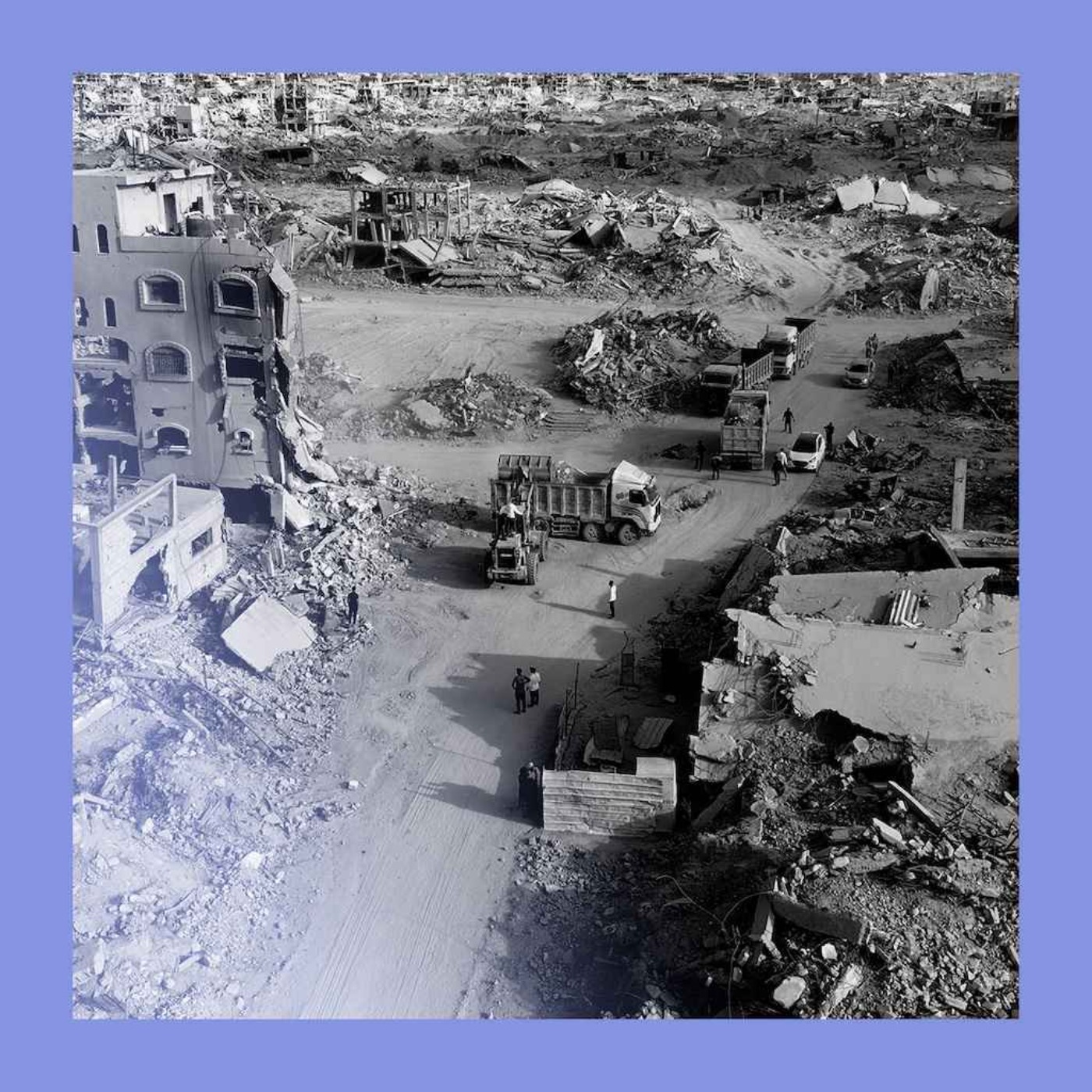
The primary obstacle to rebuilding Gaza isn't just funding but the logistics of clearing 55-60 million tons of debris. Engineers estimate this initial step alone could take over six years, far longer than the six months proposed in reconstruction plans, making immediate rebuilding impossible.
Viewing the conflict as two rational sides in a misunderstanding is flawed. Both sides see the other as an existential threat and are willing to use extreme violence to achieve their goals. This reframes the narrative from a political dispute to a primal, violent tribal conflict where both sides see themselves as righteous.

The viability of a two-state solution depends entirely on the nature of the new Palestinian government. A state cannot achieve stability if it is run by a terrorist organization like Hamas. The international community's push for statehood is meaningless without addressing the internal governance that perpetuates violence.

When a defining career ends, the biggest struggle is often existential, not financial. Our culture fuses identity with profession ('what you do is who you are'), creating a vacuum when the job is gone. This leads to profound questions of self-worth, value, and purpose that transcend money.
