Get your free personalized podcast brief
We scan new podcasts and send you the top 5 insights daily.
The October 7th attacks, intended to advance the Palestinian cause, were a catastrophic strategic error. They eliminated previous restraints on Israel, allowing it to unleash its full military capacity as the region's superpower, ultimately leading to the decimation of Hamas, Hezbollah, and their primary sponsor, Iran.

Related Insights
A destabilized Iranian regime is more dangerous, not less. Israeli intelligence fears Tehran might launch a strike on a foreign enemy like Israel to distract its populace, create a "rally 'round the flag" effect, and restore military pride after recent setbacks.

Contrary to his hawkish reputation, Benjamin Netanyahu is deliberately lowering Israel's profile regarding Iran's internal protests. This strategic silence aims to prevent the embattled Iranian regime from feeling cornered and launching a preemptive attack out of paranoia.
A botched Israeli airstrike in Qatar, a key US ally, was the true catalyst for renewed US peace efforts. The fear of the conflict spiraling out and drawing in other American allies—disrupting a broader Middle East agenda—prompted a decisive push for a resolution, more so than the ongoing tragedy in Gaza itself.
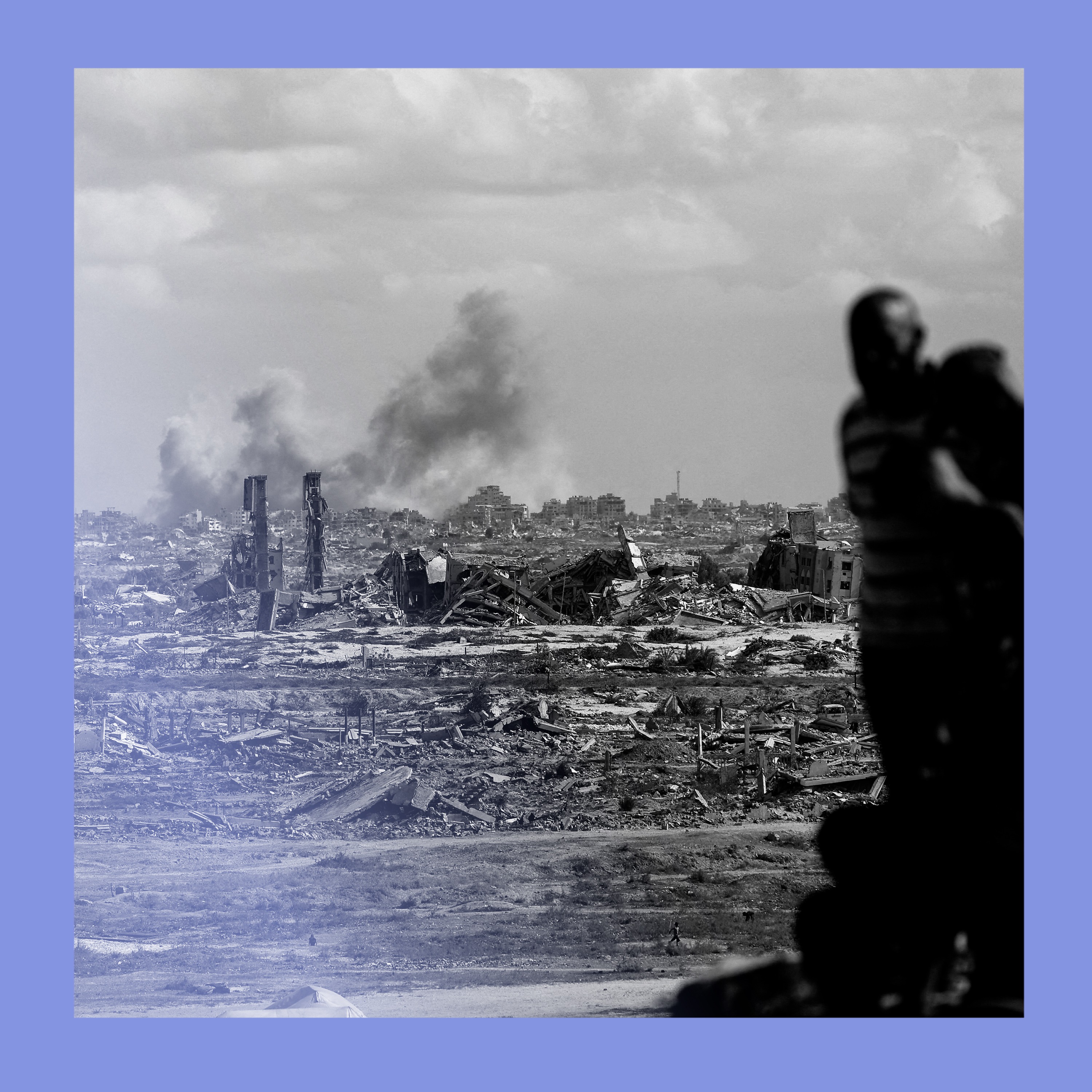
Viewing the conflict as two rational sides in a misunderstanding is flawed. Both sides see the other as an existential threat and are willing to use extreme violence to achieve their goals. This reframes the narrative from a political dispute to a primal, violent tribal conflict where both sides see themselves as righteous.

The viability of a two-state solution depends entirely on the nature of the new Palestinian government. A state cannot achieve stability if it is run by a terrorist organization like Hamas. The international community's push for statehood is meaningless without addressing the internal governance that perpetuates violence.

The West's decline in military resolve, moral authority (e.g., the Iraq War), and overall focus created a power vacuum. Adversaries perceived this weakness as an opportunity to act on long-held ambitions, viewing it as a moment to "test the waters" with minimal consequences from a weakened West.

Iran's attempt to sow regional instability by attacking nine Arab countries backfired. Instead of creating chaos, these militarily insignificant 'pinprick' attacks eliminated neutrality and pushed Gulf states to fully support the US-Israeli mission against Iran, viewing it as a necessary response.
Despite widespread internal protests and instability, history shows that an external attack is one of the few things that can unify the Iranian population. A potential Israeli strike, meant to weaken the regime, could backfire by creating a 'rally 'round the flag' effect that shores up support for the Ayatollah.

The Israelis bought a pager company, convinced Hezbollah to order from them, and inserted explosives into the devices. After routing the pagers through multiple countries, they activated all explosives simultaneously, wiping out Hezbollah's leadership in a single, coordinated supply-chain attack.

Unlike nascent revolutionary states that rally against foreign attacks, late-stage dictatorships are weakened by military defeats. Iran's recent humiliations by Israel and the US have exposed incompetence and eroded the public's perception of strength, fueling protests and accelerating the regime's demise.
