Get your free personalized podcast brief
We scan new podcasts and send you the top 5 insights daily.
The Israeli withdrawal from Gaza, without Hamas being disarmed or an international force in place, creates a space for violent clashes. Hamas, armed gangs, and powerful clans are already competing for control, illustrating a critical risk in phased peace plans where security is not transferred seamlessly.

Related Insights
Despite a comprehensive Egyptian-led rebuilding plan, wealthy Gulf monarchies refuse to provide the necessary $55 billion. They will not invest funds that could be destroyed in a future conflict, making Hamas's disarmament a non-negotiable prerequisite for any major rebuilding effort to begin.
Claiming you will only 'turn down the temperature' after your opponents do is not a strategy for de-escalation; it is a justification for retaliation. This 'counter-punching' approach ensures conflict continues. A genuine desire to reduce societal tension requires leading by example, not waiting for the other side to act first.

Unlike predecessors who acted as "Israel's lawyer," Trump's administration applied coercive pressure to both Israeli and Hamas leadership. According to diplomats, this impartial approach was the key to brokering a peace deal where past efforts failed.

Effective reconstruction in Gaza must prioritize creating meaningful employment and educational opportunities for its young population. This approach addresses the profound loss of purpose and hope, which is a more critical need than simply rebuilding physical structures. Without restoring hope, a future cannot be pursued.

Even after a ceasefire, ordinary Gazans find the psychological toll of an unknown future more difficult than ongoing material hardships. The end of bombing does not bring immediate relief or hope, as fundamental questions about their lives, work, and homes remain unanswered, creating a burden greater than day-to-day scarcity.
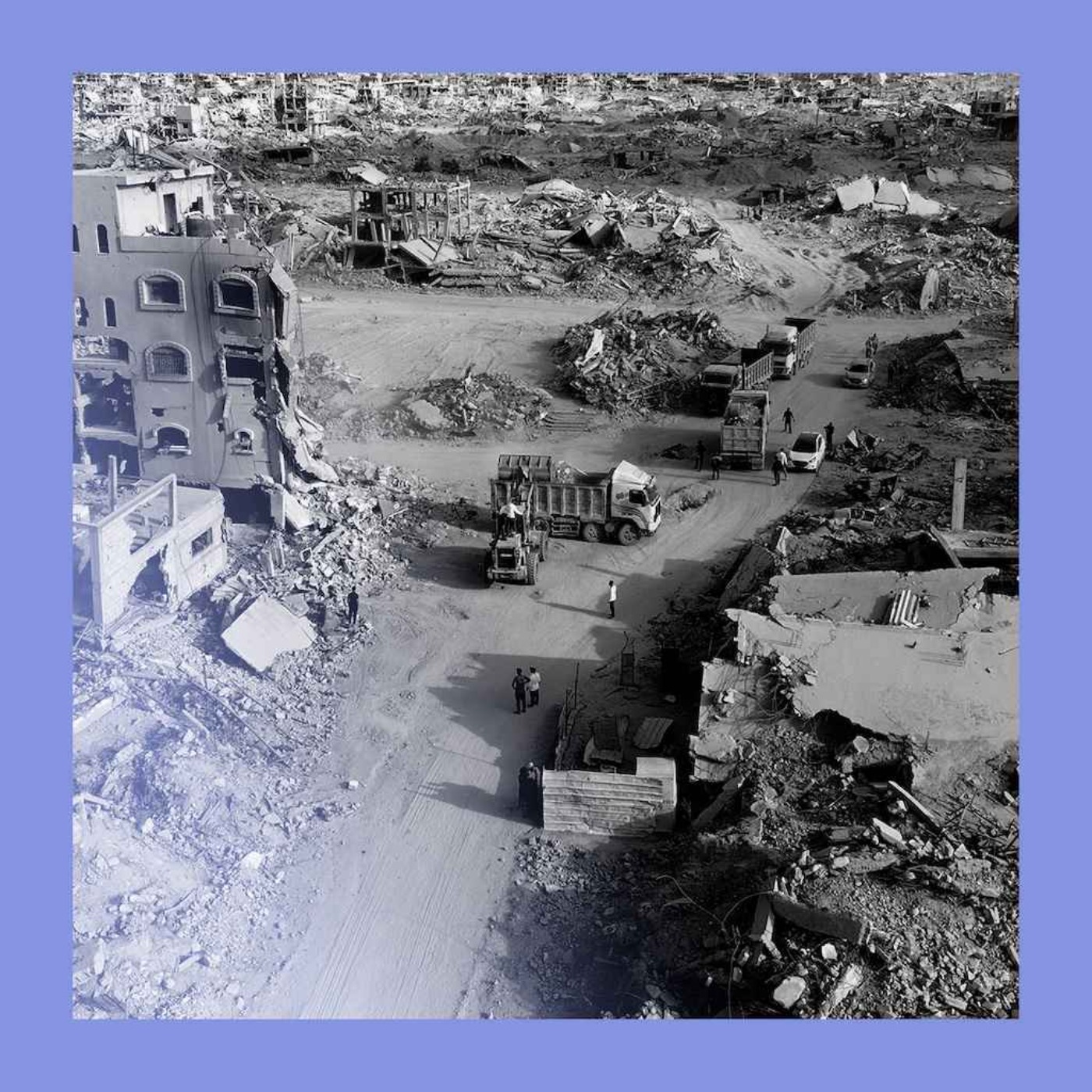
The primary obstacle to rebuilding Gaza isn't just funding but the logistics of clearing 55-60 million tons of debris. Engineers estimate this initial step alone could take over six years, far longer than the six months proposed in reconstruction plans, making immediate rebuilding impossible.
Viewing the conflict as two rational sides in a misunderstanding is flawed. Both sides see the other as an existential threat and are willing to use extreme violence to achieve their goals. This reframes the narrative from a political dispute to a primal, violent tribal conflict where both sides see themselves as righteous.

The viability of a two-state solution depends entirely on the nature of the new Palestinian government. A state cannot achieve stability if it is run by a terrorist organization like Hamas. The international community's push for statehood is meaningless without addressing the internal governance that perpetuates violence.

In times of extreme polarization, the political middle is not a safe haven but a kill zone. Moderates are targeted by both sides because they have no tribe to defend them. The escalating cost of neutrality forces everyone to pick a side, eliminating compromise and accelerating conflict.

The recent uptick in global conflicts, from Ukraine to the Caribbean, is not a series of isolated events. It's a direct result of adversaries perceiving American weakness and acting on the historical principle that nations expand their influence until they are met with sufficient counter-force.
