Get your free personalized podcast brief
We scan new podcasts and send you the top 5 insights daily.
Research shows that encountering novelty triggers dopamine hits to explore, suggesting our brains treat newness itself as the ultimate prize. Historically this drove human exploration and survival, but today frictionless modern access transforms this evolutionary advantage into chronic overconsumption.

Related Insights
Modern society turns normal behaviors like eating or gaming into potent drugs by manipulating four factors: making them infinitely available (quantity/access), more intense (potency), and constantly new (novelty). This framework explains how behavioral addictions are engineered, hijacking the brain’s reward pathways just like chemical substances.
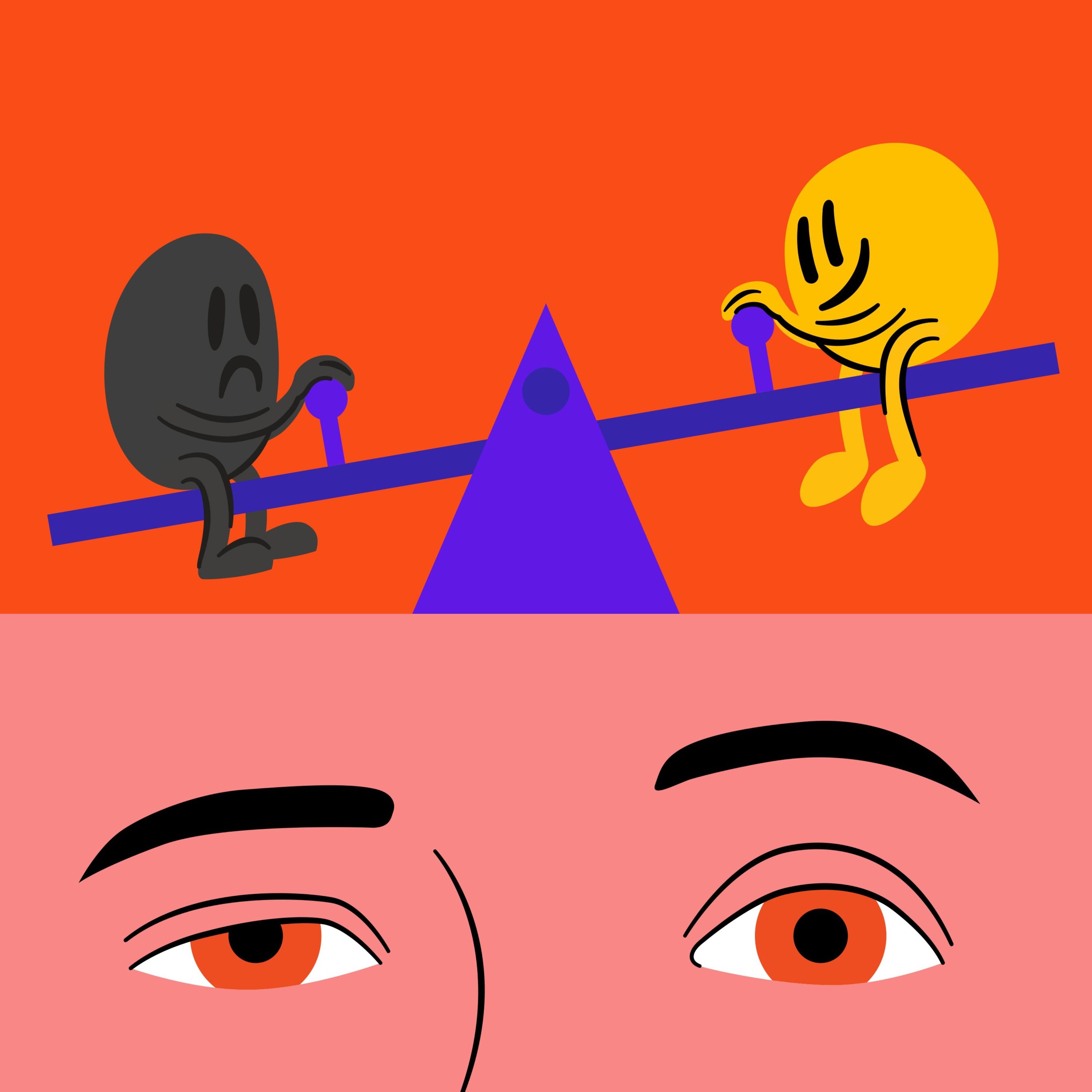
Our brains are wired to crave high-calorie foods like sugar, a valuable survival trait in the past. Modern society exploits this with an abundance of refined sugars and other stimuli, creating a constant battle between our instinctual 'animal self' and our rational 'linguistic self'.

The brain's reward system resets after an achievement, a process known as the hedonic treadmill. This means the feeling of satisfaction is inherently fleeting. The problem is not that we "can't get no satisfaction," as Mick Jagger sang, but that we "can't keep no satisfaction," driving our constant pursuit of the next goal.

Curiosity isn't simply a drive for novelty. It follows an inverted U-shaped curve, peaking for stimuli encountered just a few times. These items are frequent enough to signal future relevance but still uncertain enough to make information gathering valuable. Things that are completely new or overly familiar fail to capture our interest in the same way.

We mistakenly think kids are drawn to screens for pleasure. Neuroscience shows dopamine drives the desire and craving for an activity, creating a compulsion loop even when the activity itself ceases to be enjoyable or even becomes negative. It's the brain's 'do-it-again' button, not its 'feel-good' button.
Most believe dopamine spikes with rewards. In reality, it continuously tracks the difference between your current and next expectation, even without a final outcome. This "temporal difference error" is the brain's core learning mechanism, mirroring algorithms in advanced AI, which constantly updates your behavior as you move through the world.
Boredom is not a lack of things to do; it is the subjective experience of your brain's reward circuitry craving dopamine. This feeling prompts novelty-seeking behavior and is a necessary state for recalibrating your dopamine system after overstimulation.

Our constant access to luxury goods, leisure time, and reinforcing substances is a new type of stress. Our brains, which evolved for a world of scarcity, are not equipped to handle this overabundance, leading to compulsive overconsumption and addiction.

The feeling of dissatisfaction after achieving a major goal is a feature, not a bug. The brain's dopamine system is designed to keep you moving forward. If any single achievement—a partner, a food, a drug—were permanently satisfying, the drive to live and procreate would cease. The system ensures you always have another place to go.
The neurochemical for wanting (dopamine) is stronger than the one for liking (serotonin). This wiring creates the "arrival fallacy," where we perpetually chase achievements, mistakenly believing external validation will provide lasting fulfillment, which it is neurochemically unequipped to do.
