/
© 2026 RiffOn. All rights reserved.

Get your free personalized podcast brief

We scan new podcasts and send you the top 5 insights daily.

  1. Super Data Science: ML & AI Podcast with Jon Krohn
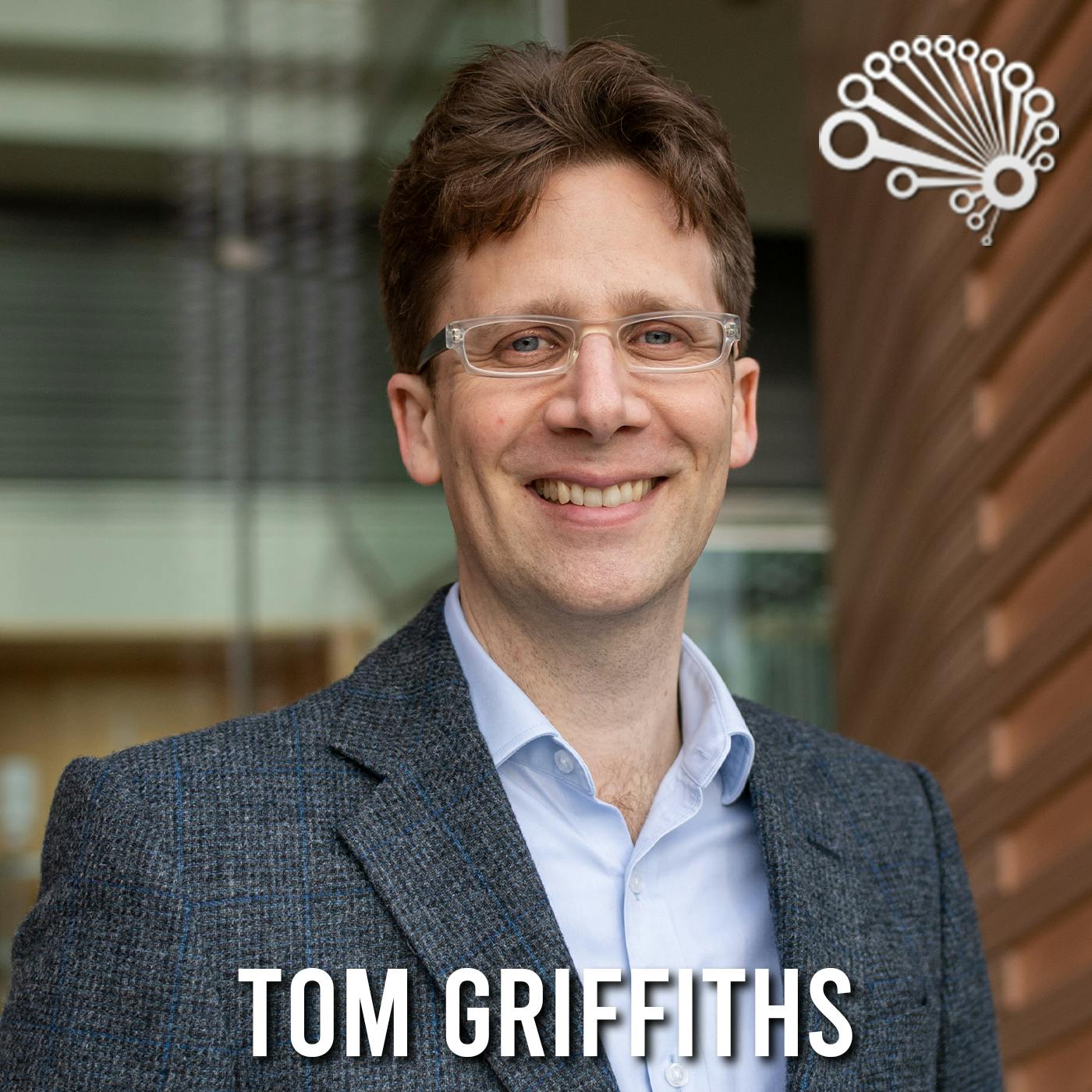
  2. 969: The Laws of Thought: The Math of Minds and Machines, with Prof. Tom Griffiths
969: The Laws of Thought: The Math of Minds and Machines, with Prof. Tom Griffiths

969: The Laws of Thought: The Math of Minds and Machines, with Prof. Tom Griffiths

Super Data Science: ML & AI Podcast with Jon Krohn · Feb 24, 2026

Prof. Tom Griffiths reveals the mathematical 'Laws of Thought' governing human and AI minds, explaining why cognitive limits make us unique.

Today's AI Agents Echo the Cognitive Architectures of 1980s Expert Systems

Modern AI agents, which wrap a large language model in a broader cognitive architecture for decision-making, are not a new concept. They mirror the structure of "expert systems" from the 1980s, which built similar architectures around a core of human-programmed if-then rules instead of a neural network.

969: The Laws of Thought: The Math of Minds and Machines, with Prof. Tom Griffiths thumbnail

969: The Laws of Thought: The Math of Minds and Machines, with Prof. Tom Griffiths

Super Data Science: ML & AI Podcast with Jon Krohn·15 hours ago

AI Will Develop Alien Intelligence Because It Lacks Human Constraints

Human intelligence is fundamentally shaped by tight constraints: limited lifespan, brain size, and slow communication. AI systems are free from these limits—they can train on millennia of data and scale compute as needed. This core difference ensures AI will evolve into a form of intelligence that is powerful but alien to our own.

969: The Laws of Thought: The Math of Minds and Machines, with Prof. Tom Griffiths thumbnail

969: The Laws of Thought: The Math of Minds and Machines, with Prof. Tom Griffiths

Super Data Science: ML & AI Podcast with Jon Krohn·15 hours ago

Force LLMs to Uncover Rare Knowledge With Procedurally Generated Prompts

LLMs are trained to produce high-probability, common information, making it hard to surface rare knowledge. The solution is to programmatically create prompts that combine unlikely concepts. This forces the model into an improbable state, compelling it to search the long tail of its knowledge base rather than relying on common associations.

969: The Laws of Thought: The Math of Minds and Machines, with Prof. Tom Griffiths thumbnail

969: The Laws of Thought: The Math of Minds and Machines, with Prof. Tom Griffiths

Super Data Science: ML & AI Podcast with Jon Krohn·15 hours ago

Psychologists See Human Irrationality; Computer Scientists See AI Inspiration

These two fields hold contradictory views of the human mind. Psychologists focus on biases and mistakes, deeming us irrational. In contrast, computer scientists see human cognition as so impressive they model the entire field of AI around its capabilities, highlighting our remarkable efficiency despite limitations.

969: The Laws of Thought: The Math of Minds and Machines, with Prof. Tom Griffiths thumbnail

969: The Laws of Thought: The Math of Minds and Machines, with Prof. Tom Griffiths

Super Data Science: ML & AI Podcast with Jon Krohn·15 hours ago

LLMs Mistakenly Favor Frequent Numbers Like '30' Over '29'

An LLM's core training objective—predicting the next token—makes it sensitive to the raw frequency of words and numbers online. This creates a subtle but profound flaw: it's more likely to output '30' than '29' in a counting task, not because of logic, but because '30' is statistically more common in its training data.

969: The Laws of Thought: The Math of Minds and Machines, with Prof. Tom Griffiths thumbnail

969: The Laws of Thought: The Math of Minds and Machines, with Prof. Tom Griffiths

Super Data Science: ML & AI Podcast with Jon Krohn·15 hours ago

The 4,995-Year Knowledge Gap Between Humans and LLMs Is Our 'Priors'

A human child learns a language from five years of input, while an LLM requires the equivalent of 5,000. Professor Griffiths quantifies this gap as 4,995 years' worth of information, which represents the "priors" or inductive biases—innate structures and assumptions—that give humans a massive head start in learning.

969: The Laws of Thought: The Math of Minds and Machines, with Prof. Tom Griffiths thumbnail

969: The Laws of Thought: The Math of Minds and Machines, with Prof. Tom Griffiths

Super Data Science: ML & AI Podcast with Jon Krohn·15 hours ago

Meta-Learning Can Give Neural Networks the 'Head Start' Humans Have

To bridge the learning efficiency gap between humans and AI, researchers use meta-learning. This technique learns optimal initial weights for a neural network, giving it a "soft bias" that starts it closer to a good solution. This mimics the inherent inductive biases that allow humans to learn efficiently from limited data.

969: The Laws of Thought: The Math of Minds and Machines, with Prof. Tom Griffiths thumbnail

969: The Laws of Thought: The Math of Minds and Machines, with Prof. Tom Griffiths

Super Data Science: ML & AI Podcast with Jon Krohn·15 hours ago

Ditch AI Benchmarks; Use Targeted Experiments to Diagnose System Principles

Standard AI benchmarks are an engineering tool for measuring performance. A more scientific approach, borrowed from cognitive psychology, uses targeted experiments. By designing problems where specific patterns of success and failure are diagnostic, researchers can uncover the underlying mechanisms and principles of an AI system, yielding deeper insights than a simple score.

969: The Laws of Thought: The Math of Minds and Machines, with Prof. Tom Griffiths thumbnail

969: The Laws of Thought: The Math of Minds and Machines, with Prof. Tom Griffiths

Super Data Science: ML & AI Podcast with Jon Krohn·15 hours ago

Human Curiosity Peaks for Things Seen a Few Times, Not for Pure Novelty

Curiosity isn't simply a drive for novelty. It follows an inverted U-shaped curve, peaking for stimuli encountered just a few times. These items are frequent enough to signal future relevance but still uncertain enough to make information gathering valuable. Things that are completely new or overly familiar fail to capture our interest in the same way.

969: The Laws of Thought: The Math of Minds and Machines, with Prof. Tom Griffiths thumbnail

969: The Laws of Thought: The Math of Minds and Machines, with Prof. Tom Griffiths

Super Data Science: ML & AI Podcast with Jon Krohn·15 hours ago

Like Airplanes Diverging From Birds, AI Should Now Focus on Machine-Specific Scaling

While biology (birds) provides initial inspiration for flight, progress eventually requires engineering machine-specific solutions (jet engines). Similarly, AI learned foundational principles from human cognition, but its recent breakthroughs come from non-biological methods like massive scaling. The focus should be on universal "laws of thought," not just mimicking biological hardware.

969: The Laws of Thought: The Math of Minds and Machines, with Prof. Tom Griffiths thumbnail

969: The Laws of Thought: The Math of Minds and Machines, with Prof. Tom Griffiths

Super Data Science: ML & AI Podcast with Jon Krohn·15 hours ago