Get your free personalized podcast brief
We scan new podcasts and send you the top 5 insights daily.
We mistakenly think kids are drawn to screens for pleasure. Neuroscience shows dopamine drives the desire and craving for an activity, creating a compulsion loop even when the activity itself ceases to be enjoyable or even becomes negative. It's the brain's 'do-it-again' button, not its 'feel-good' button.

Related Insights
Modern society turns normal behaviors like eating or gaming into potent drugs by manipulating four factors: making them infinitely available (quantity/access), more intense (potency), and constantly new (novelty). This framework explains how behavioral addictions are engineered, hijacking the brain’s reward pathways just like chemical substances.
When blood glucose drops, the brain's prefrontal cortex—responsible for willpower—dims its activity to save energy. This 'energy crisis' makes it nearly impossible to resist dopamine hits from activities like social media, creating a cycle of compulsive behavior.

Boys addicted to devices are being rewired for constant action-reaction dopamine hits. In a low-stimulus environment like a classroom, they may subconsciously create conflict or act out simply to generate a reaction, fulfilling their brain's conditioned need for immediate feedback, making them incredibly difficult to manage.

When parents use a smartphone to soothe an unhappy child, it establishes a powerful "perception-action loop." The child's brain learns that internal distress is a cue to reach for a digital device, conditioning them to seek external stimulation to manage negative emotions from a young age.

Unlike television, which induces a state of narrative transportation, touchscreen devices operate like a Skinner box. The stimulus-response-reward loop of swiping and receiving variable rewards actively trains and rewires a user's brain for addictive, quick-reinforcement behaviors, which is a fundamentally different neurological process.
The human brain is wired for progress achieved through struggle. By using technology to constantly skip to the "punchline" for a quick dopamine hit, we bypass this fundamental process. This creates a dangerous feedback loop akin to drug addiction, ultimately eroding a person's life and sense of accomplishment.

Addiction isn't defined by the pursuit of pleasure. It's the point at which a behavior, which may have started for rational reasons, hijacks the brain’s reward pathway and becomes compulsive. The defining characteristic is the inability to stop even when the behavior no longer provides pleasure and begins causing negative consequences.
The core engagement loop of the internet is not simply dopamine, but a cycle of intense, opposing emotional activations. It maintains arousal by rapidly switching between fear, anger, and joy (e.g., scary news followed by a cute cat video), which is cognitively draining.

The brain's hyper-plasticity period lasts until around age 25. Constant scrolling on social media provides rapid dopamine hits that the developing brain adapts to. This can create a permanent neurological wiring that expects high stimulation, leading to agitation and dysfunction in normal environments.
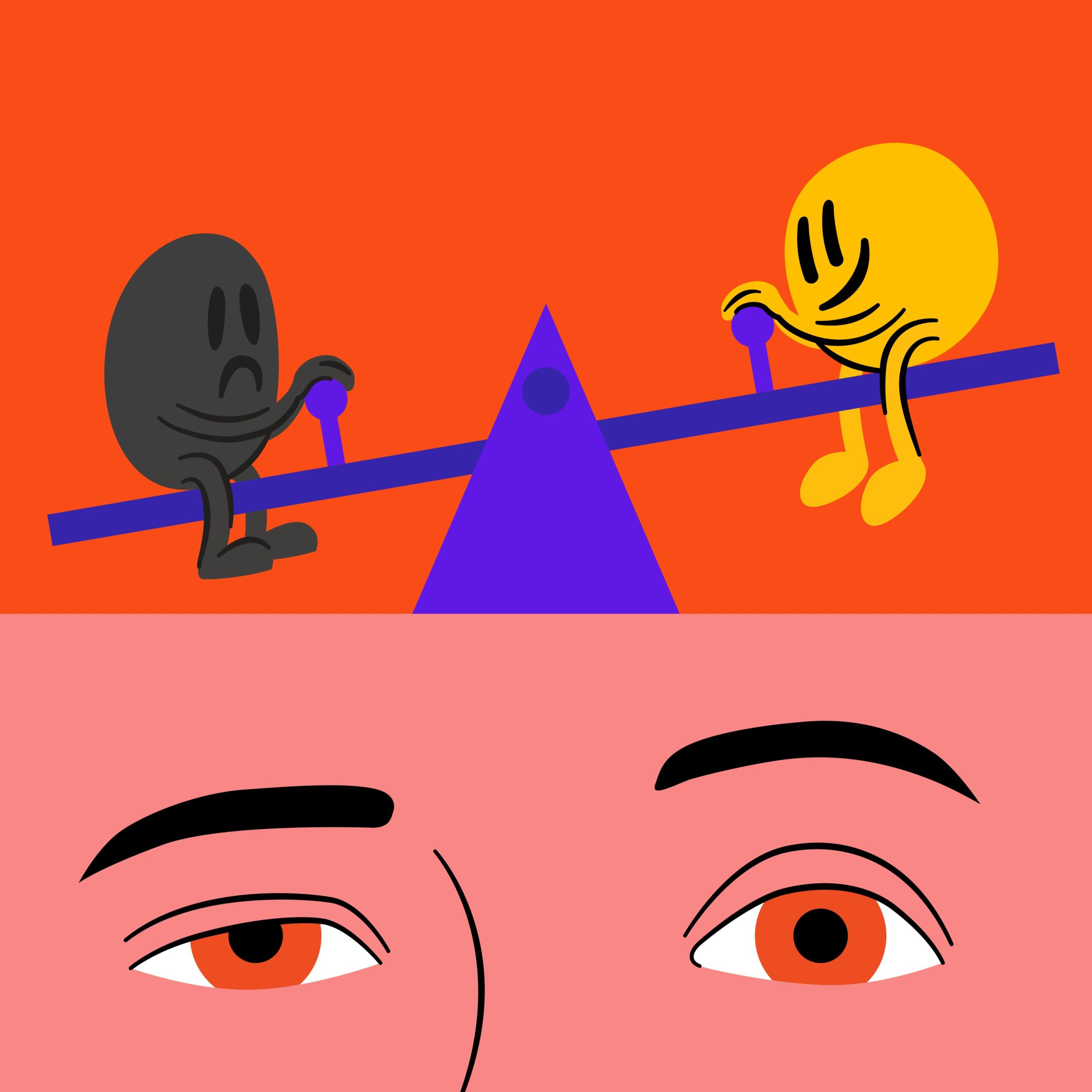
The brain maintains a pain-pleasure balance. Constantly triggering pleasure (dopamine) causes the brain to overcompensate by activating pain pathways, leading to a chronic dopamine-deficient state that manifests as anxiety, irritability, and depression.