Get your free personalized podcast brief
We scan new podcasts and send you the top 5 insights daily.
Boredom is not a lack of things to do; it is the subjective experience of your brain's reward circuitry craving dopamine. This feeling prompts novelty-seeking behavior and is a necessary state for recalibrating your dopamine system after overstimulation.

Related Insights
Constant stimulation from digital media keeps our brains in a taxed 'work mode.' Intentionally disconnecting and allowing for boredom activates the default mode network, a resting state that fosters inward thinking, problem-solving, and ultimately, enhanced creativity. Our escape from boredom is often 'junk food for the mind.'

Dopamine is often misunderstood as a 'pleasure molecule.' Its more crucial role is in motivation—the drive to seek a reward. Experiments show rats without dopamine receptors enjoy food but won't move to get it, starving to death. This seeking behavior is often triggered by the brain's craving to escape a dopamine deficit state.
The human brain defaults to an energy-saving 'autopilot' mode for predictable routines, like a daily commute. This causes you to be mentally absent and miss large portions of your life. Introducing novelty and unpredictable experiences is crucial because it forces your brain to disengage autopilot and become present and focused.
By filling every spare moment, we prevent our brains from entering the 'default mode' needed for creativity and contemplating complex questions. This creates lives that feel uninteresting despite constant stimulation. Arthur Brooks advises scheduling tech-free time to allow for this essential 'blank space'.

Humans can endure immense suffering, misery, and ugliness, but find boredom intolerable. This powerful aversion is an underestimated catalyst for major historical events, social movements, and even revolutions, as people seek excitement and a sense of purpose over monotony.

Contrary to conventional wisdom, the solution to boredom from a simple task isn't to simplify further, but to make it more difficult. Adding a secondary task (a form of multitasking) can increase alertness and engagement, preventing the mental fatigue that comes from forcing your attention on something under-stimulating.
We mistakenly think kids are drawn to screens for pleasure. Neuroscience shows dopamine drives the desire and craving for an activity, creating a compulsion loop even when the activity itself ceases to be enjoyable or even becomes negative. It's the brain's 'do-it-again' button, not its 'feel-good' button.

Most believe dopamine spikes with rewards. In reality, it continuously tracks the difference between your current and next expectation, even without a final outcome. This "temporal difference error" is the brain's core learning mechanism, mirroring algorithms in advanced AI, which constantly updates your behavior as you move through the world.

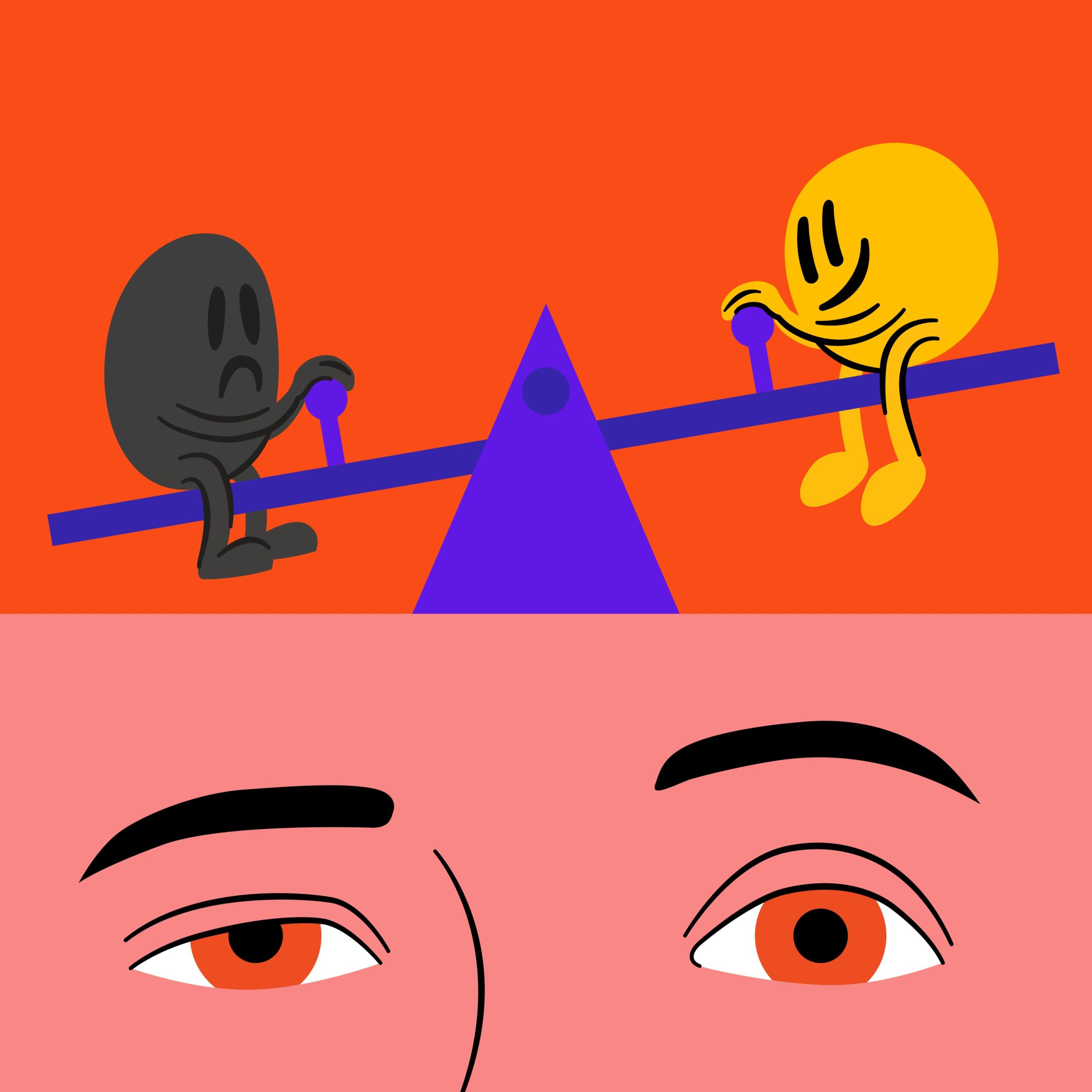
The brain maintains a pain-pleasure balance. Constantly triggering pleasure (dopamine) causes the brain to overcompensate by activating pain pathways, leading to a chronic dopamine-deficient state that manifests as anxiety, irritability, and depression.

The feeling of dissatisfaction after achieving a major goal is a feature, not a bug. The brain's dopamine system is designed to keep you moving forward. If any single achievement—a partner, a food, a drug—were permanently satisfying, the drive to live and procreate would cease. The system ensures you always have another place to go.