Get your free personalized podcast brief
We scan new podcasts and send you the top 5 insights daily.
To combat razor-thin margins, Diapers.com's key innovation was deep logistics optimization. They hired a PhD in nuclear physics to develop an algorithm that calculated the perfect box size for every order, minimizing dimensional weight shipping charges and making their loss-leader model viable.

Related Insights
To launch, Diapers.com bought products at full price from wholesale clubs like Costco. This "do things that don't scale" approach proved demand and built a customer base before they had manufacturer deals, despite losing more money per order.
Many 3PLs use cheaper, modern shipping carriers while still billing you at legacy rates for companies like FedEx or UPS. Regularly auditing your 3PL invoices for this arbitrage can uncover a "gold mine" of savings to add directly to your bottom line.

Contrary to common belief for online-native brands, Peak Design's own retail stores have the highest contribution margin. This is because shipping products in bulk freight to stores is cheaper than covering the high last-mile delivery costs for individual e-commerce orders, which often qualify for free shipping.
Beyond obvious expenses like ads and inventory, the most overlooked financial leak is in 3PL and shipping. Most founders are unaware that their 3PL providers are arbitraging shipping rates and adding hidden fees, which significantly erodes profitability.
Instead of stocking every product variation, Sol Price's "intelligent loss of sales" system offered only the best-value item (e.g., one size of oil). This deliberately lost some customers but radically simplified inventory, labor, and checkout, creating an unbeatable cost advantage.

Before free shipping was standard, Nuts.com intentionally used shipping costs to deter low-value orders. The founder wanted a 'hurdle' to 'adversely select away the bad customers,' like someone buying a single $2.99 item. This counterintuitive strategy focused on attracting high-quality, profitable customers rather than maximizing order volume.
High-margin software businesses operate on 'easy mode,' which can mask inefficiencies. To build a truly durable company, founders should study discount retailers like Costco or Aldi. These businesses thrive on razor-thin margins by mastering cost reduction, operational simplicity, and value delivery—lessons directly applicable to building efficient software companies.

This classic mathematical problem seeks the shortest possible route between multiple cities. While simple to state, it's incredibly complex to solve at scale. Its principles are now fundamental to optimizing global logistics and delivery networks for modern commerce giants.

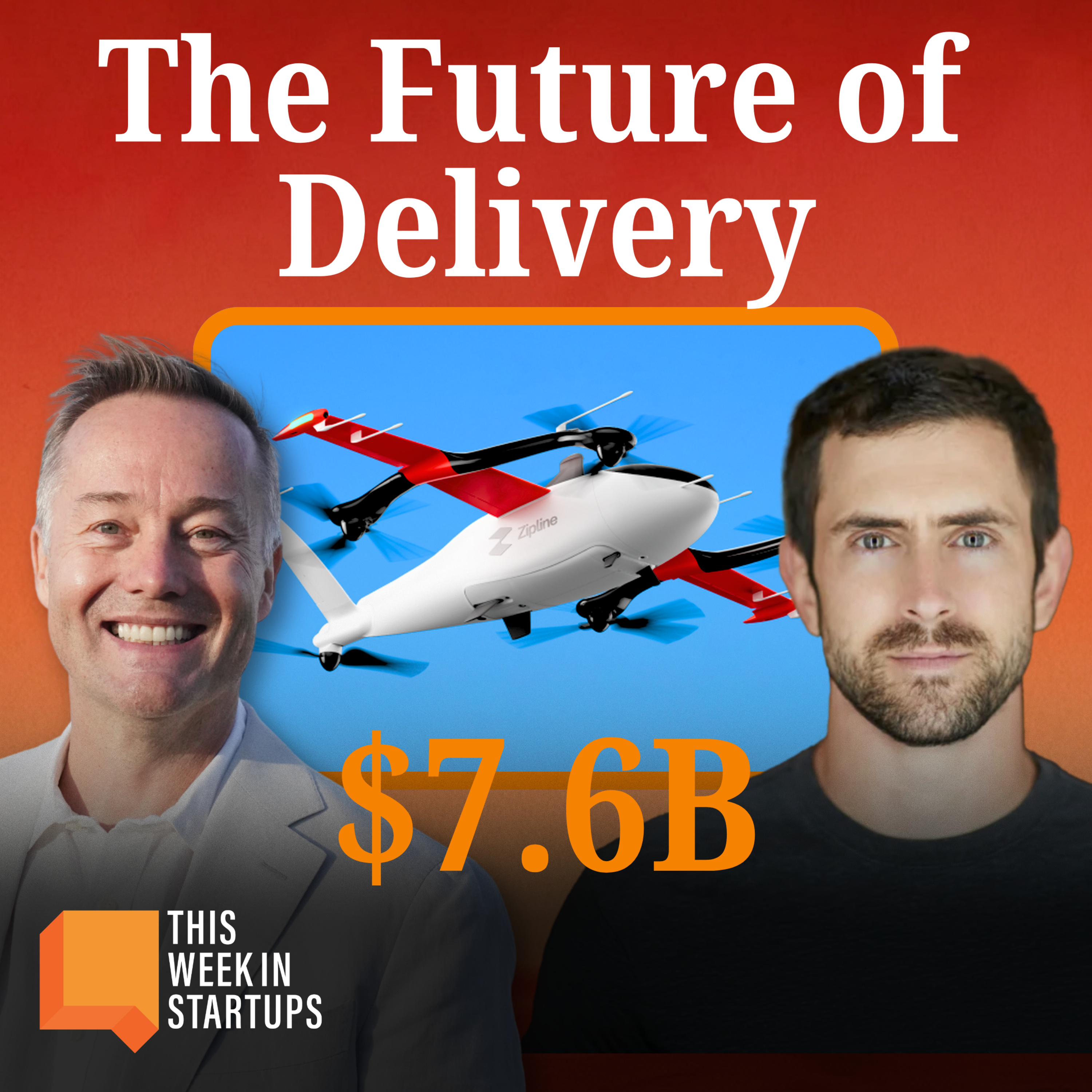
The inefficiency of using a 4,000-pound gas vehicle for a 5-pound delivery ensures drone delivery will eventually be far cheaper. This physics-based argument underpins the entire business model's long-term economic viability.
Flexport's AI optimization models achieved a rare win-win: making ocean shipping both 20% faster and 2% cheaper. This defies the conventional logistics trade-off where speed costs more. The AI constantly re-optimizes container placements, a task humans cannot do at scale, particularly for cancelled shipments.