Get your free personalized podcast brief
We scan new podcasts and send you the top 5 insights daily.
A naval and air blockade, or "cordon sanitaire," presents a more dangerous and likely scenario than a direct cross-strait assault. This strategy would force an enormously difficult political and military decision upon the U.S. about whether to break the blockade and come to Taiwan's aid.

Related Insights
Beijing’s core strategy for Taiwan is to convince its populace that "resistance is futile" and no outside help is coming. U.S. arms sales and rhetorical support from allies are particularly disruptive because they directly counter this psychological narrative of isolation, undermining China's goal of a coerced unification.

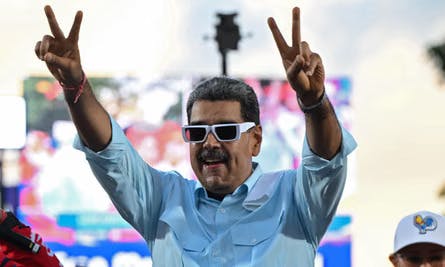
The U.S. operation to capture Maduro serves as a real-world case study for China's potential 'decapitation' strike against Taiwan. China has already rehearsed such scenarios in mock-ups of Taipei's presidential palace. This event demonstrates the feasibility of a quick, surgical strike, which is more aligned with the CCP's goals than a costly amphibious invasion.
China's showcase of advanced military hardware, like its new aircraft carrier, is primarily a psychological tool. The strategy is to build a military so 'forbiddingly huge' that the US would hesitate to engage, allowing China to achieve goals like reabsorbing Taiwan without fighting. This suggests their focus is on perceived power to deter intervention.

China is completely dependent on US-policed sea lanes for oil and food. The U.S. could trigger a civilizational collapse, potentially killing half the population, by simply using a few destroyers to stop energy and food flows near Singapore. This can be done without a direct military confrontation on Chinese soil.

China maintains a strategic petroleum reserve covering over 120 days of imports, exceeding the 90-day international standard. This massive stockpile is not just for economic stability but is a key national security measure, driven by long-standing fears that the U.S. Navy could cut off its seaborne oil supplies during a conflict.

Contrary to widespread fear, the probability of a Chinese invasion of Taiwan before 2028 is extremely low (~5%). China believes its goal of 'peaceful reunification' is progressing, its military is in disarray after deep purges, and it views President Trump as an accommodating US leader on the Taiwan issue.

China's strategy for Taiwan likely mirrors its 2019 Hong Kong takeover. Instead of a direct military assault, Beijing will use political influence, espionage, and legislative changes to create administrative bridges, making any physical resistance illegal before troops ever move in.

Instead of a full-scale invasion, China is employing an "anaconda strategy" of constant, low-level pressure. Tactics like cutting undersea cables and sending drones are designed to exhaust and demoralize Taiwan, making a military response from the US difficult to justify.
While the U.S. is preoccupied with Iran and the Strait of Hormuz, China has significantly increased its military presence around Taiwan. This may not be just a show of force, but a strategic dress rehearsal for an invasion, testing capabilities while global attention is focused elsewhere.

The primary danger to the West's technology infrastructure is not a Chinese invasion of Taiwan, but a simple naval blockade. This less aggressive act could halt the flow of 90% of the world's advanced microprocessors, crippling Western economies and defense systems without firing a shot.
