Get your free personalized podcast brief
We scan new podcasts and send you the top 5 insights daily.
Instead of a full-scale invasion, China is employing an "anaconda strategy" of constant, low-level pressure. Tactics like cutting undersea cables and sending drones are designed to exhaust and demoralize Taiwan, making a military response from the US difficult to justify.

Related Insights
The Russia-Ukraine conflict demonstrates that the first move in modern warfare is often a cyberattack to disable critical systems like logistics and communication. This is a low-cost, high-impact method to immobilize an adversary before physical engagement.

The strategic competition with China is often viewed through a high-tech military lens, but its true power lies in dominating the low-tech supply chain. China can cripple other economies by simply withholding basic components like nuts, bolts, and screws, proving that industrial basics are a key geopolitical weapon.

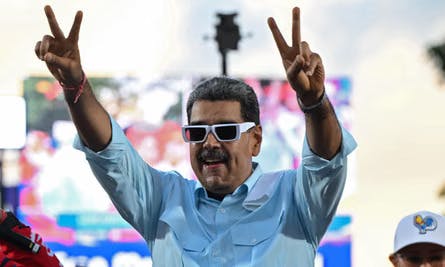
The U.S. operation to capture Maduro serves as a real-world case study for China's potential 'decapitation' strike against Taiwan. China has already rehearsed such scenarios in mock-ups of Taipei's presidential palace. This event demonstrates the feasibility of a quick, surgical strike, which is more aligned with the CCP's goals than a costly amphibious invasion.
China's showcase of advanced military hardware, like its new aircraft carrier, is primarily a psychological tool. The strategy is to build a military so 'forbiddingly huge' that the US would hesitate to engage, allowing China to achieve goals like reabsorbing Taiwan without fighting. This suggests their focus is on perceived power to deter intervention.

Unlike the old Cold War with Russia, the U.S. and China's deep economic interdependence prevents open conflict. The current "Rice War" is like water polo: while business and diplomacy occur on the surface, a covert intelligence and influence war rages underneath.

China's strategy for Taiwan likely mirrors its 2019 Hong Kong takeover. Instead of a direct military assault, Beijing will use political influence, espionage, and legislative changes to create administrative bridges, making any physical resistance illegal before troops ever move in.
The widely cited 2027 date for China to be ready to invade Taiwan is an American intelligence assessment, not a public Chinese declaration. It aligns with the PLA's internal modernization deadline for achieving "intelligentised warfare" capabilities, including AI and advanced networks.
The Trump administration's renewed focus on Latin America, as detailed in its national security strategy, could inadvertently signal a reduced US geopolitical focus on China's sphere of influence. Beijing may interpret this as an opportunity to play the long game on Taiwan, avoiding immediate retaliation over Venezuela.

Censorship in China operates less through direct orders and more through an atmosphere of unpredictable threat. Like an anaconda sleeping in a chandelier above a dinner party, the state's potential to strike at any moment for any reason causes individuals to self-censor constantly, stifling creativity and open discourse.
![Dan Wang - The US vs China In The 21st Century - [Invest Like the Best, EP.444] thumbnail](https://megaphone.imgix.net/podcasts/e1599a88-a9f6-11f0-b532-e3695bb27d60/image/0f5c07552cef2689e5834d56786ad6f1.jpg?ixlib=rails-4.3.1&max-w=3000&max-h=3000&fit=crop&auto=format,compress)
Recent trade talks deliberately sidestepped core geopolitical issues like Taiwan and the South China Sea. This highlights that economic agreements are merely treating symptoms. The fundamental problem is a geopolitical power struggle, which will continue to undermine any economic progress.