Get your free personalized podcast brief
We scan new podcasts and send you the top 5 insights daily.
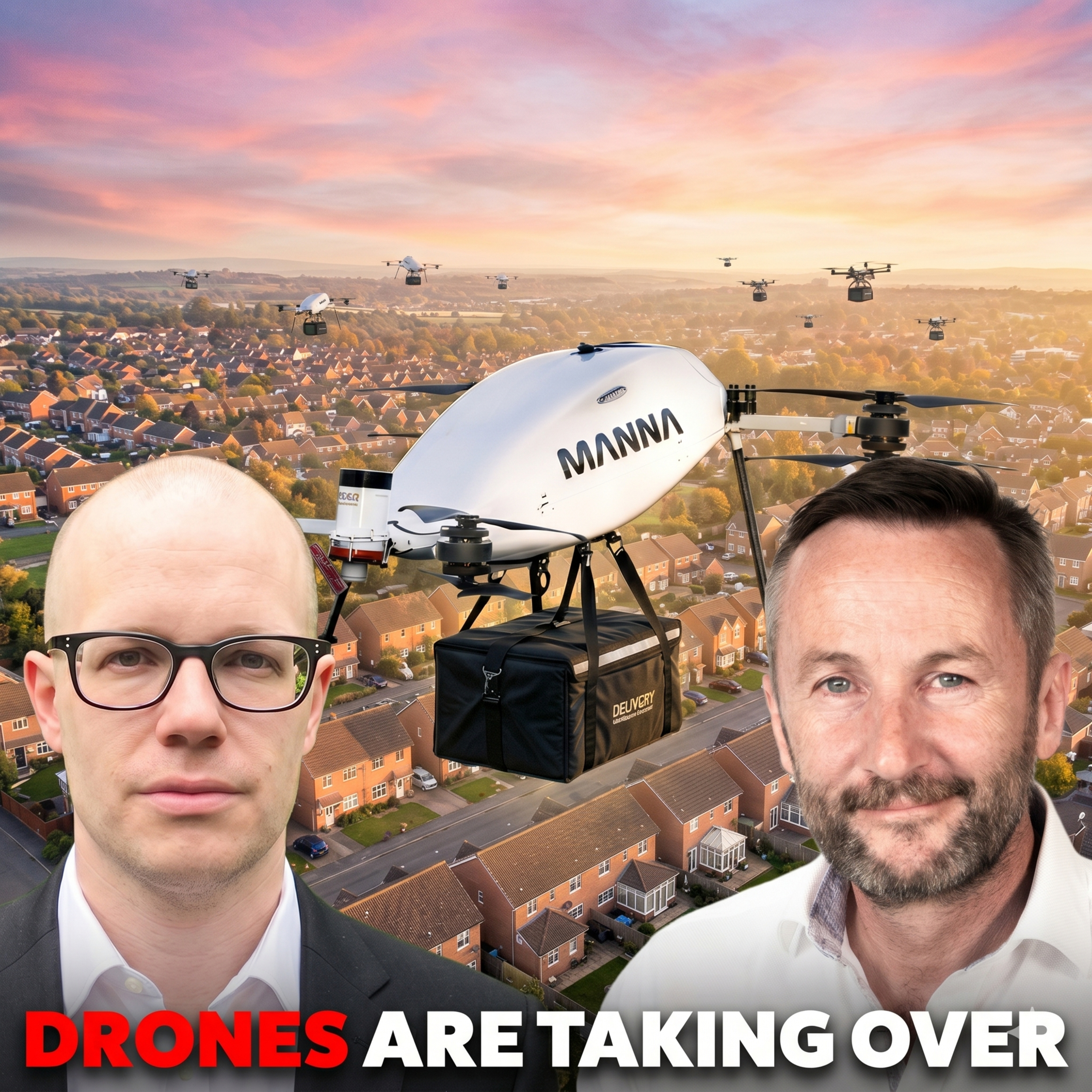
Instead of relying on a single central hub, Mana's drones fly out to various pre-set pads each morning. They then migrate between these locations throughout the day based on anticipated order flow, balancing rapid delivery times with capital expenditure on depots.
Related Insights
Instead of mirroring Amazon’s capital-intensive, fully-owned logistics network, MercadoLibre adopted a flexible hybrid model. It owns the core infrastructure but partners with local services for last-mile delivery, achieving speed and reliability without the massive capex burden.

Contrary to a single-hub model, modern radiopharmaceutical supply chains require a decentralized network of regional manufacturing sites. This approach ensures reliability for time-sensitive isotopes by mitigating risks like weather or transport delays, prioritizing same-day ground delivery over less dependable overnight air.

Beyond delivering restaurant food, Mana's ultimate goal is to create a platform for peer-to-peer delivery. This would empower individuals and small home-based businesses to sell and ship products hyper-locally, effectively creating a new, democratized logistics layer for neighborhood economies.
Before autonomous vehicles can dominate delivery, a more fundamental problem must be solved: creating a structured, real-time catalog of the tens of millions of items available in a city. Without knowing what exists and where, advanced fulfillment technology is useless.
Unlike typical cash-burning startups, Mana's new drone locations are contribution-positive from the start and achieve payback in 7-12 months. This allows the company to use debt, not just dilutive equity, to finance its physical expansion, creating a highly capital-efficient scaling model.
Instead of competing with giants like FedEx and DHL, some drone companies are offering them a white-labeled, fully integrated autonomous delivery system. This B2B model allows logistics operators to adopt drone technology without building it from scratch, treating it as an addition to their existing fleet.

Autonomous commerce will be a multimodal ecosystem using drones, sidewalk bots, and AVs. This creates a massive integration problem for retailers. The winning strategy is not building one vehicle, but creating the universal orchestration layer that allows retailers to manage all autonomous delivery form factors seamlessly.

Zipline's CEO argues from first principles that current delivery logistics are absurdly inefficient. Replacing a human-driven, gas-powered car with a small, autonomous electric drone is not just an incremental improvement but a fundamental paradigm shift dictated by physics.

Drone delivery startup Iona is targeting the 99% of the world with low population density, where traditional van-based logistics are inefficient. Their vision is to create a 'physical internet' that makes obtaining physical goods as easy as accessing information online.
Mana views drone delivery not as a tech product but as a commodity for delivering goods like burritos. This forces an obsessive focus on operational efficiency and unit cost, adopting a low-cost airline mentality to win on price and scale, rather than on flashy technology.