Get your free personalized podcast brief
We scan new podcasts and send you the top 5 insights daily.
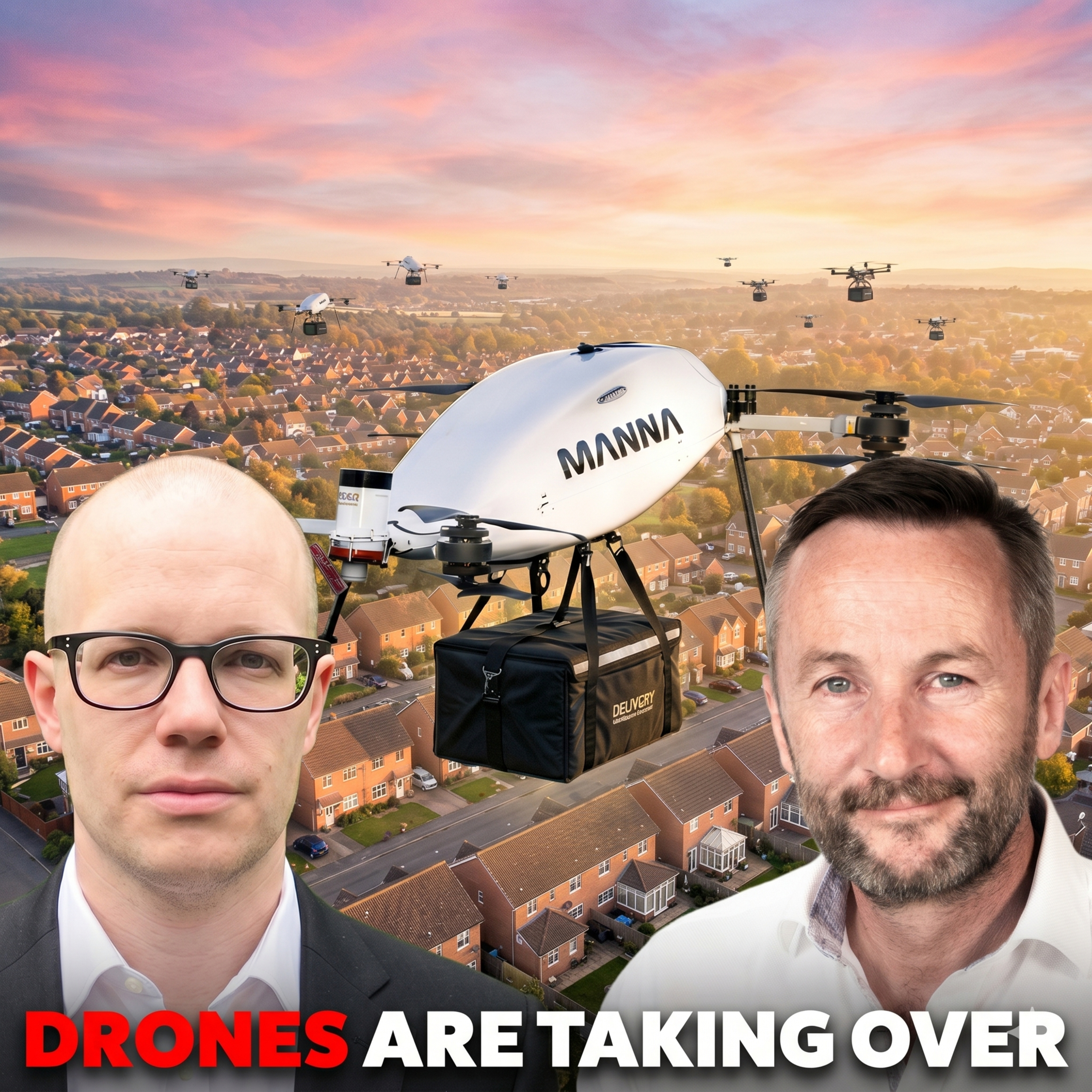
Unlike typical cash-burning startups, Mana's new drone locations are contribution-positive from the start and achieve payback in 7-12 months. This allows the company to use debt, not just dilutive equity, to finance its physical expansion, creating a highly capital-efficient scaling model.
Related Insights
Instead of raising dilutive equity, RealDefense uses debt to acquire companies. Lenders base the loan amount (typically 2-4x EBITDA) on the combined EBITDA of both the acquiring and target companies, allowing the business to fund growth while founders retain ownership.

Profitable manufacturer SendCutSend raised $110M not for operations, but to fund growth that can't be financed with traditional debt, such as hiring software engineers and securing buildings. They continue to use loans for hard assets like machinery, demonstrating a sophisticated, hybrid capital strategy.

By ensuring customers pay back their acquisition cost quickly, you eliminate cash as a growth bottleneck. This self-sufficiency means you aren't forced to take loans or investment prematurely, allowing you to negotiate from a position of strength and on your own terms if and when you decide to raise capital.

Instead of viewing a pilot plant as just an R&D cost center, design it to be profitable. This self-sustaining model provides commercial validation and helps secure pre-sale agreements, which can then be leveraged to finance a full-scale industrial facility with less investor risk.

For asset-heavy hard tech companies, debt is most effective not as a bridge to the next equity round, but to finance long-lived assets (e.g., machinery) that are directly tied to contracted revenue. This approach de-risks the loan and supports scalable growth without excessive equity dilution, a sharp contrast to SaaS venture debt norms.

Flipsnack proves the model of using founder-owned profits to reach significant scale. Only after hitting $15M ARR did they take on non-dilutive debt capital for targeted acceleration, like opening international sales offices. This avoids early dilution and maintains 100% ownership while fueling growth.
This model focuses on rapid cash conversion by making gross profit from a new customer in the first 30 days exceed twice the cost of acquiring and serving them. This self-funding loop eliminates cash flow as a growth constraint, allowing for aggressive scaling.

Mana views drone delivery not as a tech product but as a commodity for delivering goods like burritos. This forces an obsessive focus on operational efficiency and unit cost, adopting a low-cost airline mentality to win on price and scale, rather than on flashy technology.
Instead of relying on a single central hub, Mana's drones fly out to various pre-set pads each morning. They then migrate between these locations throughout the day based on anticipated order flow, balancing rapid delivery times with capital expenditure on depots.
Intercom raised $250M in debt to fund its AI expansion. For a high-growth, profitable company, debt is far less dilutive than equity, costing an estimated tenth of the price to shareholders. It is an underutilized tool for mature tech companies to finance new growth.