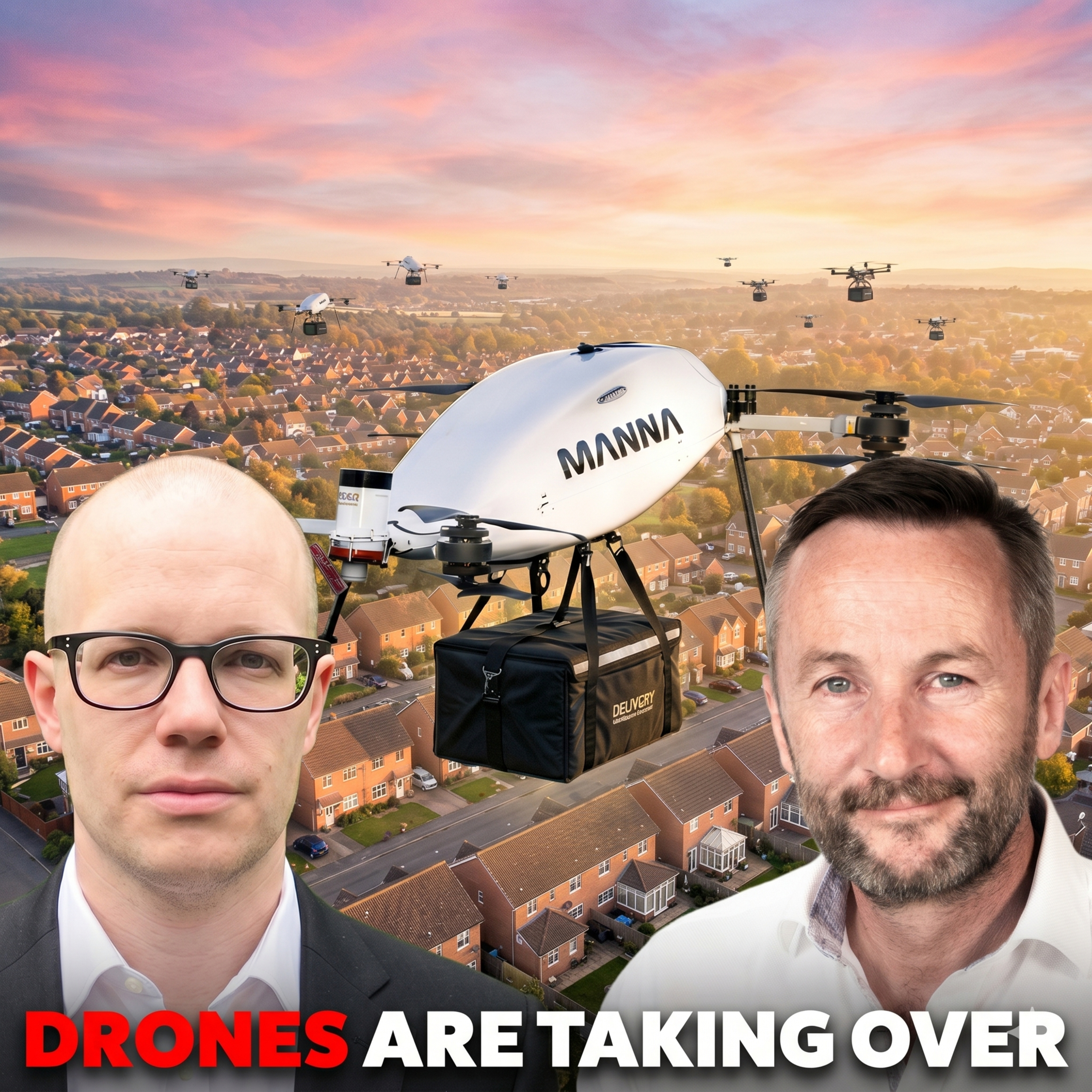
Unlike typical cash-burning startups, Mana's new drone locations are contribution-positive from the start and achieve payback in 7-12 months. This allows the company to use debt, not just dilutive equity, to finance its physical expansion, creating a highly capital-efficient scaling model.
Instead of relying on a single central hub, Mana's drones fly out to various pre-set pads each morning. They then migrate between these locations throughout the day based on anticipated order flow, balancing rapid delivery times with capital expenditure on depots.
The universal jamming of GPS in conflict zones like Ukraine has rendered modern, GPS-reliant drones ineffective. This has reset the baseline level of drone autonomy to what it was two decades ago, creating an urgent need for alternative navigation systems that can operate without satellite signals.
Mana views drone delivery not as a tech product but as a commodity for delivering goods like burritos. This forces an obsessive focus on operational efficiency and unit cost, adopting a low-cost airline mentality to win on price and scale, rather than on flashy technology.
A recent executive order and new FAA regulations (like the upcoming Part 108) have dramatically accelerated the path to scaling drone operations in the US. This policy shift has transformed the country into the most attractive market globally, enabling approvals in 30 days that previously took years.
Beyond delivering restaurant food, Mana's ultimate goal is to create a platform for peer-to-peer delivery. This would empower individuals and small home-based businesses to sell and ship products hyper-locally, effectively creating a new, democratized logistics layer for neighborhood economies.
Theseus's vision-based navigation is only accurate to 30 meters, a deliberate choice. This is sufficient for long-range transport ('getting from A to B') without enabling precision targeting. This strategy prioritizes reliability in GPS-denied areas while navigating regulatory and ethical concerns.
Initially a hardware company, Theseus evolved into a software provider that enhances drone reliability. By offering a solution that runs on commodity hardware like a Raspberry Pi, they solve the core problem of autonomy in contested environments without getting bogged down in manufacturing.
The U.S. faces a significant national security risk because its drone manufacturing relies heavily on Chinese components. From camera lenses to the PCBs that connect sensors, key parts are nearly impossible to source elsewhere without incurring massive cost increases, hindering domestic production capacity.