Get your free personalized podcast brief
We scan new podcasts and send you the top 5 insights daily.
Drone delivery startup Iona is targeting the 99% of the world with low population density, where traditional van-based logistics are inefficient. Their vision is to create a 'physical internet' that makes obtaining physical goods as easy as accessing information online.

Related Insights
Starlink's satellite beams are too broad to effectively serve dense cities. Its business model is complementary to ground-based cellular, focusing on rural and underserved areas where building fiber or cell towers is economically inefficient.

The founders initially focused on building the autonomous aircraft. They soon realized the vehicle was only 15% of the problem's complexity. The real challenge was creating the entire logistics ecosystem around it, from inventory and fulfillment software to new procedures for rural hospitals.

Hardware founders often fixate on the core device. Zipline learned the hard way that their aircraft was only 15% of the total system complexity. The truly difficult challenges lay in the surrounding logistics: inventory management, cold chain, maintenance, air traffic control, and ground infrastructure.

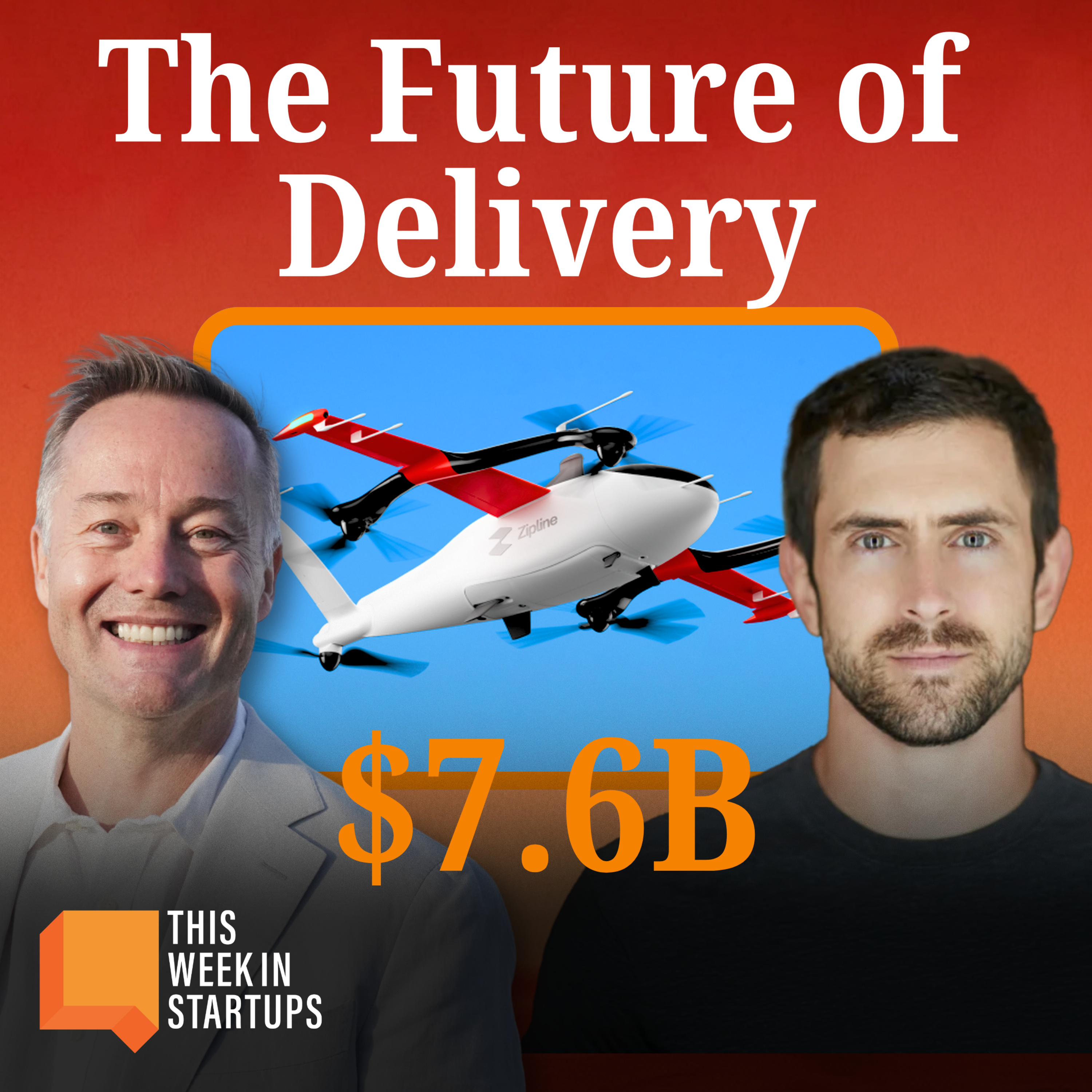
For serious cargo delivery, tilt-rotor hybrid drones are more effective than simple quadcopters. They combine the convenience of vertical takeoff with the energy efficiency of fixed-wing flight, enabling longer ranges (60+ miles) and heavier payloads (40+ lbs).
Zipline's CEO reveals the aircraft is a small part of their solution. The real challenge and value lie in the vertically integrated network: ground infrastructure, traffic management, regulatory approval, and customer-facing apps.
Instead of competing with giants like FedEx and DHL, some drone companies are offering them a white-labeled, fully integrated autonomous delivery system. This B2B model allows logistics operators to adopt drone technology without building it from scratch, treating it as an addition to their existing fleet.
Autonomous commerce will be a multimodal ecosystem using drones, sidewalk bots, and AVs. This creates a massive integration problem for retailers. The winning strategy is not building one vehicle, but creating the universal orchestration layer that allows retailers to manage all autonomous delivery form factors seamlessly.

The inefficiency of using a 4,000-pound gas vehicle for a 5-pound delivery ensures drone delivery will eventually be far cheaper. This physics-based argument underpins the entire business model's long-term economic viability.
Zipline's CEO argues from first principles that current delivery logistics are absurdly inefficient. Replacing a human-driven, gas-powered car with a small, autonomous electric drone is not just an incremental improvement but a fundamental paradigm shift dictated by physics.

Drone delivery service Zipline achieved 46% market penetration among households in one of its Dallas service areas, far exceeding typical 2-5% market share benchmarks for new tech. This demonstrates that highly differentiated services can achieve utility-like adoption levels very rapidly, becoming a new normal for communities.
