Get your free personalized podcast brief
We scan new podcasts and send you the top 5 insights daily.
Twyla Tharp defines a successful performance as a service provided. The key metric is not technical perfection or critical acclaim, but whether the audience leaves in a better state than they arrived—with a renewed sense of optimism or joy. This frames artistic creation as an act of public service.

Related Insights
Twyla Tharp argues that a major success creates a more difficult creative situation than a failure. Success raises expectations and leaves the artist with the daunting question of "what now?" whereas failure provides a clearer, albeit painful, path forward to improve and try again.
While knowledge is valuable, choreographer Twyla Tharp argues that a creator's most difficult and essential work is "protecting but refining instinct." The challenge is to prevent intellectual understanding and external feedback from diluting the pure, immediate, and often correct, gut reactions that drive original work.
Art is a mechanism for changing perception. It often makes audiences uncomfortable at first by introducing a novel idea or form. Over time, great art guides people from that initial discomfort to a new state of understanding, fundamentally altering how they see the world.

Technical talent is not the primary driver of resonant creative work. The key ingredient is 'taste'—an unteachable ability to discern what will be emotionally pleasing and impactful to an audience. This intuitive sense separates good creators from great ones.

Renowned choreographer Twyla Tharp defines the "spine" of a creative project as its central focus. This core idea connects all disparate elements, preventing the work from becoming disjointed and providing a grounding point from which all decisions must originate.
When building an elite team, choreographer Twyla Tharp looks beyond skill. The crucial factor is the collaborator's own intense desire to work with her and tackle immense challenges. The best team members effectively select themselves by demonstrating a commitment so strong they're willing to "go through the wall."
Twyla Tharp outlines the creator's spectrum of audience engagement: from complete manipulation to serve their desires, to total disregard in favor of pure self-expression. The optimal approach depends on the context, such as whether the work is a commercial contract or a personal artistic exploration.
Citing Kurt Vonnegut, the host and artist agree that the best creative work uses entertainment as a vehicle for delivering deeper insights. Rather than just being fun, its purpose is to inform and share experiences, making complex ideas accessible and memorable for the audience.
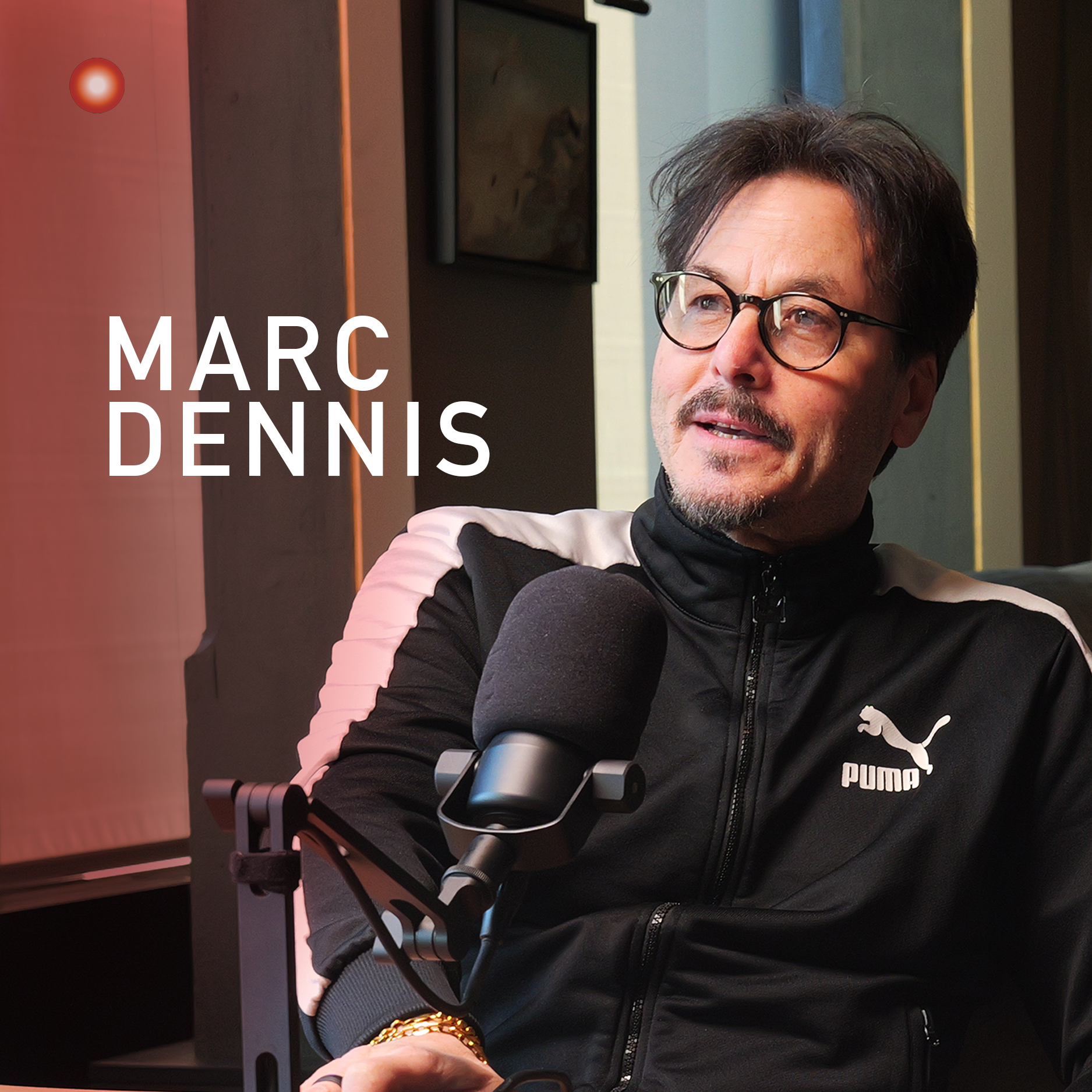
Marc Dennis states his purpose is not self-expression or personal catharsis. Instead, he aims to create work that entertains others, providing a mirror for them to reflect upon and discover parts of themselves within his art. His success is measured by the audience's self-discovery.
When working privately, don't label early attempts as successes or failures. Instead, choreographer Twyla Tharp suggests evaluating them based on their utility. The crucial question is not "Is this good?" but "Is this useful? Does it generate the next question and move the process forward?"