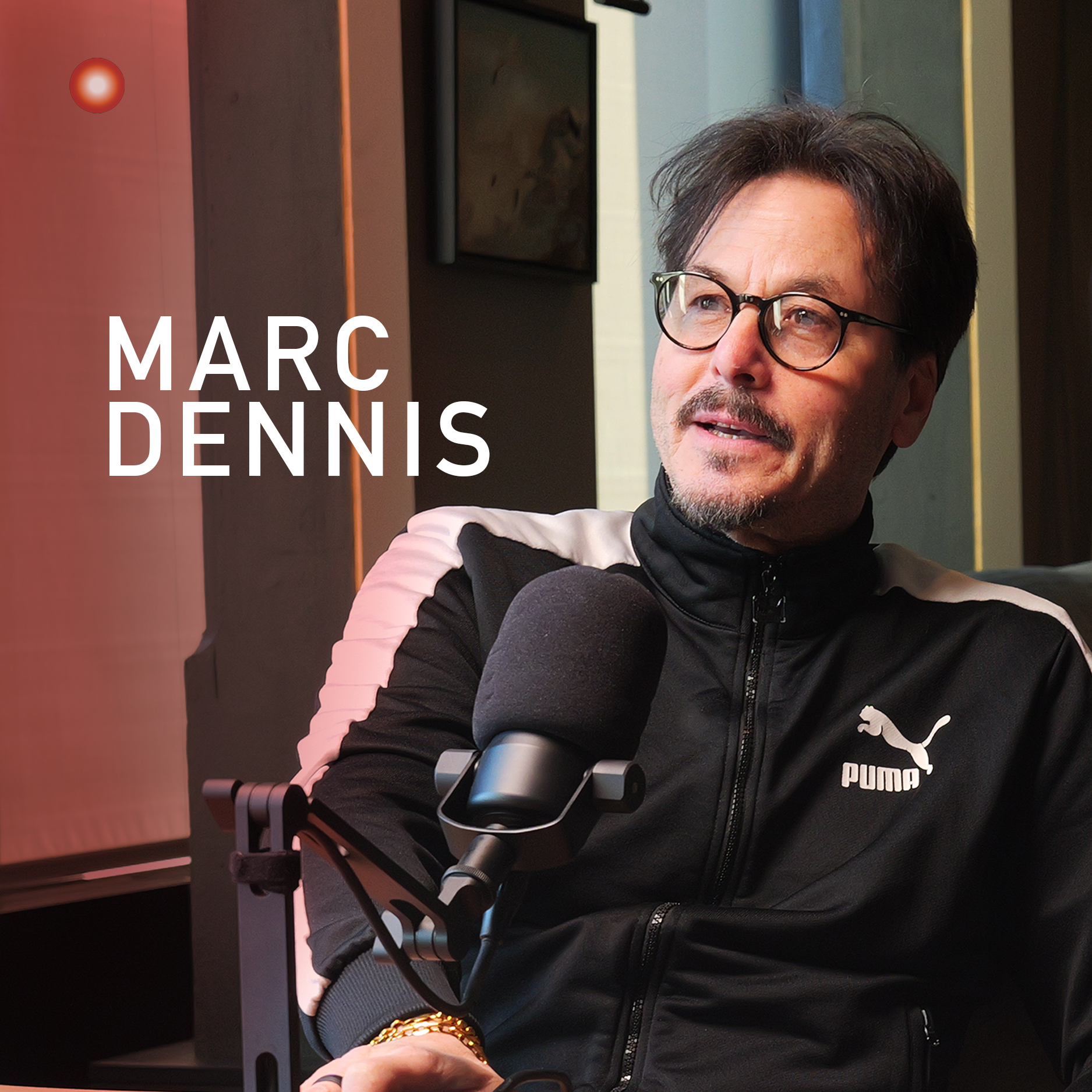
Artist Marc Dennis started writing his memoir not for an audience, but as a way to communicate with his younger brother after he passed away. This deeply personal, therapeutic act of writing daily letters evolved into a broader collection of life stories and memories, born from grief rather than ambition.
The earliest known joke, traced to Assyrian cuneiform, is simply "a dog walks into a bar," with no punchline. The humor is not in a witty ending but in the absurdity of the premise itself. This highlights that humor's fundamental power lies in subverting established norms and expectations.
Feeling like an outsider in the traditional art world, Marc Dennis built his network at exclusive events. He connected directly with collectors and appreciators who became his patrons and advocates, creating an alternative support system that propelled his career outside of institutional validation.
When asked for a piece of advice for the world, Marc Dennis's first idea is that loving others is impossible without first loving oneself. He views this as a fundamental principle that people often forget, leading to troubled relationships and personal unhappiness.
Artist Marc Dennis's career truly took off only after he resigned from a tenured professorship. By removing the security of a "Plan B" and going "all in" on being a full-time artist, he created the necessary pressure and focus to achieve breakthrough professional success.
Artist Marc Dennis combines his obsessive, hyper-real painting skill with an unserious sense of humor. He views this humor not as a gimmick but as a "high voltage technique" that energizes his technically demanding work and injects his distinct personality, preventing it from being solely about craftsmanship.
Marc Dennis states his purpose is not self-expression or personal catharsis. Instead, he aims to create work that entertains others, providing a mirror for them to reflect upon and discover parts of themselves within his art. His success is measured by the audience's self-discovery.
Society rarely bans powerful new technologies, no matter how dangerous. Instead, like with fire, we develop systems to manage risk (e.g., fire departments, alarms). This provides a historical lens for current debates around transformative technologies like AI, suggesting adaptation over prohibition.
Citing Kurt Vonnegut, the host and artist agree that the best creative work uses entertainment as a vehicle for delivering deeper insights. Rather than just being fun, its purpose is to inform and share experiences, making complex ideas accessible and memorable for the audience.
Dennis creates "paintings within paintings" to challenge perception. Inspired by Wile E. Coyote and a real-life museum experience, his work makes the viewer's interaction part of the art itself, creating a nested, self-aware narrative that questions the relationship between art and its audience.
Instead of offering a formula for success, artist Marc Dennis tells aspiring creatives that the key to failure is trying to please everyone. True artistic success requires finding and staying true to a unique voice, even if it disappoints others' expectations or preconceived notions.
After starting a forest fire at age seven, a firefighter's comment about the animals that lost their homes struck Marc Dennis profoundly. This single, powerful memory of unintended consequences and displacement became a recurring theme he has painted about throughout his career.