Get your free personalized podcast brief
We scan new podcasts and send you the top 5 insights daily.
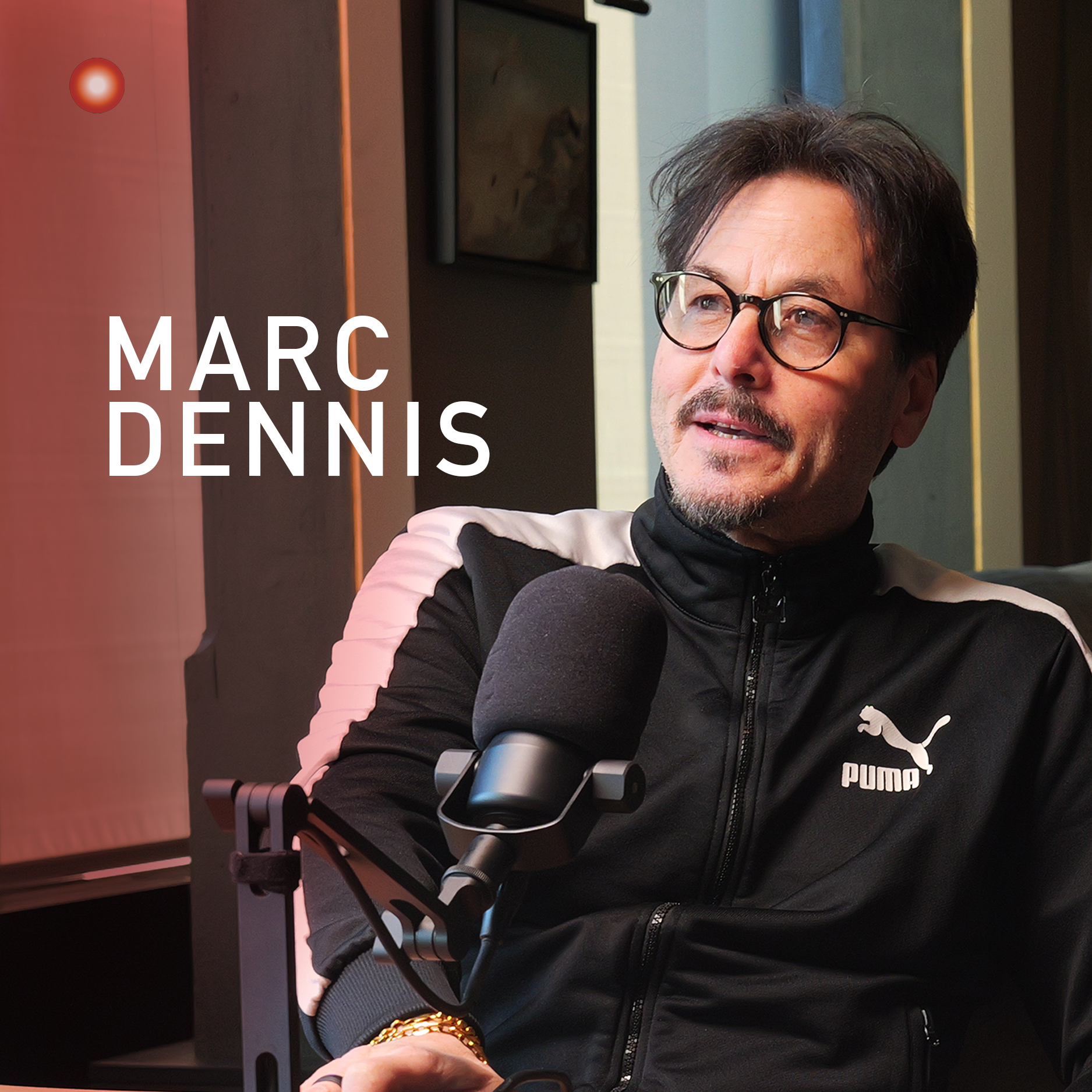
Marc Dennis states his purpose is not self-expression or personal catharsis. Instead, he aims to create work that entertains others, providing a mirror for them to reflect upon and discover parts of themselves within his art. His success is measured by the audience's self-discovery.
Related Insights
Aspiring creators often get stuck on "what problem am I solving?" This is a flawed premise. Providing entertainment, joy, and an escape from reality is an incredibly valuable contribution—just as valid as solving a practical business or life problem for your audience.

When asked for a piece of advice for the world, Marc Dennis's first idea is that loving others is impossible without first loving oneself. He views this as a fundamental principle that people often forget, leading to troubled relationships and personal unhappiness.
The creative process is like calling out "Marco" in isolation for a long time. The reward comes when the audience responds with "Polo," signifying a connection. This metaphor also highlights the creator's responsibility to listen for the "Marco" calls of others needing help.

Artists can become emotionally detached from their own work over time. Experiencing profound personal hardship, while devastating, can be a 'gift' that forces a reconnection with the visceral emotions their music explores. This allows them to see their art through the fans' eyes again, understanding the catharsis their audience experiences on a much deeper level.

The first half of a creative life is the "Hero's Journey": finding your calling. The second, harder part is the "Artist's Journey": the daily, unglamorous work of honing your craft and asking, "What is my unique gift?" This shift from discovery to execution is a critical transition.

Instead of offering a formula for success, artist Marc Dennis tells aspiring creatives that the key to failure is trying to please everyone. True artistic success requires finding and staying true to a unique voice, even if it disappoints others' expectations or preconceived notions.
After starting a forest fire at age seven, a firefighter's comment about the animals that lost their homes struck Marc Dennis profoundly. This single, powerful memory of unintended consequences and displacement became a recurring theme he has painted about throughout his career.
Citing Kurt Vonnegut, the host and artist agree that the best creative work uses entertainment as a vehicle for delivering deeper insights. Rather than just being fun, its purpose is to inform and share experiences, making complex ideas accessible and memorable for the audience.
Dennis creates "paintings within paintings" to challenge perception. Inspired by Wile E. Coyote and a real-life museum experience, his work makes the viewer's interaction part of the art itself, creating a nested, self-aware narrative that questions the relationship between art and its audience.
Artist Marc Dennis combines his obsessive, hyper-real painting skill with an unserious sense of humor. He views this humor not as a gimmick but as a "high voltage technique" that energizes his technically demanding work and injects his distinct personality, preventing it from being solely about craftsmanship.