Get your free personalized podcast brief
We scan new podcasts and send you the top 5 insights daily.
Military actions against Iran and Venezuela, neither listed as top threats in official documents, are likely driven by a desire to secure quick "wins" for the Trump brand. This strategy targets irritants rather than genuine security issues to project strength for legacy-building purposes.

Related Insights
Unlike predecessors who framed foreign policy within a broader worldview (e.g., democracy promotion), Trump's approach is purely transactional and theatrical. It lacks a moral or ideological justification, instead focusing on demanding tribute, like oil from Venezuela, to appeal to a nationalist base without building a durable governing coalition.

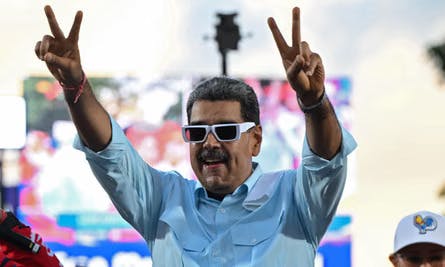
Authoritarian leaders who publicly mock or dismiss threats risk triggering a military response driven by personal pride. Venezuelan President Maduro's televised dancing was reportedly perceived by the Trump administration as calling their bluff, demonstrating how avoiding the appearance of being a 'chump' can become a primary motivator for military action.
Viewing Trump's actions as part of a grand strategic plan is flawed. According to inside sources, his administration's policy is purely tactical and present-focused, lacking memory of past decisions or a vision for the future. The mantra is, 'There is no yesterday. There is no tomorrow. There is only the now.'

Trump's negotiation strategy, particularly with Iran, involves a massive, visible military presence to create extreme pressure. This 'peace through strength' approach aims to force concessions at the negotiating table by making the alternative—imminent, overwhelming force—undeniably clear and credible.

In the current political environment, foreign policy decisions like military strikes can be driven less by strategic objectives and more by their value as 'memes' or content. The primary goal becomes looking 'cool as fuck' and projecting strength, rather than achieving a tangible outcome.
The public threats of a military strike against Iran may be a high-stakes negotiating tactic, consistent with Trump's style of creating chaos before seeking a deal. The goal is likely not war, which would be politically damaging, but to force Iran into economic concessions or a new agreement on US terms.

Instead of fearing Trump's unpredictability, foreign leaders can manipulate it. By appealing to his desire for a 'peace through strength' legacy and his need to showcase American power, a country like Mexico could secure significant military and economic aid by framing it as a clear win for him.
U.S. foreign policy actions against Venezuela and Iran are not primarily about democracy but are strategic moves to disrupt the flow of cheap, sanctioned oil to China. By controlling these sources, the U.S. can directly attack a key adversary's economic and military engine.

Despite rhetoric supporting protesters in Iran and Venezuela, the Trump administration's actions suggest a preference for replacing existing leaders with more compliant strongmen. In Venezuela, this meant dealing with Maduro's VP, indicating a pragmatic focus on control and stability over messy, long-term nation-building.
A core element of Trump's worldview is the belief that global affairs can be managed through personal relationships and deals between powerful leaders, bypassing institutions. This 'great power condominium' approach explains his attempts to charm leaders like Putin and Xi, believing his personal diplomacy can resolve complex structural issues.
