The official National Defense Strategy document generates significant debate but is largely symbolic and disconnected from an administration's actual foreign policy decisions. Professionals often waste time analyzing a document that has little real-world impact on guiding decisions.
Iran's government created propaganda claiming theorist Gene Sharp, who worked with Dr. King, is a CIA operative. They use this to paint domestic protests as foreign-backed coups—a tactic of delegitimization ironically echoed by some U.S. commentators against American protesters.
The current deployment of agencies like ICE and CBP in domestic roles creates a new, quasi-military federal entity. This is distinct in American history and occupies a middle ground between traditional law enforcement and the uniformed military, altering civil-military relations.
The Posse Comitatus Act restricts direct military training of civilian law enforcement. However, federal agencies like ICE are not governed by this act, creating a gray area for unprecedented military involvement in domestic security without needing formal declarations like the Insurrection Act.
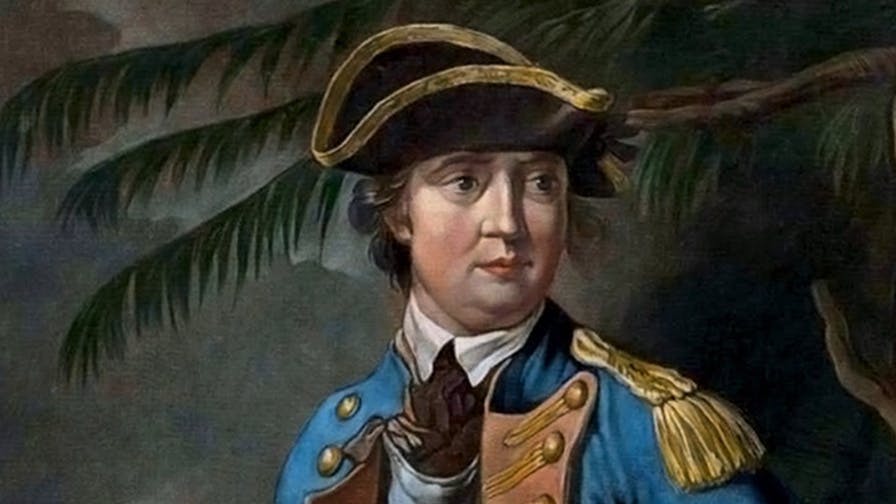
Despite battlefield successes, Arnold repeatedly failed to understand the broader strategic context, particularly Washington's political constraints. He couldn't see past personal grievances, a classic trait of what the modern military calls a 'terminal colonel'—an effective leader who can't make the leap to strategic thinking.
The American Revolution was itself an act of treason against Britain. Benedict Arnold's defection created a singular, despised traitor, allowing the American people to unite against an internal enemy and solidifying their identity beyond simply being rebels against the crown.
The 2018 NDS was praised for pivoting to great power competition, naming Russia as a top threat. This made the document inherently dishonest, as it represented the Pentagon's consensus while completely contradicting President Trump's well-known admiration for Vladimir Putin.
Unlike in the 1930s, the U.S. is enmeshed in a global network of alliances. A modern isolationist policy cannot be a simple retreat; it requires an active, aggressive phase of dismantling these structures to clear the way for withdrawal. You must 'blow up the world first to ignore it.'
Pundits frame U.S. domestic protests as an 'insurgency' using tactics from Iraq. This is flawed, as decentralized organization is characteristic of many social movements, including the Civil Rights movement and pro-democracy efforts like Poland's Solidarity, not just terrorist networks.
In the current political environment, foreign policy decisions like military strikes can be driven less by strategic objectives and more by their value as 'memes' or content. The primary goal becomes looking 'cool as fuck' and projecting strength, rather than achieving a tangible outcome.