Get your free personalized podcast brief
We scan new podcasts and send you the top 5 insights daily.
Shervin Peshavar strongly emphasizes that preserving Iran's existing borders is non-negotiable for the opposition movement. He warns that supporting any separatist groups, even for tactical advantage, would alienate the Iranian people and undermine the entire effort due to a deep-seated national identity.

Related Insights
Contrary to the typical anti-war sentiment in the West, anecdotal evidence suggests that an overwhelming majority of Iranians who oppose the regime—perhaps 80% or more—would welcome outside help. They feel abandoned after the US promised support for protesters, making them receptive to foreign intervention.

Fears of ethnic fragmentation are a regime talking point, not a likely reality. Unlike 20th-century states, Iran has a 2,500-year history that forged a strong national identity. Even repressed ethnic minorities like Kurds and Azeris largely see themselves within the fabric of a unified Iran.

Reza Pahlavi outlines a clear, four-point platform required for any group to join the post-regime alliance: maintaining Iran's territorial integrity, a strict separation of religion and state, equality for all citizens under the rule of law, and a transparent democratic process.
The primary force preventing a collapse of the Iranian regime isn't its own strength, but fear among its neighbors. Countries like Turkey and Pakistan worry a collapse would lead to a massive refugee crisis and empower separatist movements on their borders, creating a strong regional bias for stability.

An unintended consequence of the conflict could be the ethnic fragmentation of Iran. With only 60% of the population being Persian, the external pressure and internal chaos could cause the country to disintegrate into ethnic conflict and civil war, creating a far greater humanitarian and geopolitical crisis.
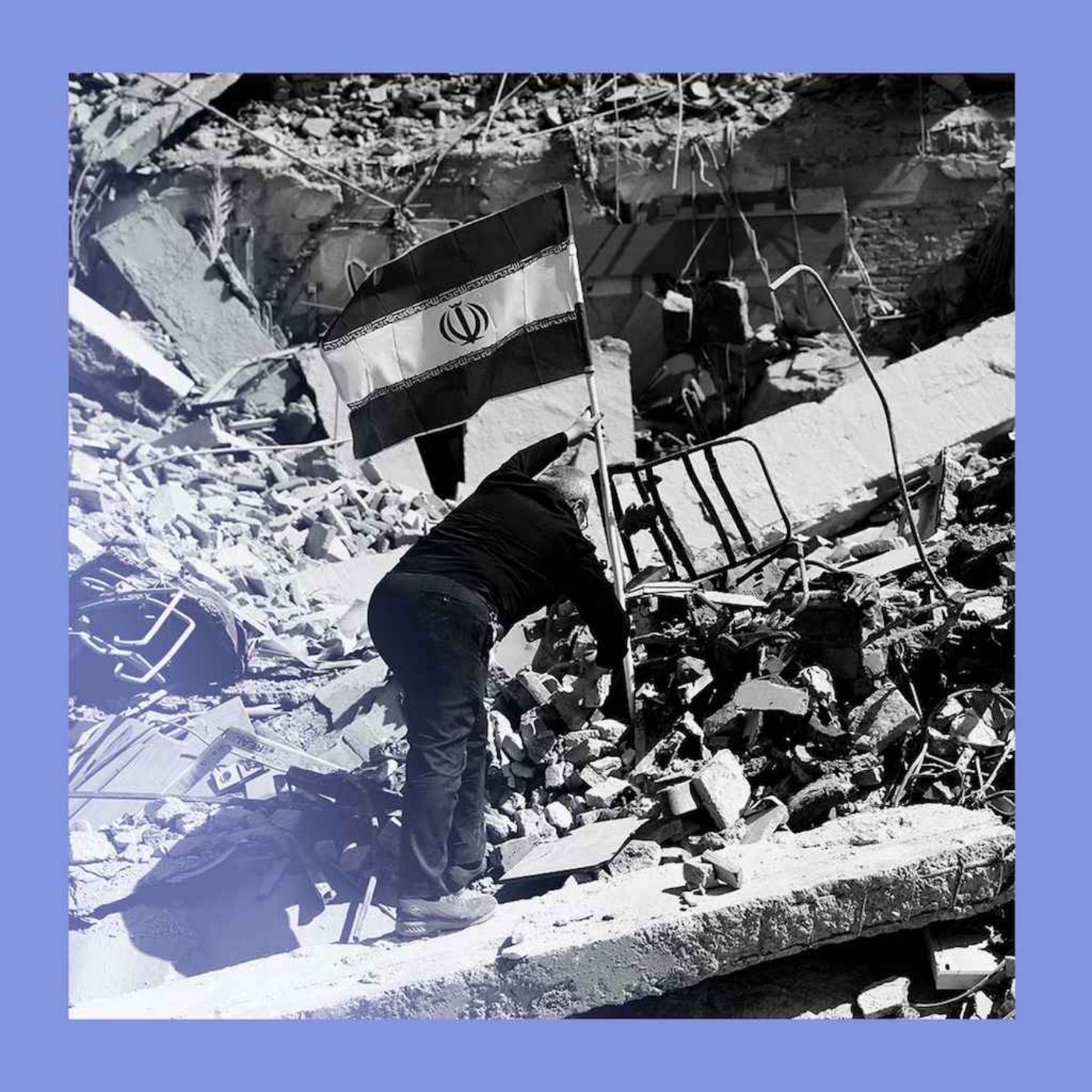
With its credibility destroyed by bloodshed, the Iranian regime's only remaining leverage over some citizens is the fear of a chaotic power vacuum. The prospect of a full-blown civil war may convince some to tolerate the current oppression over the alternative of total state collapse.

Iran maintains two distinct military forces. The national army's role is to defend Iran's borders. In contrast, the Islamic Revolutionary Guard Corps (IRGC) is an ideological army accountable only to the Supreme Leader, tasked with protecting the revolution and its proxies abroad.

A key pillar of the transition plan is encouraging defections from the current regime's military. Shervin Peshavar reveals that a secure communication channel set up by the Crown Prince has already received responses from over 50,000 military personnel, signaling widespread internal dissent.
The current Iranian protests are uniquely potent because the regime is at its weakest geopolitically. The loss of regional proxies like Hezbollah and Hamas, coupled with key ally Russia's preoccupation with Ukraine, has left the Iranian government more isolated and vulnerable than during any previous wave of unrest.

The leading royalist faction's failure to build an inclusive coalition with ethnic minorities, particularly the politically organized and armed Kurds, is a critical weakness. Their push for a centralized, Persian-dominated state alienates these groups, creating incentives for separatism and potentially a civil war.