Get your free personalized podcast brief
We scan new podcasts and send you the top 5 insights daily.
Reza Pahlavi outlines a clear, four-point platform required for any group to join the post-regime alliance: maintaining Iran's territorial integrity, a strict separation of religion and state, equality for all citizens under the rule of law, and a transparent democratic process.

Related Insights
Pahlavi stresses his focus is on the democratic process, not the outcome. He defines his role as a unifying figure to guide Iran toward free elections, where the populace will choose their system of government. He explicitly states he is not seeking personal power or a specific office.
Unusually, Reza Pahlavi's supporters are already turning on their coalition partners. They've launched online hate campaigns to crush alternative power centers within the opposition movement, a tactic typically reserved for consolidating power *after* a successful revolution, not during the struggle.

Contrary to a "burn-it-all-down" revolutionary approach, Reza Pahlavi proposes a pragmatic transition. He plans to incorporate existing state institutions, including the Islamic Revolutionary Guard Corps (IRGC), into his vision for a new national army to ensure stability and state function.
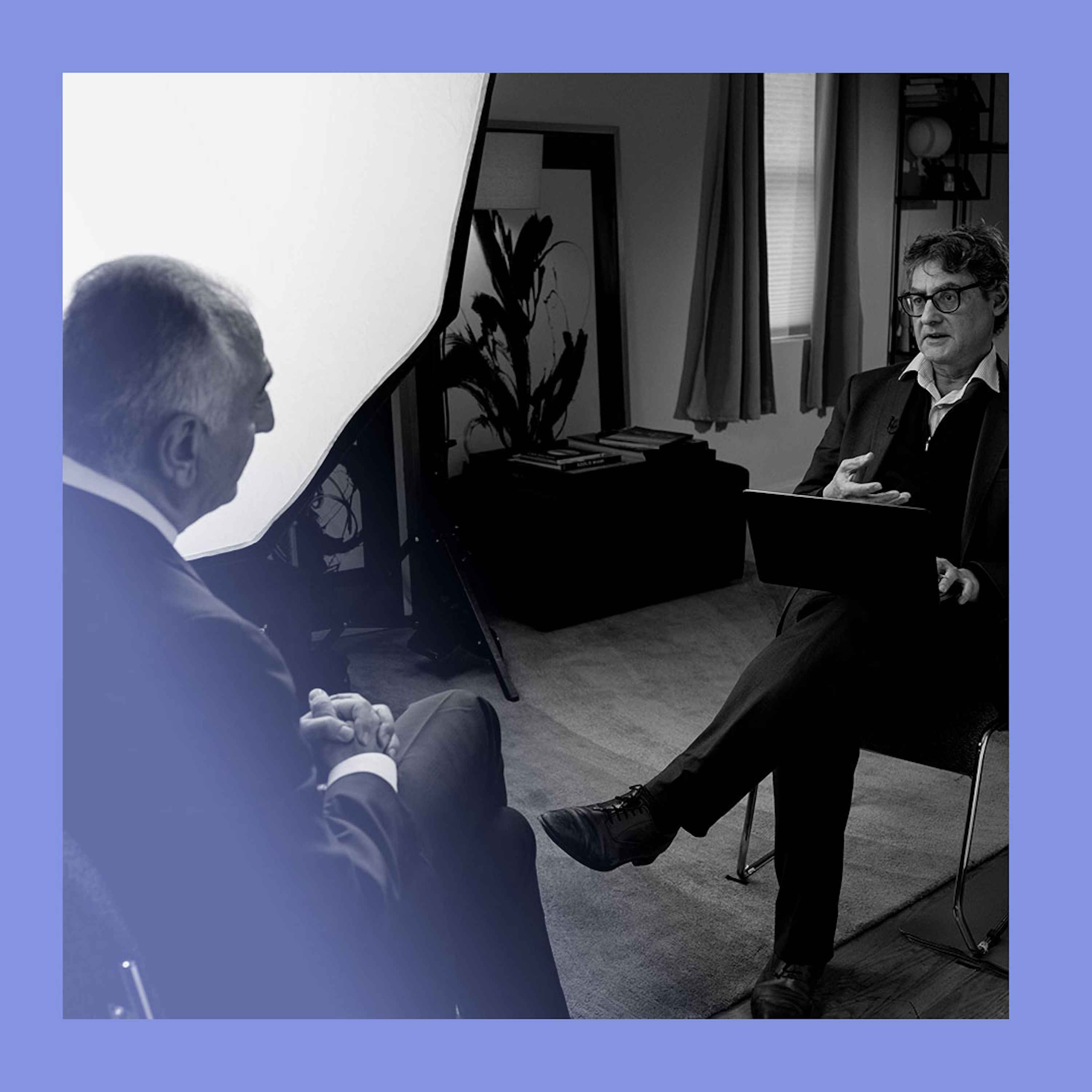
Shervin Peshavar frames the modern fight for a democratic Iran within a 2,500-year historical context. He connects the principles of human rights from Persian king Cyrus the Great to the American Declaration of Independence via Thomas Jefferson, arguing the current movement continues this ancient legacy.
Shervin Peshavar strongly emphasizes that preserving Iran's existing borders is non-negotiable for the opposition movement. He warns that supporting any separatist groups, even for tactical advantage, would alienate the Iranian people and undermine the entire effort due to a deep-seated national identity.
Even if Iran's theocracy falls, a Western-style liberal democracy is unlikely. The leading opposition factions, particularly the royalists, are themselves illiberal and exhibit authoritarian tendencies. The most optimistic outcome may be a state resembling Hungary or a MAGA-led America, not a truly free society.
The concept of an "Islamic government" was deliberately left undefined. This vagueness allowed various anti-Shah groups—from secular liberals to Marxists—to project their own hopes onto the revolution, creating a broad but fragile coalition. The lack of detail was a feature, not a bug.

A key pillar of the transition plan is encouraging defections from the current regime's military. Shervin Peshavar reveals that a secure communication channel set up by the Crown Prince has already received responses from over 50,000 military personnel, signaling widespread internal dissent.
Unlike the de-Ba'athification in Iraq, the proposed transition for Iran includes a path for members of the current military and bureaucracy. Those who did not commit atrocities will be offered roles or retirement, a strategy designed to ensure stability and prevent a power vacuum.
The 47-year rule of the Islamic Republic has had a paradoxical effect. The oppressive theocracy has led to a population that is now arguably the most secular in the Middle East and, despite its anti-American government, one of the most pro-American populations in the region, desperate to separate mosque and state.
