Get your free personalized podcast brief
We scan new podcasts and send you the top 5 insights daily.
Contrary to the typical anti-war sentiment in the West, anecdotal evidence suggests that an overwhelming majority of Iranians who oppose the regime—perhaps 80% or more—would welcome outside help. They feel abandoned after the US promised support for protesters, making them receptive to foreign intervention.

Related Insights
Despite widespread protests, Iran's repressive state apparatus is highly effective and has shown no signs of cracking. The probability of the regime collapsing from internal pressure alone is extremely low. Niall Ferguson argues that only external intervention, a form of 'regime alteration,' can realistically topple the Islamic Republic.

Reza Pahlavi's strategy is not based on domestic uprising alone. He believes protestors are "sacrificial lambs" who cannot succeed without direct American military intervention, framing them as a "fort waiting for the cavalry." This dependence makes his plan vulnerable to US political shifts.

With its credibility destroyed by bloodshed, the Iranian regime's only remaining leverage over some citizens is the fear of a chaotic power vacuum. The prospect of a full-blown civil war may convince some to tolerate the current oppression over the alternative of total state collapse.
Rather than surgical strikes, which have a poor historical track record, the most effective foreign support for Iranian protesters is restoring their internet connectivity. The regime kills in the dark; offensive cyber operations that tear down its 'digital iron wall' directly empower citizens and expose atrocities.

A U.S. military strike to remove Ayatollah Khamenei is unlikely to help protesters. Analysis suggests it would more likely result in the Revolutionary Guard seizing control or other regime remnants continuing the fight, ultimately failing to satisfy the opposition and potentially worsening the civil conflict.
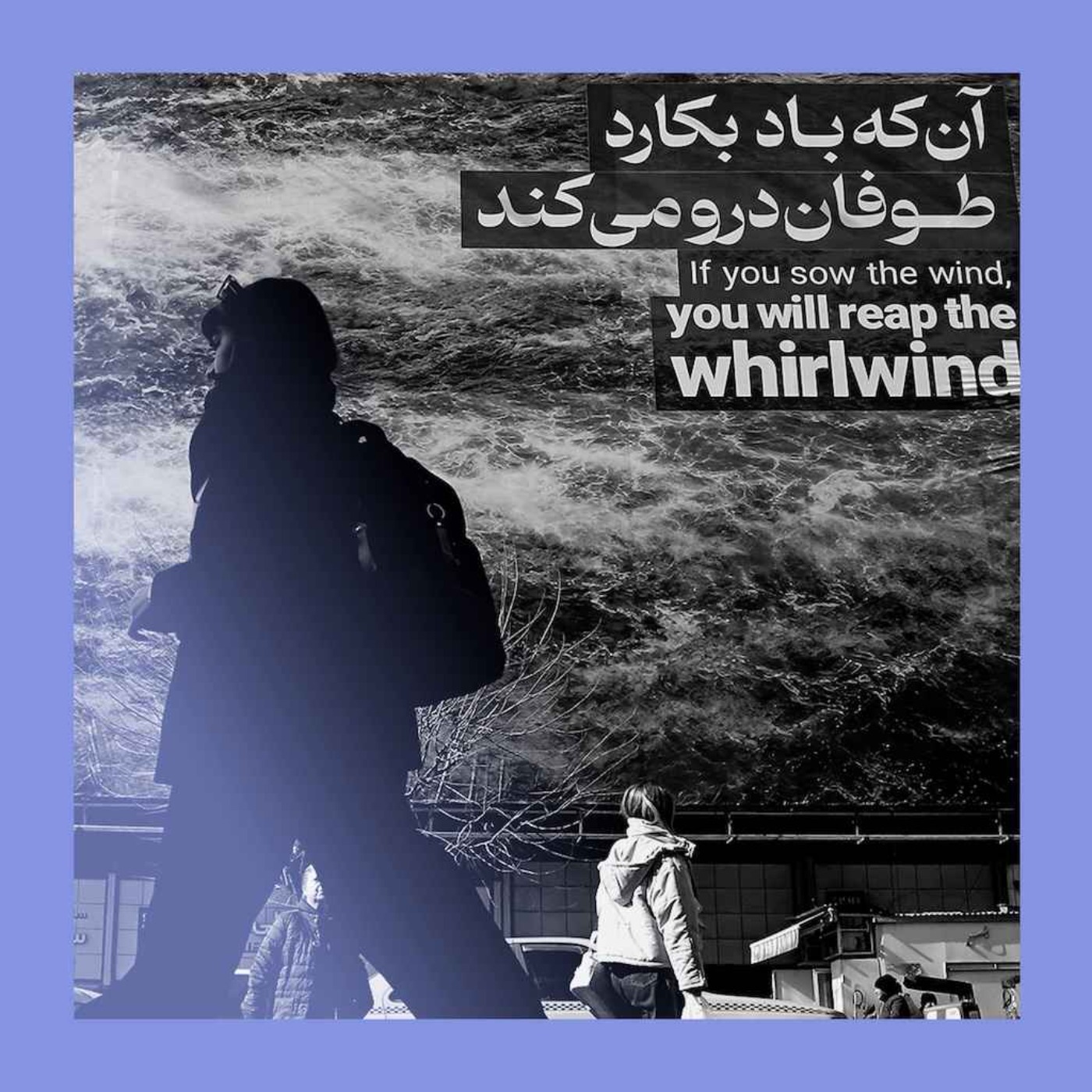
The progression of protest slogans from demanding a vote recount in 2009 ('Where is my vote?') to calling for regime overthrow today ('Death to the supreme leader') indicates a fundamental change. Protestors no longer seek to work within the existing system but aim to dismantle it entirely.

The current Iranian protests are uniquely potent because the regime is at its weakest geopolitically. The loss of regional proxies like Hezbollah and Hamas, coupled with key ally Russia's preoccupation with Ukraine, has left the Iranian government more isolated and vulnerable than during any previous wave of unrest.
Despite widespread internal protests and instability, history shows that an external attack is one of the few things that can unify the Iranian population. A potential Israeli strike, meant to weaken the regime, could backfire by creating a 'rally 'round the flag' effect that shores up support for the Ayatollah.

The 47-year rule of the Islamic Republic has had a paradoxical effect. The oppressive theocracy has led to a population that is now arguably the most secular in the Middle East and, despite its anti-American government, one of the most pro-American populations in the region, desperate to separate mosque and state.
Unlike nascent revolutionary states that rally against foreign attacks, late-stage dictatorships are weakened by military defeats. Iran's recent humiliations by Israel and the US have exposed incompetence and eroded the public's perception of strength, fueling protests and accelerating the regime's demise.