Get your free personalized podcast brief
We scan new podcasts and send you the top 5 insights daily.
Fears of ethnic fragmentation are a regime talking point, not a likely reality. Unlike 20th-century states, Iran has a 2,500-year history that forged a strong national identity. Even repressed ethnic minorities like Kurds and Azeris largely see themselves within the fabric of a unified Iran.

Related Insights
Meaningful reform in Iran is unlikely until the succession of the 86-year-old Supreme Leader is resolved. Deep uncertainty over who will hold power paralyzes the political system, preventing any faction from making significant changes and forcing the country into a holding pattern until the leadership transition occurs.
In a diverse, multi-ethnic country, national identity cannot be based on ancestry or "bloodline." Instead, it can be rooted in a shared abstract value. Canada's unifying identity is positioned as "freedom"—the common reason people have historically immigrated, providing a non-ethnic foundation for unity.

Young Iranians, with no memory of the Shah's era, embrace a romanticized vision of pre-1979 Iran's social freedoms and global standing. This nostalgia, combined with the regime's suppression of internal leaders, has elevated Reza Pahlavi as a symbolic, default leader for a nationalist reclamation.
The ruling elite has inverted from 80% ideologues at the revolution's start to 80% charlatans today. Expedience and financial gain, not revolutionary zeal, now bind the regime's core. This ideological hollowness makes the regime more brittle than its rhetoric suggests.
A clean, external removal of Iran's leadership, similar to what occurred in Venezuela, is unlikely. Iran's population is nearly four times larger, it is geographically distant, and the American political psyche associates the Middle East with costly military entanglements, creating a much higher barrier to intervention.

When a country is successful for too long, its citizens forget the difficult and often violent actions required to achieve that prosperity. This ignorance leads to guilt, a weakened national identity, and an inability to make tough decisions for self-preservation.

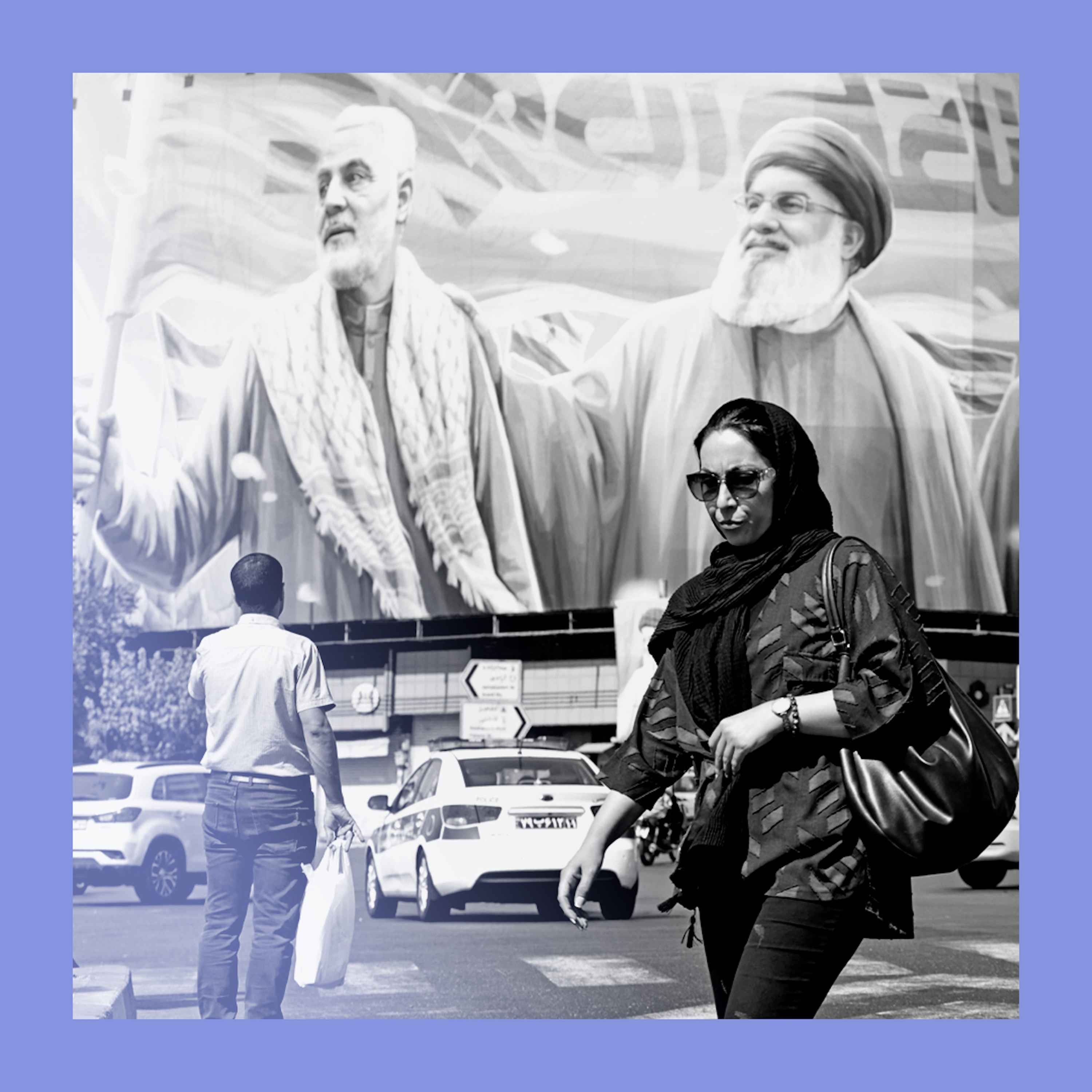
The Iranian populace is exhausted with theocratic rule after five decades. Any future authoritarian leader will likely be a product of the intelligence or security services, appealing to nationalism rather than revolutionary ideology. The era of the turban-wearing ruler is over.
The current Iranian protests are uniquely potent because the regime is at its weakest geopolitically. The loss of regional proxies like Hezbollah and Hamas, coupled with key ally Russia's preoccupation with Ukraine, has left the Iranian government more isolated and vulnerable than during any previous wave of unrest.
Despite widespread internal protests and instability, history shows that an external attack is one of the few things that can unify the Iranian population. A potential Israeli strike, meant to weaken the regime, could backfire by creating a 'rally 'round the flag' effect that shores up support for the Ayatollah.

Unlike nascent revolutionary states that rally against foreign attacks, late-stage dictatorships are weakened by military defeats. Iran's recent humiliations by Israel and the US have exposed incompetence and eroded the public's perception of strength, fueling protests and accelerating the regime's demise.