Get your free personalized podcast brief
We scan new podcasts and send you the top 5 insights daily.
Jeffrey Goldberg critiques the casual, emoji-laden discourse from officials discussing military action. He argues that even when targeting terrorists, leaders must not "act like a fucking child" because killing people is not a video game. This solemn approach to lethal force is an increasingly lonely position.

Related Insights
A population can be habituated to war through gradual escalation. By starting with seemingly small, contained "lightning strikes," each subsequent step feels less shocking. This incremental approach can lead a nation into a major conflict without a single decisive moment of public debate or consent.

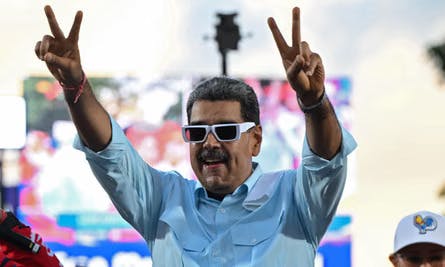
Authoritarian leaders who publicly mock or dismiss threats risk triggering a military response driven by personal pride. Venezuelan President Maduro's televised dancing was reportedly perceived by the Trump administration as calling their bluff, demonstrating how avoiding the appearance of being a 'chump' can become a primary motivator for military action.
Historically, figures like Hitler were initially dismissed as buffoons. This perceived lack of seriousness is a strategic tactic, not a flaw. It disarms civil opponents who can't operate in that space, captures constant media attention, and causes observers to fatally underestimate the true threat. The defense to "take him seriously, not literally" is a modern manifestation of this pattern.

Political figures often focus on superficial issues like beards and physical fitness, which directly conflicts with the professional military's culture. The armed services value deep competence, humility, and character—qualities essential for managing lethal force and complex global operations, regardless of appearance.

The "if one person dies, it's one too many" mentality, while sounding noble, is framed as a sign of poor leadership. Effective leaders must synthesize complex data and make decisions based on second and third-order effects, not just a single, emotionally resonant metric like zero risk.

Presidential decisions, such as the strike on Iran, may stem from a simplistic, personal "tit for tat" logic rather than complex geopolitical strategy. The President's own statement that "the Ayatollah tried to kill him" is seen as the direct, personal motivation for a major military action.

In the current political environment, foreign policy decisions like military strikes can be driven less by strategic objectives and more by their value as 'memes' or content. The primary goal becomes looking 'cool as fuck' and projecting strength, rather than achieving a tangible outcome.

Initial military actions, like successful bombings, can feel like victories. However, they often fail to solve the core political issue, trapping leaders into escalating the conflict further to achieve the original strategic goal, as they don't want to accept failure.

Holding out for morally perfect leaders is naive and paralyzing. The reality of geopolitics is a "knife fight" where leaders inevitably make decisions that result in death. Progress requires working with these flawed individuals rather than disengaging over past actions.

Rather than being a problem, public criticism of the military serves a vital function. It forces politicians and leaders to rigorously test their hypotheses and ethics, preventing a descent into an unchecked, aggressive "Team America world police" mentality.