Get your free personalized podcast brief
We scan new podcasts and send you the top 5 insights daily.
Historically, figures like Hitler were initially dismissed as buffoons. This perceived lack of seriousness is a strategic tactic, not a flaw. It disarms civil opponents who can't operate in that space, captures constant media attention, and causes observers to fatally underestimate the true threat. The defense to "take him seriously, not literally" is a modern manifestation of this pattern.
Related Insights
Mark Twain saw humorists as having a critical role: to challenge authority and consensus. He argued that irreverence is the "champion of liberty" because despots fear a laughing public more than anything else. This frames satire not just as entertainment, but as a vital tool for maintaining a free society.

Historically, murderous ideologies like those of Mao and Stalin gained traction by hiding behind benevolent promises ('free stuff'). This benign messaging makes them more deceptively dangerous than overtly aggressive ideologies like Nazism, which clearly signal their malevolence and are thus easier for the public to identify and reject.

Trump's comedic style is a direct imitation of Johnny Carson's deadpan delivery. This allows him to effectively land jokes and control narratives, even when punching down. The political opposition often disarms itself by failing to recognize or counter his humor, which contrasts sharply with the scripted jokes of other recent leaders.

Joke telling is a communication tool, not an inherently virtuous act. A well-structured joke elicits a physical laugh response that can make an audience accept a premise, even a harmful one. This persuasive power can be used for 'evil,' as the structure's effectiveness is independent of the content's morality.

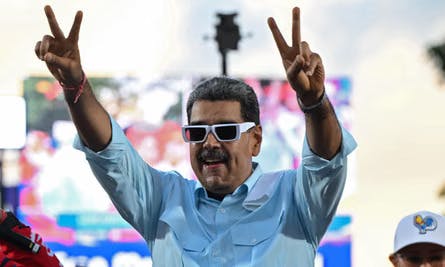
Authoritarian leaders who publicly mock or dismiss threats risk triggering a military response driven by personal pride. Venezuelan President Maduro's televised dancing was reportedly perceived by the Trump administration as calling their bluff, demonstrating how avoiding the appearance of being a 'chump' can become a primary motivator for military action.
Across history, from Nazis calling Jews "pestilence" to Hutus calling Tutsis "cockroaches," propaganda follows a single playbook. By labeling an out-group as non-human (animals, viruses), it deactivates the brain's social cognition and empathy networks, making it psychologically easier to commit atrocities.

To manage a cabinet of statesmen who disliked him and each other, Lincoln strategically used folksy humor and jokes about his own appearance to build a group identity. This reframes him as a leader who wielded humor as a sophisticated tool for disarming detractors and fostering connection in high-stakes environments.

Contrary to their image of strength, authoritarian figures often rely on bluff and "anticipatory obedience." When confronted with direct, organized resistance, they frequently lack a follow-up plan and retreat, revealing their inherent fragility and dependence on their opposition's inaction.

Salman Rushdie posits that humor is more than just entertainment; it is a potent tool against oppression. He observes that dictators and narrow-minded individuals are characteristically humorless and that satire can provoke them more effectively than direct criticism, making it a crucial element in the struggle for free expression.

Engaging controversial figures through a comedic lens serves as a powerful humanizing agent. It punctures their self-serious persona and tests their ability to laugh at the absurdity of their own position. This can disarm audiences who expect confrontation and instead reveal a more relatable, self-aware individual.
