Get your free personalized podcast brief
We scan new podcasts and send you the top 5 insights daily.
When confronting her husband's infidelity, Laura Clery recognized it not just as a betrayal but as a 'cross addiction.' The theory is that addiction is like a game of whack-a-mole: once you suppress one compulsion like alcohol, another one like sex, shopping, or gambling can pop up in its place.

Related Insights
The neuroscience of habit-breaking is paradoxical. While most habits require top-down prefrontal cortex control, overcoming deep-seated addictions is often easier when individuals "give over" control to a higher power, offloading the immense cognitive burden of self-restraint.

A compelling theory frames addiction as a learning disorder. While most brains downgrade a behavior's value as negative consequences pile up, the addict's brain gets stuck on the initial reward signal, failing to update the calculation that the behavior is no longer beneficial.

True recovery requires identifying and removing precursor behaviors that, while not the addiction itself, reliably trigger overwhelming cravings. For a sports gambling addict, this meant cutting out all sports media—not just betting apps—to redesign his environment for success.

Addiction isn't defined by the pursuit of pleasure. It's the point at which a behavior, which may have started for rational reasons, hijacks the brain’s reward pathway and becomes compulsive. The defining characteristic is the inability to stop even when the behavior no longer provides pleasure and begins causing negative consequences.
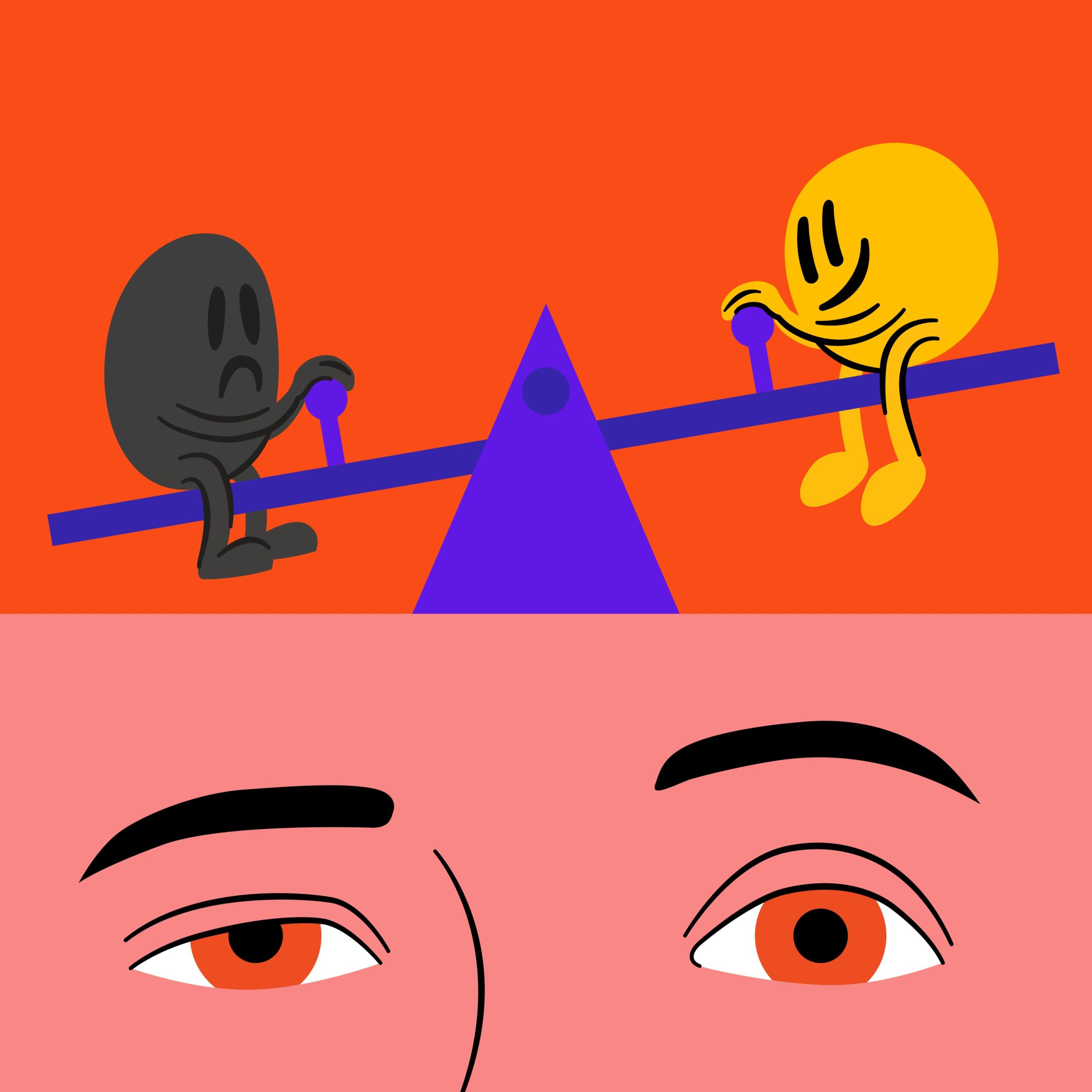
Instead of focusing on the immediate gratification of an addictive behavior, use logic to forecast its ultimate conclusion. By "playing the tape out," you force yourself to confront the inevitable negative outcome—be it personal ruin, health failure, or relationship destruction—making the initial impulse less appealing.

Initially, addictive behaviors are pursued for a pleasurable dopamine rush. Over time, the brain's dopamine system adapts and down-regulates, diminishing the pleasure. The behavior then becomes a compulsive habit driven not by a desire for a high, but by the urgent need to avoid the anxiety and physical discomfort of withdrawal.

Resolving a specific addiction (like alcoholism) doesn't necessarily resolve the underlying genetic or psychological predisposition. This 'diathesis' can re-emerge years later, expressing itself as a new compulsion, such as a sex addiction or compulsive eating, even in someone who has been sober for 20 years.
Addiction isn't just about substances; it's a pattern. Any thought, emotion, or action that reliably satisfies at least three of the six human needs (certainty, variety, significance, love, growth, contribution) will become a compulsion, whether positive or negative.

Brain imaging studies show that the brain's reward circuitry (nucleus accumbens) activation in response to drug cues is a more accurate predictor of relapse than the person's own stated commitment to sobriety. This highlights a powerful disconnect between conscious desire and deeply ingrained, subconscious cravings.
Willpower is an exhaustible resource. A more effective strategy is "self-binding," where you create literal and metacognitive barriers between yourself and your drug of choice. This friction (e.g., deleting an app) slows you down, giving you the critical time needed to surf a craving without acting on it.
