Get your free personalized podcast brief
We scan new podcasts and send you the top 5 insights daily.
A compelling theory frames addiction as a learning disorder. While most brains downgrade a behavior's value as negative consequences pile up, the addict's brain gets stuck on the initial reward signal, failing to update the calculation that the behavior is no longer beneficial.

Related Insights
Modern society turns normal behaviors like eating or gaming into potent drugs by manipulating four factors: making them infinitely available (quantity/access), more intense (potency), and constantly new (novelty). This framework explains how behavioral addictions are engineered, hijacking the brain’s reward pathways just like chemical substances.
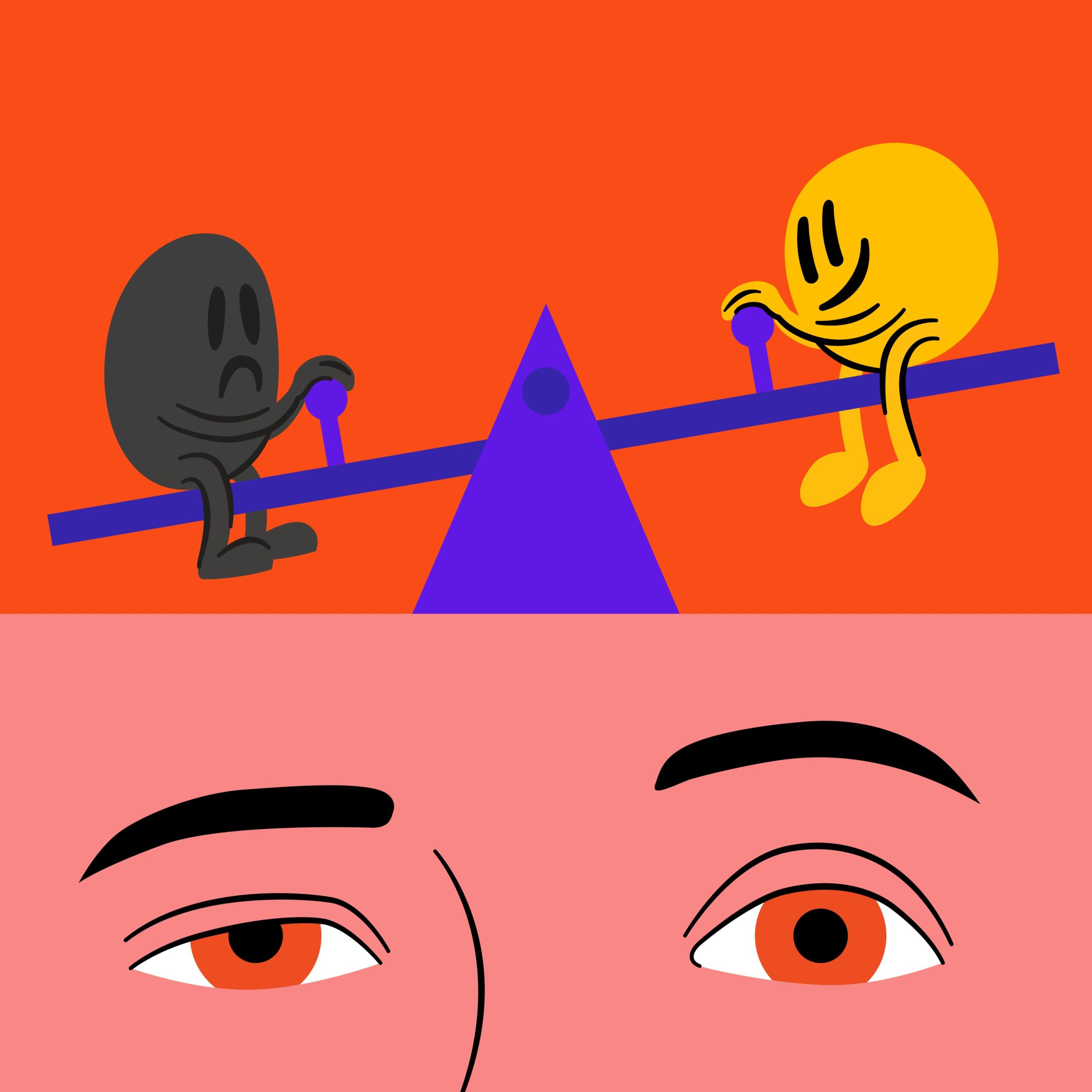
A powerful definition of addiction is the gradual shrinking of a person's sources of joy. As the addiction takes hold, natural rewards like relationships, work, and hobbies fall away until the substance or behavior becomes the only thing left that provides a feeling of reward, creating a powerful psychological dependency.

Addiction isn't defined by the pursuit of pleasure. It's the point at which a behavior, which may have started for rational reasons, hijacks the brain’s reward pathway and becomes compulsive. The defining characteristic is the inability to stop even when the behavior no longer provides pleasure and begins causing negative consequences.
Neuroplasticity is not inherently positive. The same brain malleability that allows young people to easily learn new skills and languages also makes them exceptionally vulnerable to addiction. Starting a substance as a teenager is far more likely to lead to lifelong dependency than starting at an older age because the brain learns the addiction more deeply.
Initially, addictive behaviors are pursued for a pleasurable dopamine rush. Over time, the brain's dopamine system adapts and down-regulates, diminishing the pleasure. The behavior then becomes a compulsive habit driven not by a desire for a high, but by the urgent need to avoid the anxiety and physical discomfort of withdrawal.

Genes linked to addiction, impulsivity, and aggression are most active during fetal development, affecting the brain's fundamental balance of inhibition and excitation. This reframes addiction and conduct disorders as neurodevelopmental conditions akin to ADHD, rather than purely as choices or moral failings.
We mistakenly think kids are drawn to screens for pleasure. Neuroscience shows dopamine drives the desire and craving for an activity, creating a compulsion loop even when the activity itself ceases to be enjoyable or even becomes negative. It's the brain's 'do-it-again' button, not its 'feel-good' button.

Constantly bombarding our reward pathways causes the brain to permanently weigh down the 'pain' side of its pleasure-pain balance. This alters our baseline mood, or 'hedonic set point,' meaning we eventually need our substance or behavior not to get high, but simply to escape a state of withdrawal and feel normal.
Most believe dopamine spikes with rewards. In reality, it continuously tracks the difference between your current and next expectation, even without a final outcome. This "temporal difference error" is the brain's core learning mechanism, mirroring algorithms in advanced AI, which constantly updates your behavior as you move through the world.
Brain imaging studies show that the brain's reward circuitry (nucleus accumbens) activation in response to drug cues is a more accurate predictor of relapse than the person's own stated commitment to sobriety. This highlights a powerful disconnect between conscious desire and deeply ingrained, subconscious cravings.