Get your free personalized podcast brief
We scan new podcasts and send you the top 5 insights daily.
People vary dramatically in their ability to form mental images, from none (aphantasia) to vivid (hyperphantasia). Surprisingly, this has no bearing on real-world capability, even in visual fields. Top Pixar animators, for example, are often aphantasic, proving the brain can use non-visual pathways to solve visual problems.

Related Insights
The hippocampus, traditionally known as the brain's memory center for past events, is also crucial for imagination. It works by associating and reassembling stored information in novel ways to construct future scenarios you haven't experienced.

A study of art students found that long-term creative success was predicted not by skill or confidence, but by the tendency to spend more time exploring objects and defining the "problem" of their drawing. True creativity emerges from deeply understanding the situation itself before attempting a solution.

With 10x more neurons going to the eye than from it, the brain actively predicts reality and uses sensory input primarily to correct errors. This explains phantom sensations, like feeling a stair that isn't there, where the brain's simulation briefly overrides sensory fact.

Contrary to intuition, many leading animators at Pixar have aphantasia (the inability to visualize mentally). The hypothesis is that this 'disadvantage' forces them to engage more deeply with the physical act of drawing and observation to understand form, leading to superior skill.

Your brain processes a vividly imagined scenario and a real-life experience through similar neural pathways. This is why visualization is a powerful tool for skill acquisition and even physical change. For instance, repeatedly thinking about exercising a muscle can lead to a measurable increase in its mass, without physical movement.
Improving imagination is less like a painter adding to a blank canvas and more like a sculptor removing material. The primary task is to forget expected answers and consensus reality. This subtractive process uncovers the truly novel ideas that are otherwise obscured by convention.
![Kevin Kelly - Be Generous and Unique - [Invest Like the Best, CLASSICS] thumbnail](https://megaphone.imgix.net/podcasts/9e957b1c-b60e-11f0-8fae-c3720ebd149d/image/fe443cb4b0d58f10dbccb1cf43a6abe2.jpg?ixlib=rails-4.3.1&max-w=3000&max-h=3000&fit=crop&auto=format,compress)
Just as a blind person's visual cortex is repurposed for heightened hearing and touch, savantism might be an extreme case of this principle. An individual may develop superhuman skills by allocating a disproportionate amount of neural resources to one area, often at the cost of others like social skills.
Kevin Rose describes discovering he has aphantasia, a condition where one cannot voluntarily visualize mental images. For these individuals, abstract concepts and memories are experienced through feelings and kinesthetics rather than vivid pictures, highlighting vast, often unknown, differences in human cognition.

Neuroscience research shows that highly imaginative individuals sometimes exhibit reduced gray volume in the prefrontal cortex. This suggests that certain forms of creativity may thrive with less critical filtering, challenging the assumption that more brain mass in analytical regions always equates to superior cognitive ability.
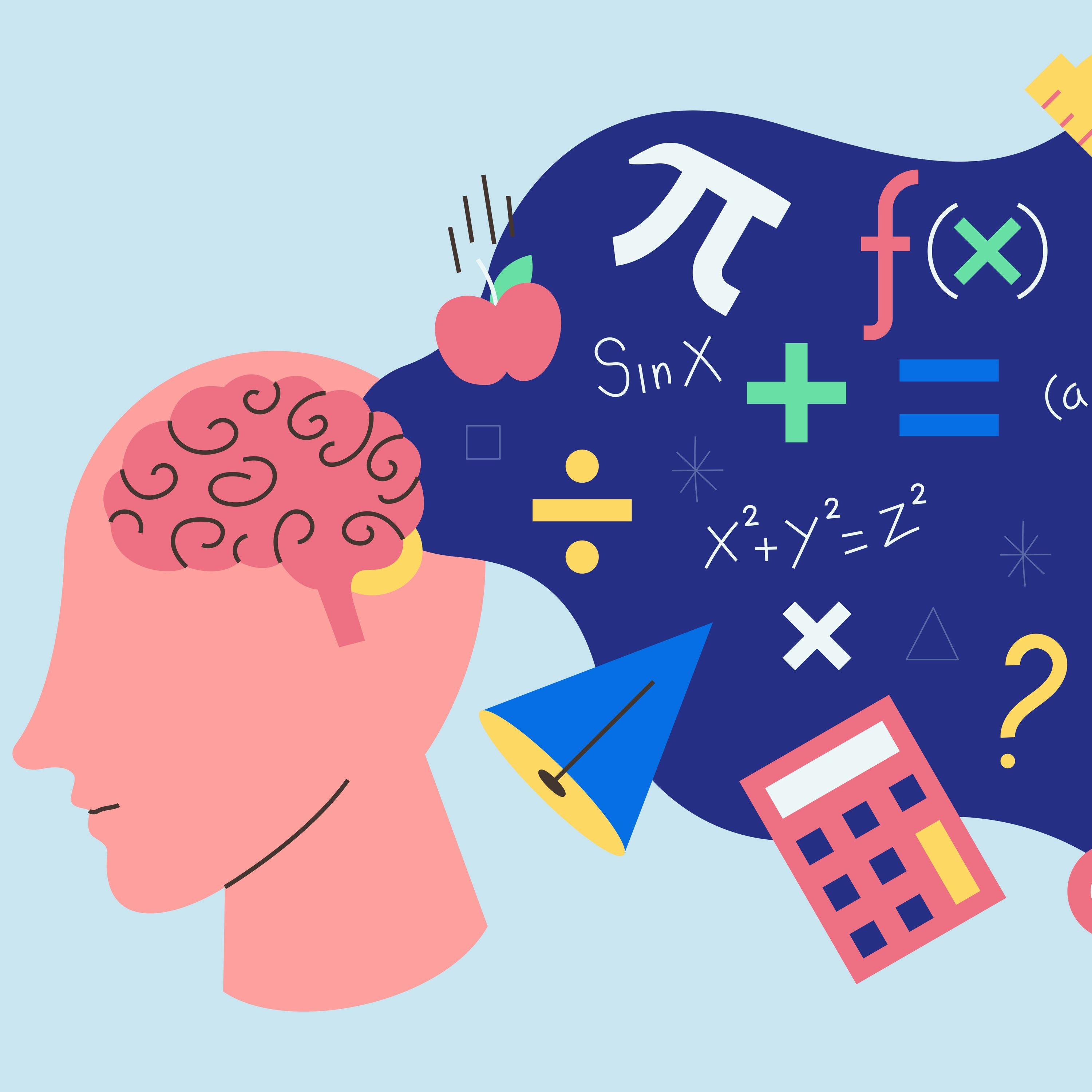
Psychologist Alan Richardson's study on basketball players demonstrated that mental rehearsal is almost as powerful as physical practice. The group that only visualized making free throws improved by 24%, just shy of the 25% improvement seen in the group that physically practiced on the court.
